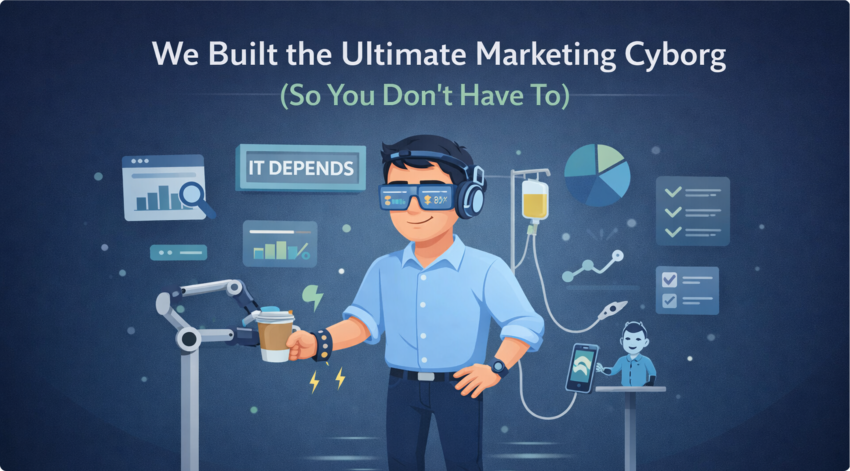
We Built the Ultimate Marketing Cyborg (So You Don’t Have To)
TL;DR
- We’re all optimising marketing with AI. But have we forgotten to optimise the marketer? This post assembles the most ridiculously over-engineered loadout of real productivity tech available today.
- Every device actually exists. Electric shock wristbands. Brain-sensing headphones. Exoskeletons. IV vitamin drips. Coffee delivery robots. All real. All linked.
- We’ve included a budget table ranging from ~$1,000 (Budget Build) to POA (God Mode).
- There’s also an ROI table. Satirical, but not entirely.
- The actual point: The productivity gap between AI-enabled marketers and everyone else is widening. You don’t need a shock collar. But you probably need better tools.
We’re all optimising marketing with AI now. The AI handles the campaigns. The AI writes the copy. The AI segments the audiences.
But the human running it all? Still powered by coffee, anxiety, and whatever sleep they managed between Slack notifications.
Between LinkedIn posts glorifying 4 a.m. hustle and the expectation to instantly master every new tool, marketers are expected to be part robot anyway.
So we decided to lean into it.
Below is the most ridiculously over‑engineered loadout of real productivity tech that could turn an ordinary marketer into a genuine marketing super‑soldier. Every product links to a real website. Every price is accurate. The only thing stopping you is your credit card limit — and possibly your dignity.
Think of this less as a shopping list, and more as a thought experiment about where the real productivity edge now lives.
The Pain Compliance System: Electric Shocks When Conversions Drop
Let’s start with the most important upgrade: consequences.
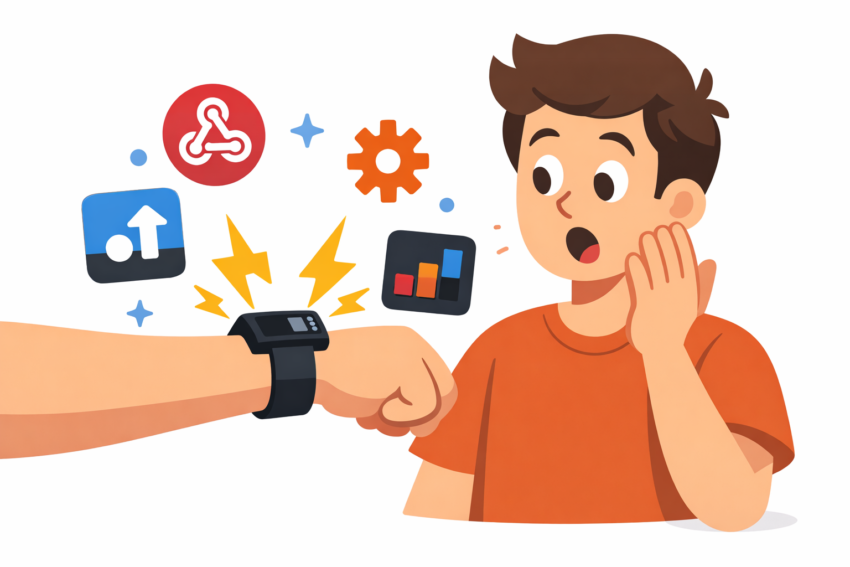
The Pavlok 3 ($219) is a wristband that delivers a 350-volt electric shock. Originally designed to break bad habits like nail-biting and doom-scrolling, it connects to IFTTT and Zapier via webhooks.
You know where this is going.
Hook it up to your analytics platform. Conversion rate drops below target? Zap. Bounce rate spikes? Zap. Client emails asking “just checking in on that campaign”? Believe it or not, zap.
The backstory is too perfect: founder Maneesh Sethi has ADHD. In 2012, he hired someone on Craigslist to slap him in the face every time he opened Facebook. His productivity quadrupled. Pavlok was born.
Over 100,000 users have strapped this to their wrists. Tim Ferriss is reportedly a customer. The company’s most popular use case is the Shock Clock—an alarm that vibrates, beeps, and then zaps until you get out of bed and do jumping jacks.
Cyborg upgrade: Pavlovian conditioning for ROAS. Your body will learn to optimise campaigns before your brain knows there’s a problem.
This is ridiculous. But manually noticing performance drops at the end of the week is also ridiculous.
The “IT DEPENDS” Sign: Automated Boundary Setting
Every marketer knows the two most dangerous words in client meetings: “quick question.”
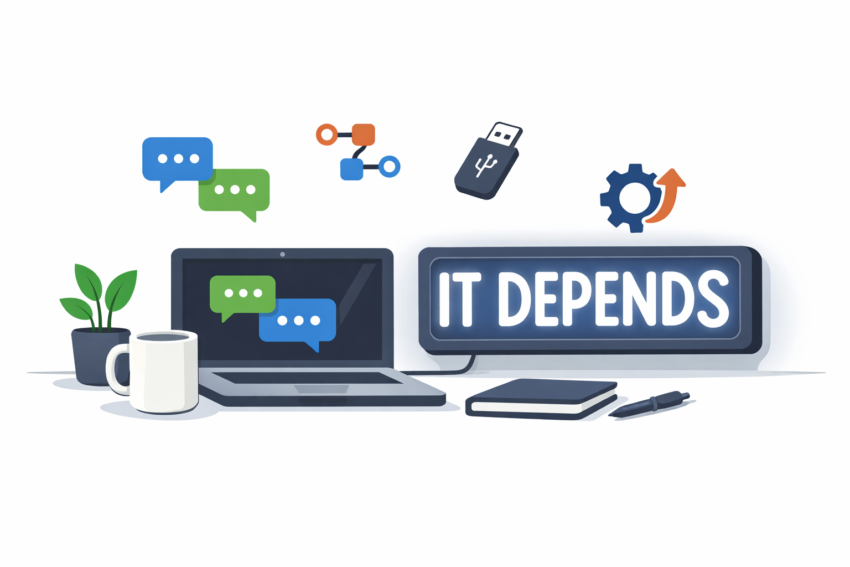
The Wired In sign (~$75) is a customisable LED sign that lights up when you’re focusing. It connects to your computer via USB, syncs with apps via IFTTT, and can display custom text.
The obvious move: get one laser-etched with “IT DEPENDS” and set it to light up automatically whenever someone sends you a message containing the word “SEO.”
Alternatively: wire it to your calendar so it displays “ON A CALL” during meetings, “IN THE ZONE” during deep work, and “SEND HELP” during Q4.
Cyborg upgrade: Passive-aggressive boundary-setting, automated.
The Voice Mask: Private Calls in Open Offices
Ever had a confidential client call in a crowded co-working space?
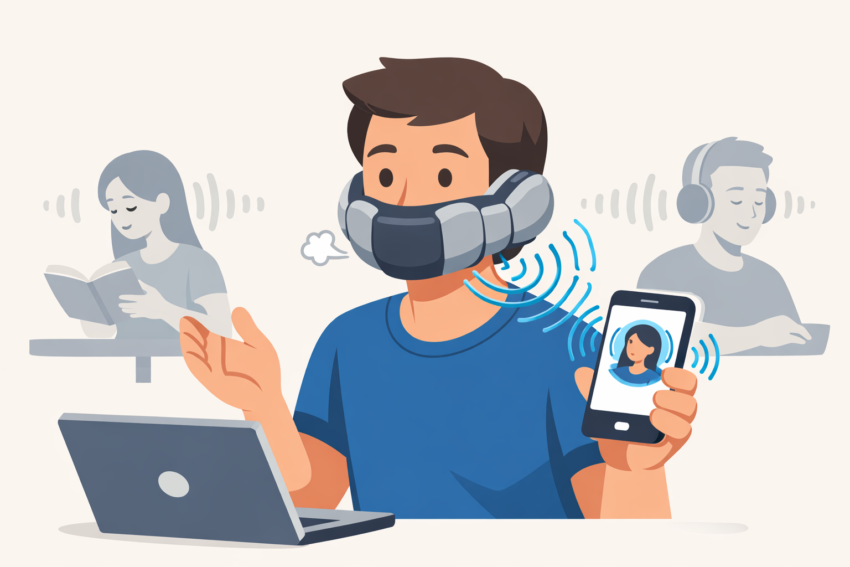
The Hushme (~$200) is a Bluetooth muzzle for your face. Snap this padded device around your mouth and it muffles your speech while you talk into a built-in microphone. People nearby hear nothing (or at most, a Darth Vader-esque murmur). The person on the call hears you clearly.
Unveiled at CES by a Ukrainian inventor, it’s billed as the world’s first voice mask for mobile phones. It absolutely makes you look like Bane from Batman.
Small price to pay for confidentiality.
Cyborg upgrade: A mute button for your face. Privacy at the cost of looking like a supervillain.
The Neural Interface: Brain-Sensing Headphones
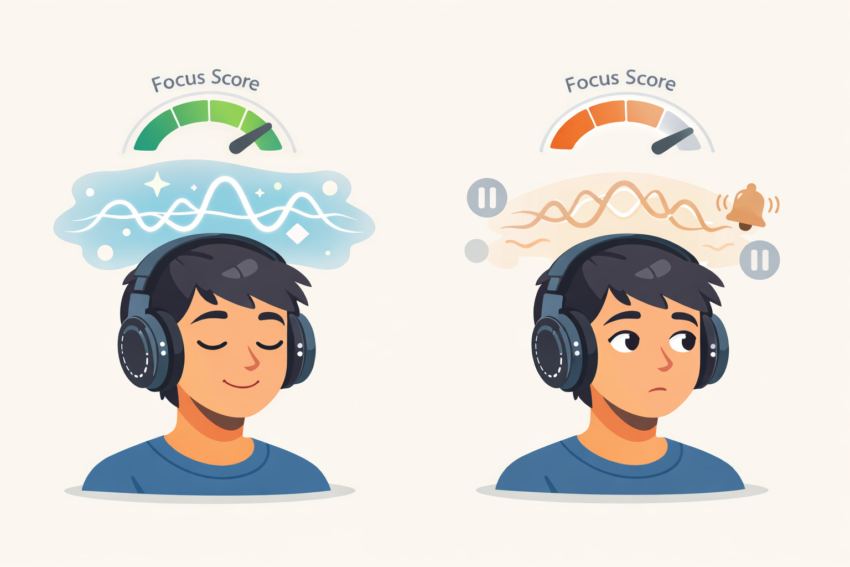
Forget Spotify’s “Focus” playlist. The Neurable MW75 Neuro ($699) are over-ear headphones with EEG sensors built into the ear pads. They track beta waves—the brain activity associated with concentration—to give you a real-time “Focus Score.”
When your attention drifts, they nudge you to take a brain break. When you’re locked in, they stay quiet.
For the truly committed: the Muse 2 brain-sensing headband ($250) plays nature sounds that respond to your mental state. Calm brain? Birds chirping. Distracted brain? Thunderstorms. It’s Pavlovian conditioning via bird sounds.
Fun fact: Chinese train conductors on the Beijing-Shanghai line (the busiest high-speed rail in the world) already wear brain sensors throughout their shifts. Employees with “less than stellar brain metrics” get sent home.
Cyborg upgrade: Your distractions are now data. Procrastination has metrics.
The Brain Zapper: 20 Minutes to Instant Focus
So you’ve got brain-sensing headphones that track your focus. But what if you could force it?
The LIFTiD tDCS Headset (~$159) sends a gentle electric current through your prefrontal cortex via electrodes stuck to your forehead. The promise: 20 minutes of brain stimulation replaces your morning coffee.
tDCS (transcranial direct current stimulation) has actual research behind it. Studies show it can boost cognitive performance in some scenarios.
But let’s be real: strapping a mini car battery to your skull each morning is a lifestyle choice.
Cyborg upgrade: Overclock your brain like a CPU. Side effects may include feeling superior to coffee drinkers.
The Focus Helmet: Full Sensory Deprivation at Your Desk
The Helmfon is a giant isolation helmet from Ukrainian design company Hochu Rayu. It looks like something from a 1970s sci-fi film about a dystopian office future. Which is just called “2026.”
Made from glass fibre and foamed polyethylene, it blocks all sound and visual distraction. Built-in speakers, microphone, and a slot for your phone mean you can take Zoom calls while looking like you’re preparing for lunar re-entry.
But the Helmfon is nothing new. The original focus helmet was The Isolator, invented in 1925 by Hugo Gernsback. Made of solid wood, lined with cork, covered with felt. The eyeholes were painted black with a thin line scraped out so you could only see the paper directly in front of you.
When testers kept falling asleep inside it, Gernsback added an oxygen tank.
Cyborg upgrade: Your coworkers will be too afraid to interrupt you. Problem solved.
The Memory Prosthetic: AI Recording Devices
Your second brain is now a literal device you pin to your shirt.
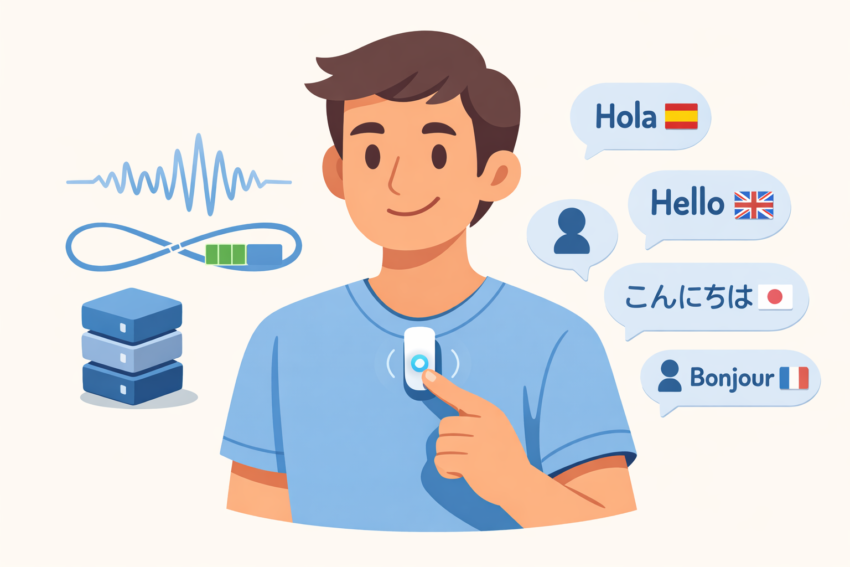
The Plaud NotePin S ($169) is a pill-sized AI recorder you wear as a magnetic pin, clip, wristband, or necklace. One press to record. 20 hours continuous recording. 64GB local storage. Transcription in 112 languages with speaker identification.
The magic is in the AI processing: 10,000+ summary templates for different roles, mind maps, and a “highlight” button that signals to the AI that whatever was just said matters more. It runs on GPT-5.2, Claude Sonnet 4.5, and Gemini 3 Pro.
Ask your voice recorder questions about your meetings. “What action items did we agree to?” “Did anyone object to the timeline?” “What did Sarah actually say about the budget?”
For heavier users, the Plaud Note Pro ($179) is credit card-sized, fits in your wallet, captures audio from up to 16.4 feet, runs for 50 hours, and records both sides of phone calls.
Cyborg upgrade: Perfect recall. Your memory is now cloud-hosted and searchable.
The Breathing Tracker: Biometrics for Your Brain State
FOCI 2 (~$89) clips to your waistband and monitors your breathing patterns to determine your cognitive state: focused, distracted, fatigued, or stressed.
It vibrates when you lose focus. The app shows you exactly when your attention wandered and for how long. It’s like RescueTime, but for your nervous system.
The marketing copy promises to help you “achieve flow state on demand.” Which is either revolutionary or horrifying, depending on how you feel about quantifying consciousness.
Cyborg upgrade: Your nervous system now has a dashboard.
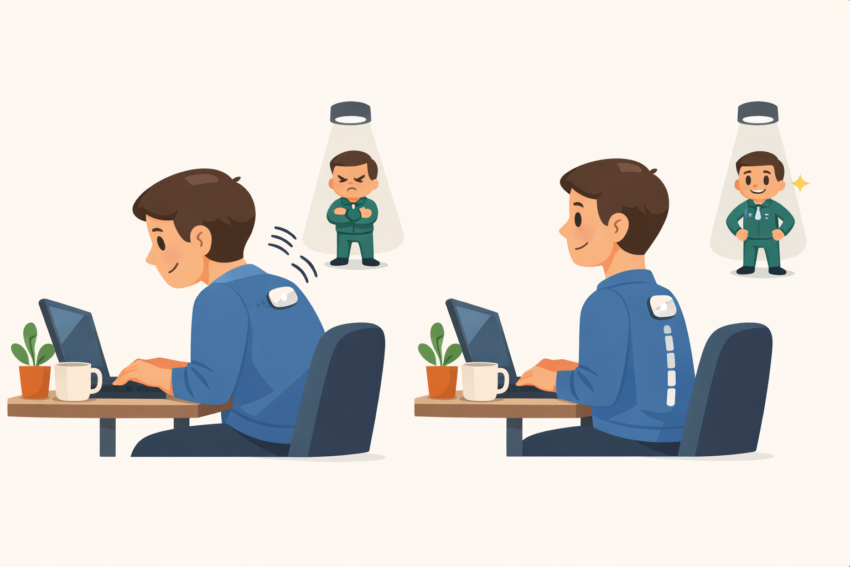
The Posture Police: Vibrations Every Time You Slouch
The Upright GO 2 ($100) sticks to your upper back and vibrates every time you slouch. It’s like having a very judgmental physiotherapist living on your spine.
The app tracks your posture over time. You can see charts. You can set goals. You can share your “posture score” on LinkedIn if you’ve completely lost the plot.
95% of users report improved posture within two weeks. Which means 5% slouch defiantly while their device buzzes futilely against their rounded shoulders.
Cyborg upgrade: Constant low-grade harassment about your sitting position.
The Personal Thermostat: Climate Control for One
Ever battle coworkers over the office thermostat? The cyborg exec does not have time to be either sweating or shivering.
The Embr Wave 2 ($299) is a wristband that tricks your brain into feeling cooler or warmer by sending precise temperature waves to the sensitive skin on your wrist.
Too cold in the AC blast? Tap for a warm pulse. Getting drowsy in a stuffy meeting room? Hit the cool setting and wake up.
It doesn’t actually change your core body temp or the room temperature—it just changes your perception of temperature. Basically wearable air-conditioning that only you can feel.
Cyborg upgrade: Your own microclimate on demand. Thermostat wars: ended.

The Smart Water Bottle: Because Dehydration Has a Dashboard
The HidrateSpark PRO ($70) glows to remind you to drink water. The bottom literally lights up like a UFO landing pad.
It tracks every sip via Bluetooth and syncs with Apple Health, Fitbit, and Garmin. It calculates your personal hydration goal based on your age, weight, activity level, local weather, and elevation.
For extra accountability, the WaterH Boost ($80) has an LED touch display built into the bottle itself showing your intake percentage in real time.
Nothing says “late-stage capitalism” like gamifying basic biological functions.
Cyborg upgrade: You can now disappoint an app by not drinking enough water. Hydration has KPIs.
The Smell of Success: Automated Aromatherapy
What about hacking the one sense we usually ignore at work—smell?
In one study, employees made 54% fewer typing errors in a lemon-scented office. Some Japanese offices actually pump citrus fragrance through the HVAC in the afternoons to perk everyone up.
The Moodo Smart Diffuser (~$150) lets you load up to four scent capsules and blend them via an app. It connects with IFTTT, so you can automate your “scent schedule.”
Deep focus session at 9 AM? Blast some peppermint or rosemary. Post-lunch slump at 2 PM? Citrus burst. High-stress client call? A hint of lavender to tone down the cortisol.
Your office might smell like a Yankee Candle factory on steroids. That’s the price of peak performance.
Cyborg upgrade: Olfactory optimisation. Your nose becomes an alarm system, mood regulator, and KPI booster all in one.
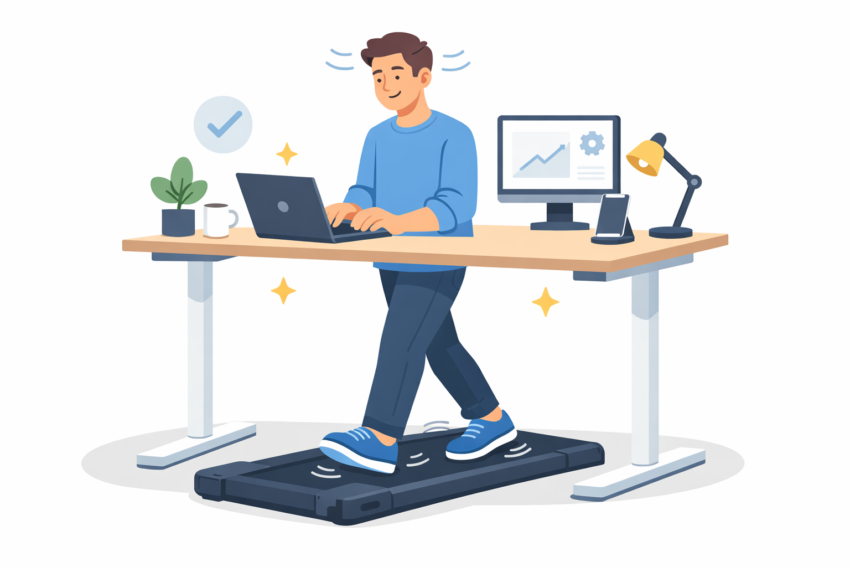
The Walking Pad: Exercise Without Leaving Your Desk
Under-desk treadmills have gone mainstream. The WalkingPad ($250-400) slides under your standing desk and lets you walk at 2-4 mph while working.
Studies show people who use treadmill desks report improved energy, better focus, and boosted mood. Also: they walk 5-10 km per day without leaving their home office.
Most are quiet enough to use during video calls. Your colleagues will never know you’re walking to nowhere while discussing Q3 projections.
Cyborg upgrade: Movement without destination. Exercise as ambient background process.
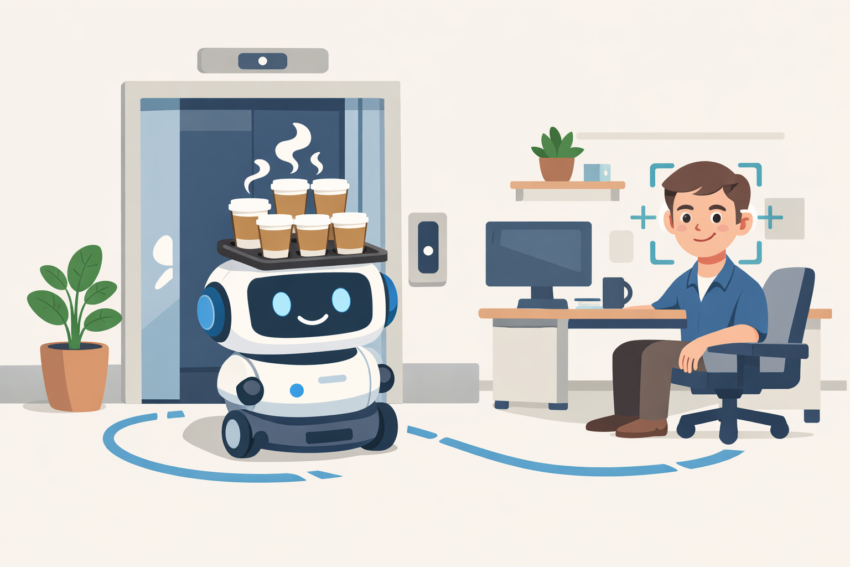
The Caffeine Delivery Robot: Because Walking to the Kitchen is Wasted Time
Hyundai’s DAL-e Delivery robot can carry 16 cups of coffee, navigate complex office environments, take elevators by itself, and use facial recognition to find you.
Price? Undisclosed, but if you have to ask, your agency isn’t ready.
For mortals, the COFE+ Robot Coffee Bar starts around $30,000-50,000 and makes 50+ drink varieties with a four-axis robotic arm. It runs 24/7, 365 days a year. The company claims one unit ran for over 1,000 consecutive days without human intervention.
Cyborg upgrade: Your relationship with coffee becomes fully automated. You don’t go to the caffeine. The caffeine comes to you.
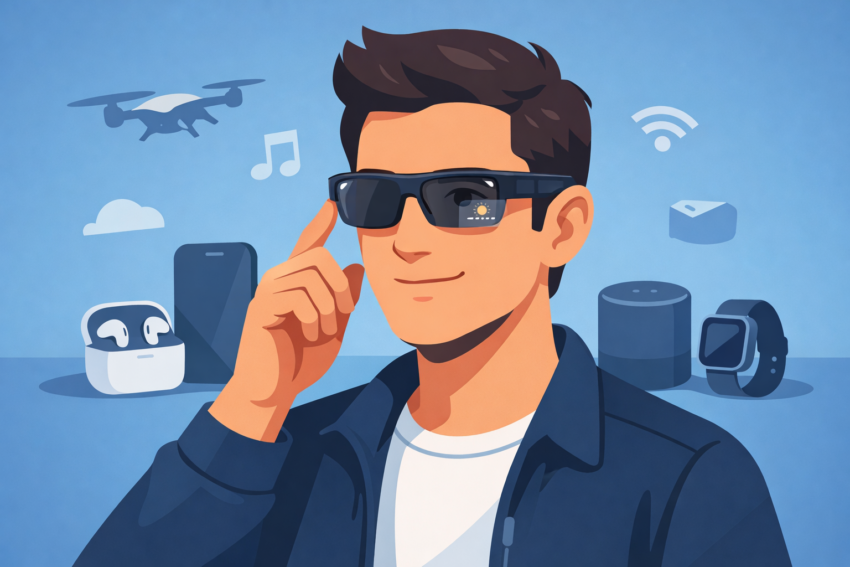
The Eyes: AR Glasses for Omniscient Networking
Imagine walking into a client meeting and seeing each attendee’s name, title, and recent LinkedIn posts floating next to their head. No more “sorry, remind me of your name again.”
The Ray-Ban Meta Smart Glasses start at $379 for the latest Gen 2 model with 8 hours of battery life, 3K video capture, and full Meta AI integration. Say “Hey Meta, what does this sign say?” and it translates in 14 languages.
But that’s entry-level cyborg.
The Meta Ray-Ban Display ($799) launched in September 2025 with an actual display built into the right lens. It comes bundled with the Meta Neural Band—a wristband that uses electromyography (sEMG) to read muscle signals from your wrist. Pinch your fingers to scroll through messages without anyone noticing.
Turn-by-turn walking navigation. Real-time translation captions. Live video calls where your contact sees what you see. All projected onto a 600×600 pixel display that appears just below your line of sight.
Cyborg upgrade: Augmented reality for social situations. Networking becomes a video game with floating name tags.
The Ears: Translation Earbuds and Neural Interfaces
Timekettle translation earbuds (~$300) offer real-time translation for 40+ languages. Negotiating with a team in Tokyo? The AI whispers the translation in your ear as they speak.
But the real cyborg move is the Naqi Neural Earbuds, which won Best of Innovation at CES 2026. They read brainwaves and facial muscle signals to execute commands.
Clench your jaw twice: slides advance. Glance left quickly: lights dim. Concentrate: cursor moves.
This is Neuralink without the brain surgery. Early demos showed users turning lamps on and off just by thinking about it.
Cyborg upgrade: Telepathy, basically. Your thoughts directly control your environment.

The Legs: Exoskeletons for Endless Endurance
Hypershell (~$600) makes a lightweight consumer exoskeleton originally designed for hikers who want to walk farther with less effort. Works just as well for marketers who refuse to sit down at trade shows.
The suit takes the strain off your legs and hips. You can walk and stand indefinitely without back pain. At CES 2026, they let attendees wear them around the show floor. People were literally becoming cyborgs on the convention centre carpet.
There are also “wearable chair” exoskeletons like the Archelis that let you sit while standing by locking in place when you bend your knees. Look perfectly normal at a networking event. Secretly resting. Nobody knows.
Cyborg upgrade: Physical limits are now optional. Your meat suit has mechanical assistance.
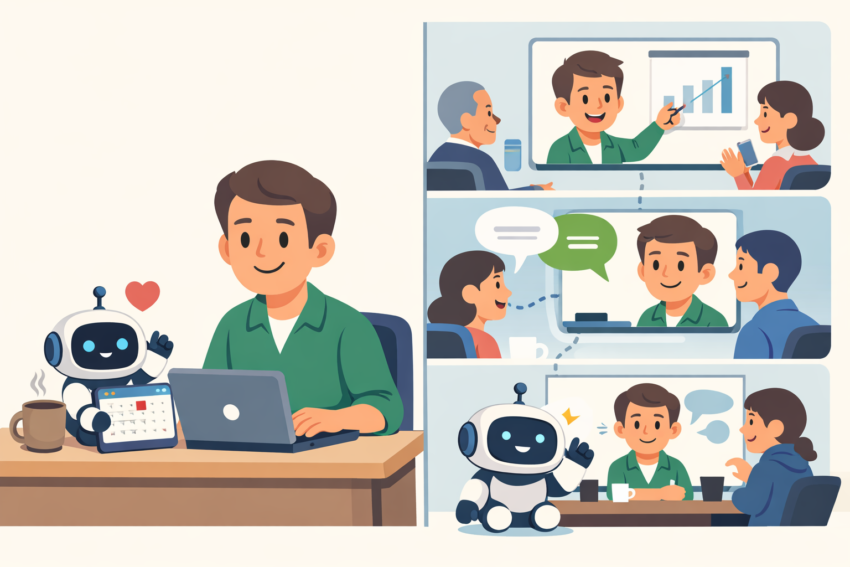
The Clone Army: AI Avatars That Attend Meetings for You
Why be in one place when your AI clone can cover the other three meetings?
HeyGen and similar platforms are building AI avatars trained on your knowledge and speaking style. They attend briefings, handle onboarding, and report back with transcripts. Clients might not notice the difference.
For physical presence, desktop robots like Loona (~$500) manage calendars, translate languages, and provide moral support before big pitches. Small, cute, weirdly effective.
Cyborg upgrade: Exist in multiple places simultaneously. Delegate to your digital army.
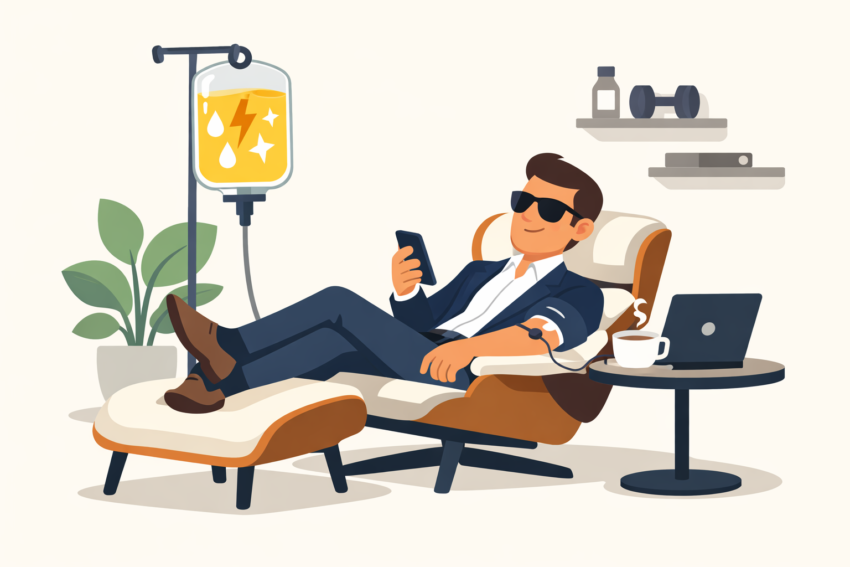
The IV Drip: Bypass Your Digestive System Entirely
Why eat vitamins when you can mainline them?
The DRIPBaR, Hydrate IV Bar, and NutriDrip offer IV vitamin infusions for the busy executive who considers digestion a bottleneck.
Prices range from $100-400 per session. Menu items include:
- “The Executive” – B vitamins, magnesium, and amino acids for energy
- “NAD+ Infusion” – supposedly for “cellular regeneration” and “anti-aging”
- “Myers Cocktail” – the OG vitamin drip, named after the doctor who invented it
Some offer in-home concierge service. A nurse comes to your house or office and hooks you up while you take calls. This is a real thing that real people pay for.
Cyborg upgrade: Your lunch break is now medicalised. Productivity is administered intravenously.
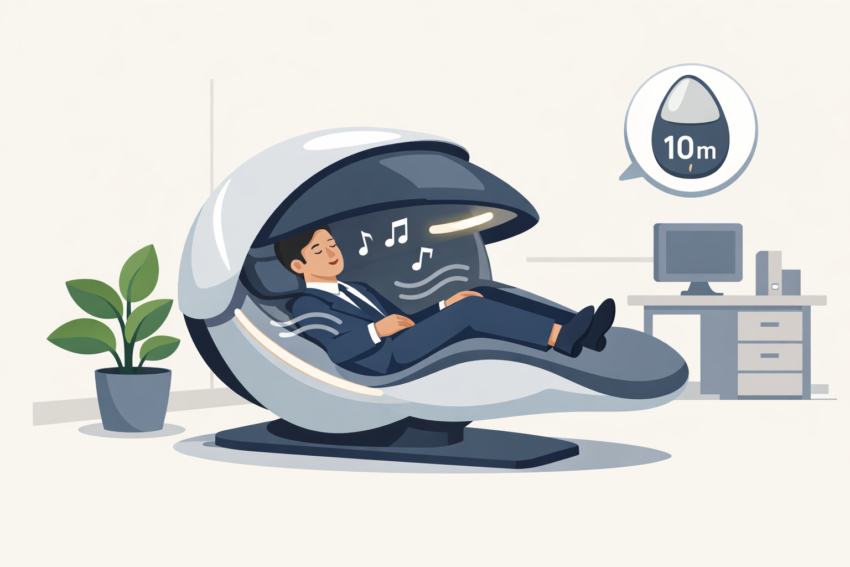
The Nap Pod: $12,985 to Sleep at Work (Officially)
The MetroNaps EnergyPod ($12,985) is a curved recliner designed specifically for power napping in offices.
It features a privacy visor, zero-gravity positioning, specially composed sleep music, and a “gentle wake sequence” of programmed lights and vibrations. There’s a 20-minute timer because sleeping any longer would be unprofessional.
Google has them. Zappos has them. Arianna Huffington has them. She said: “When we first started the nap rooms, people were reluctant to use them. Now, we need to open a third one.”
For cheaper options, Podtime sleeping pods start around $2,000-3,000 and look like human-sized capsules from a Japanese hotel.
Cyborg upgrade: Scheduled unconsciousness, optimised for productivity. Your dreams are now a work expense.
The ROI Table (Satirical, But Not Really)
| Device | What It Does | Efficiency Gain | Payback Period |
|---|---|---|---|
| Pavlok 3 ($219) | Shocks you for bad habits | -100% social media scrolling | Immediate |
| Plaud NotePin S ($169) | AI meeting recorder | -4 hrs/week note-taking | 2 weeks |
| Neurable MW75 ($699) | EEG focus tracking | +23% focus time* | 6 weeks |
| Upright GO 2 ($100) | Posture buzzer | -50% back pain complaints | 1 month |
| Embr Wave 2 ($299) | Personal thermostat | +100% thermostat war victories | Immediate |
| HidrateSpark ($70) | Glowing water bottle | Hydration has KPIs now | Never |
| WalkingPad ($300) | Under-desk treadmill | +5km/day without leaving desk | 3 months |
| Meta Ray-Ban Display ($799) | AR glasses + neural band | +15% meeting efficiency | 3 months |
| MetroNaps EnergyPod ($12,985) | 20-minute power nap station | +34% afternoon alertness | 18 months |
| Hypershell Exo ($600) | Leg exoskeleton | Unlimited trade show endurance | 1 event |
| IV Drip Subscription ($500/mo) | Cognitive enhancement infusions | +10% mental clarity** | Never |
| The Isolator Helmet (DIY) | 1925-style helmet with O2 tank | +100% focus (or unconsciousness) | Immediate |
*Company claim, no independent clinical trials.
**Placebo effect is real, and it works.
The Budget Table
| Tier | Total Budget | Core Loadout |
|---|---|---|
| Budget Build | ~$1,000 | Plaud NotePin S ($169) + Pavlok 3 ($219) + Upright GO 2 ($100) + HidrateSpark ($70) + FOCI 2 ($89) + WalkingPad ($300) |
| Mid-Range Cyborg | ~$5,000 | All above + Ray-Ban Meta glasses ($379) + Neurable headphones ($699) + Embr Wave 2 ($299) + Moodo diffuser ($150) + Wired In sign ($75) |
| Full Enhancement | ~$20,000 | All above + Meta Ray-Ban Display ($799) + Hypershell exo ($600) + EnergyPod ($12,985) + IV subscription (3 months) |
| God Mode | POA | All above + Hyundai DAL-e coffee robot + AI clone service + neural interface earbuds + private focus pod |
The Actual Advice
Look, we’re a digital marketing agency. We know most of this is absurd.
But here’s what’s not absurd: the productivity gap between people who understand AI tooling and those who don’t is widening every quarter. The marketers who learn to integrate these tools—the recording assistants, the AI research engines, the automated summaries—are operating with an unfair advantage.
You don’t need a shock collar. You probably don’t need brain-sensing headphones. But if you’re still manually transcribing calls, if you’re still switching between 14 browser tabs to find a statistic, if you’re still spending four hours on decks that AI could draft in four minutes—you’re leaving time on the table.
The cyborg future isn’t one big upgrade. It’s a hundred small ones, compounded.
Start with the cheap stuff. See what sticks.
And if you want to talk about how AI can actually improve your marketing outcomes—without the electric shocks—get in touch.
Click Click Media
No vanity metrics. Just results.
P.S. We are not responsible if you actually wire your CRM to a shock collar. But please send photos if you do.
Are all these products actually real?
Yes. Every single product mentioned in this post exists and can be purchased today. The Pavlok shock wristband, Plaud AI recorder, Neurable brain-sensing headphones, MetroNaps EnergyPod, Hypershell exoskeleton—all real. All linked to their official websites. We didn’t make anything up. Reality is absurd enough.
What’s the cheapest way to start “optimising the marketer”?
Start with the Budget Build (~$1,000): Plaud NotePin S for AI meeting transcription, Pavlok for habit accountability, Upright GO for posture, HidrateSpark for hydration tracking, FOCI for focus monitoring, and a WalkingPad for movement. The Plaud recorder alone will save you hours per week on meeting notes.
Is Click Click Media actually recommending we buy all this?
No. This post is satirical—but the underlying point is serious. The productivity gap between AI-enabled marketers and everyone else is real and widening. You don’t need exoskeletons or IV drips. But you probably do need better AI tools integrated into your workflow. Start with the practical stuff (AI note-taking, research assistants) and leave the shock collars to the masochists.
What’s the one tool from this list that’s actually worth buying?
An AI meeting recorder like the Plaud NotePin S ($169). It transcribes meetings in 112 languages, identifies speakers, generates summaries, and lets you search your conversations. The ROI is immediate and measurable: hours saved on note-taking every single week. Everything else on this list is optional chaos.
Why did you write this post?
Because we’re all optimising marketing with AI but we’ve forgotten to optimise the marketer. The hustle culture that demands superhuman productivity is real—and there’s now an entire industry selling gadgets to help you achieve it. We wanted to catalogue how absurd it’s gotten while making a genuine point: the gap between AI-enabled work and everyone else is widening fast.