
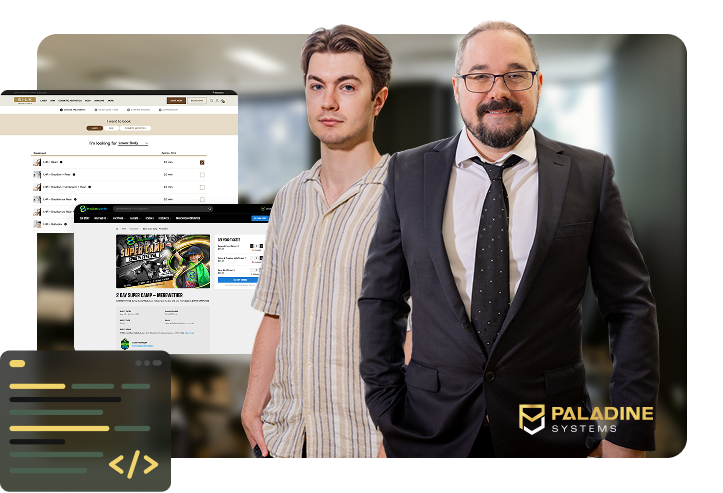
Custom Booking System Development
Tired of fragmented user journeys and booking systems that fall over? We build the platforms off-the-shelf cannot.
- 2 million bookings per year for Wesfarmers Health, powered by our Nexus middleware on Zenoti
- 15,000+ bookings per school holiday period for Motiv8sports
- Custom commerce-plus-booking workflows that off-the-shelf platforms break under











When "add a booking system" turns out to be the hardest job
Every booking business starts the same way. A Calendly link, a WooCommerce Bookings plugin, a SimplyBook subscription, a free trial of something. That works for a while. It keeps working until the business grows past it, and then "the booking system" suddenly turns out to be the hardest engineering problem in the company.
What "past it" usually means is that booking is no longer a single action. The customer is buying a treatment package on the website, while reserving a slot in the clinical system, while paying through the cart, while expecting confirmation in their inbox before they close the tab. Off-the-shelf platforms do one of those well. Sometimes two. Almost never all four. The hard part of a booking system is everything that happens after the customer clicks confirm.
We have built this layer many times over. For Wesfarmers Health, our Nexus middleware powers 2 million bookings per year, pairing beautiful customer-facing UX with the robust clinic management capabilities of Zenoti underneath. For Motiv8sports, the Paladine-built platform processes 15,000+ bookings per school holiday period across a national franchise. Different industries, same underlying engineering problem: commerce, booking, payment, and operations systems being asked to act in concert without dropping a transaction.
We will also tell you when off-the-shelf is the right answer. A small business with simple booking needs probably should not be paying for a custom build. Calendly with a Zapier chain to your CRM is sometimes the correct architecture. We turn down more booking projects than we take. Below a certain complexity threshold, custom is overkill, and we will say so directly.
Who needs a custom booking platform
Custom is the right call when off-the-shelf platforms force the business to change how it works rather than the platform adapting to the operation.


Why work with us on bookings
Plenty of agencies will tell you they build custom booking systems. Most have shipped a Calendly clone. We have shipped the orchestration layer that runs millions of bookings a year, which is a different problem.
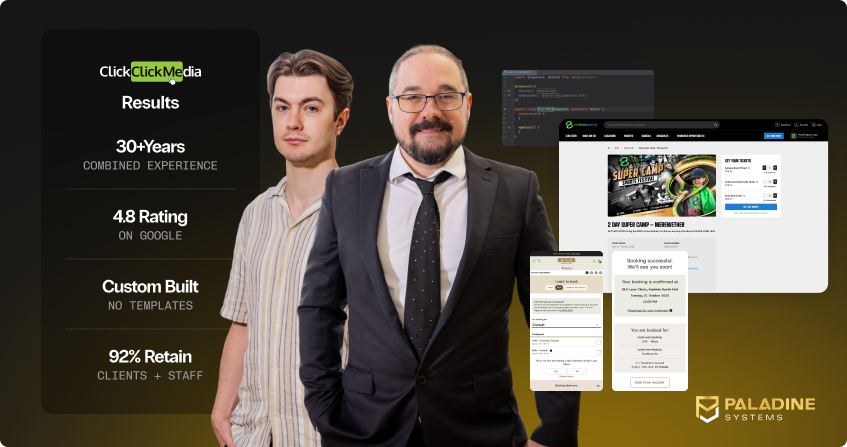
Real volume, real proof
Wesfarmers Health runs 2 million bookings per year on a stack we built: beautiful front-end UX from our team, our Nexus middleware orchestrating commerce-plus-booking, and Zenoti as the robust clinic management software underneath. Motiv8sports processes 15,000+ bookings per school holiday period through a Paladine-built custom platform across 31 franchise locations. These are the volumes that demonstrate whether the architecture actually holds up. Most "custom booking" portfolios are appointment scheduling for a single therapist. Ours are clinical networks and franchise systems running at national scale.
Commerce-plus-booking is what we do
The hard part of modern booking is rarely "show available slots". It is what happens when a customer is buying a product, reserving a service slot, and paying for both in one cart transaction. The website needs to reserve the slot during checkout. The booking platform needs to confirm availability before payment is captured. The payment needs to be atomic with the booking. The slot needs to release cleanly if the cart is abandoned. Get any step wrong and you have either double-bookings, lost payments, or angry customers turning up at a clinic that has no record of them. This is the engineering problem we have spent years solving.
Nexus middleware: orchestration so the systems can talk
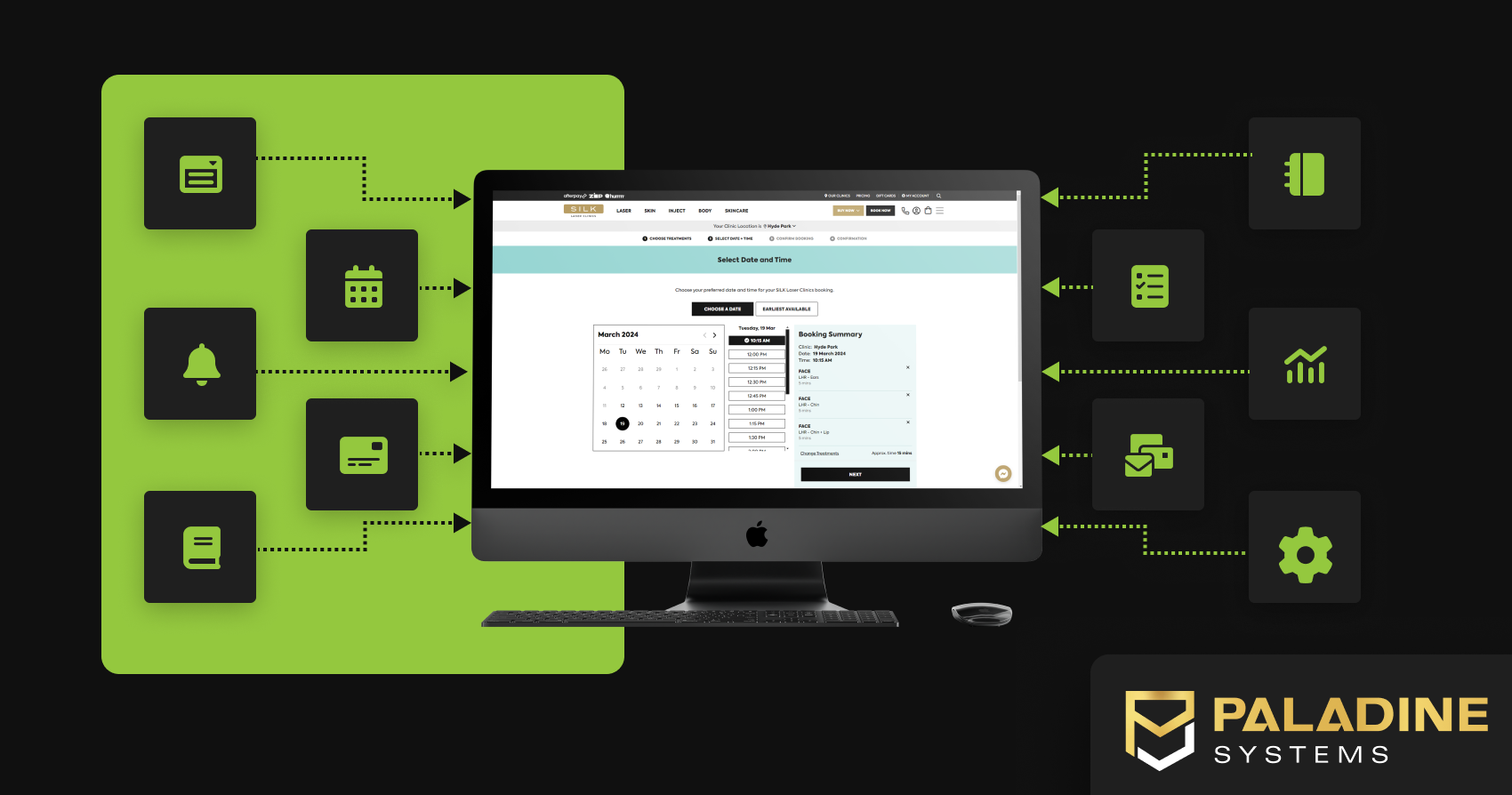
Nexus is our middleware framework for commerce-plus-booking workflows. It sits between the website (where the customer is choosing), the booking platform (where the slot lives), the payment gateway (where the money moves), and the clinical or operations system (where the team works). When a customer adds an appointment to their cart and checks out, Nexus reserves the slot, processes the payment, confirms the booking, syncs to the operational system, and emails the customer, all in the right order with rollback at any step. Most clients never need to know Nexus is there. They just notice that bookings work, even at peak.
Engineering, not vendor wrappers
Custom booking is built by Paladine Systems, our sister company dedicated to custom software development. Laravel, Node, real databases, real architecture, real test coverage. The booking layer is built around your operational reality, not a thin custom skin over a SaaS booking tool. You own the code. The repo lives in your organisation from day one. No per-booking fees, no per-user fees, no vendor dependency that escalates as you grow. Bookings usually live inside custom CRM systems we build on the same stack.
Honest about when not to build
If you have a single location, simple bookings, and modest volume, a configured SaaS platform with a Zapier chain into your CRM is probably the correct architecture. We will tell you that directly. We turn down more booking builds than we take. The point of a custom booking system is to handle complexity off-the-shelf platforms cannot, not to be a status symbol or a margin grab.
What we build
Configured WordPress booking flows
WooCommerce Bookings or Amelia, configured properly around your real workflow. For single-location businesses with moderate complexity, this is the pragmatic answer. Built on WordPress with the booking plugin doing the heavy lifting and a thin layer of custom logic where it actually adds value.
Mid-complexity custom WordPress booking
Custom post types, ACF-driven admin, custom booking logic, payment integration, branded customer journey. Still WordPress, but significantly customised because the standard plugin model breaks at this complexity level. The right answer when WordPress is the operational reality but the booking logic is not generic.
Full custom platforms (Paladine)
Laravel or Node back-end, custom database schema, multi-tenant architecture if needed, integration with payment gateways, CRMs, calendars, clinical platforms, and your other systems. The Motiv8sports-level work. When the business is genuinely too complex for any plugin or SaaS to handle, this is the level the engagement steps up to.
Integration projects (Zenoti, Mindbody, custom)
Sometimes the booking platform is fine and the problem is that nothing connects to it properly. This is the Wesfarmers Health pattern: Zenoti running the bookings, the website running the commerce, and the integration layer (Nexus) being where the real work happens. We build the integration layer that lets your existing booking platform participate in commerce, marketing, payment, and operations workflows it was never designed for. The system you already have, finally connected to the rest of your business.
How we build it
1. Discovery and workflow mapping
What is the actual booking workflow? Who books, for whom, under what rules? What happens before, during, and after the booking? We map the full operational workflow, not just the booking form, because the hard part of booking systems is everything that happens after the customer clicks confirm. Discovery typically runs 1-2 weeks and produces a working spec, not a slide deck.
2. Buy-vs-build analysis
Is there a SaaS that fits? Is there a WordPress plugin that gets you 80% of the way? We will tell you if building is overkill. If configured SaaS covers most of the requirement, we point you to it and scope the integration work separately. This is also where most of our project rejections happen, because the honest answer is that a custom build is not justified.
3. Specification, architecture, sprint-based build
Data model, integrations, admin UX, customer journey, scaling assumptions, all documented before code is written. Two-week sprints with reviewable milestones. No "we will show you in three months" mystery phase. Staging is live from week two of build. Integrations connected in staging against real data. Load-tested at projected peak before launch.
4. Test, migrate, launch, support
Data migration from existing systems with parallel running where possible, live testing before cutover, training for your team, and ongoing support and maintenance. Businesses change. Custom systems evolve with them. Month-to-month support after launch with no lock-in. The engineer who built it is the engineer who supports it. Deployed platforms run on our managed hosting in Australia.
How custom booking is priced
SaaS platforms have made custom look expensive by comparison, and sometimes the comparison is fair. Ours is scoped per business based on workflow complexity, the systems involved, and your peak volume. Not pulled from a tier card.
It is more affordable than you think. Most businesses approach custom booking expecting enterprise-platform pricing, and most pay less than they expected. Configured WordPress engagements come in lower than buyers typically assume. Full Paladine platforms cost what real engineering work costs. Either way, the engagement is scoped specifically against your workflow, your systems, and your peak volume, not a fixed package with vendor margin baked in.
We run booking platforms for Wesfarmers Health (2 million bookings a year through Nexus middleware on Zenoti) and Motiv8sports (15,000+ bookings in a school holiday), and we have also told single-location businesses that Calendly configured properly would serve them better than any custom build we could quote. Below the right complexity threshold, custom is overkill. We will tell you that directly, before scoping anything.
The engineer who scopes your booking system is the engineer building it. We care about the system not falling over at peak, which is why we load-test on real data before launch. Call us. We will tell you honestly whether your workflow justifies custom, and what the engagement actually costs for your specific systems and volume.
All engagements scoped per business based on workflow complexity, systems involved, and peak volume. No lock-in contracts. Month-to-month support post-launch.
What is included
Every custom booking engagement covers the foundations for a platform that handles real volume without breaking, plus the integration work that makes it part of your operation rather than a standalone tool.
- Discovery and workflow mapping: full operational mapping, not just the booking form, before any code is written.
- Buy-vs-build analysis: honest recommendation on whether SaaS would serve you better than custom, before scoping anything.
- Architecture and specification: data model, integration map, scaling assumptions, admin UX, customer journey, all documented before build.
- Sprint-based build: two-week sprints with reviewable milestones, staging live from week two, no mystery phase.
- Integration layer: payment gateways, CRM, calendars, SMS, clinical platforms (Zenoti, Mindbody), or custom systems, connected through Nexus where the project warrants.
- Load-testing at projected peak: tested against real data volume before launch, because the system needs to hold up at peak, not average.
- Data migration with parallel running: from Calendly, Acuity, SimplyBook, or custom databases, with audit trails and zero booking loss.
- Full code ownership: repos in your organisation from day one, no per-booking fees, no vendor lock-in, no exit fees.
Add-ons: mobile app development, multi-location rollouts, membership management, AI-powered scheduling optimisation, waitlist management, custom reporting dashboards.
Latest reviews
Last updated: August 1, 2026
Meet the booking systems team
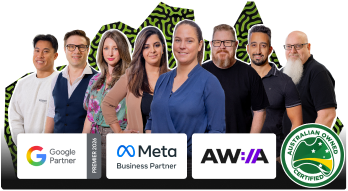
Your booking platform is built by Paladine engineers who have shipped systems running 2 million bookings per year through our Nexus middleware on Zenoti, and 15,000+ bookings per holiday across franchise networks. All in-house from our Norwest office.
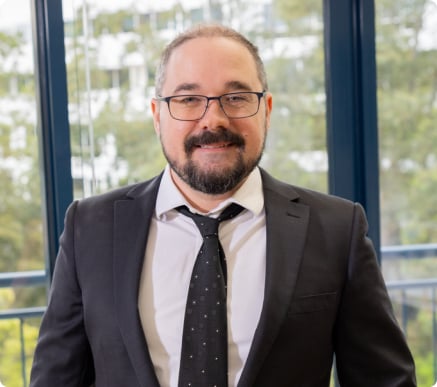
Nicolas Wendell
Managing Director | Paladine Systems
Nicolas has been building custom software since leaving school, bringing a lifelong passion for development to every project. Before founding Paladine Systems, he ran his own video game studio and earned multiple accolades in network engineering. Known as a driving force in the custom software world, Nicolas combines deep technical expertise with visionary leadership - guiding Paladine in delivering innovative, enterprise-grade solutions.
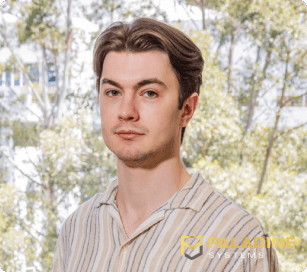
Mark Morcom
Full-Stack Software Developer
Mark is a young prodigy in software development, bringing 5 years of experience to Paladine. Equally at home on the front end and back end, he crafts clean, scalable solutions that power complex applications. Mark’s sharp problem-solving skills and passion for innovation make him a driving force behind Paladine’s most advanced projects.

Jerry Zhang
Project Manager | Design and UX Specialist
For the past 4 years at Click Click Media, Jerry has been dedicated to crafting seamless user experiences. A qualified UX professional, he maps user journeys, collects insights through surveys, and engages stakeholders to uncover friction points. If a form field doesn’t earn its keep, Jerry cuts it - streamlining experiences to be intuitive, efficient, and conversion-focused.
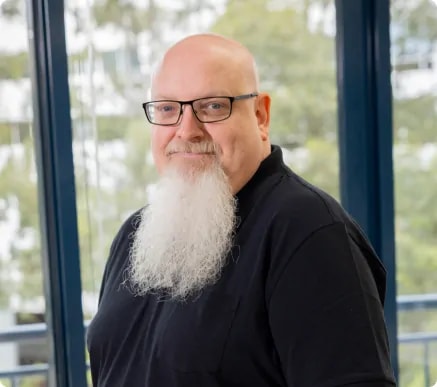
Rik Allison
Senior Manager | Website Projects
With 8 years at Click Click Media, Rik is known for getting complex builds live without the drama - scoping clean, shipping clean, and keeping scope creep firmly in a jar. A veteran of major IT infrastructure initiatives, including the Opal card rollout, Rik brings rock-solid discipline and experience to every project. His steady hand ensures websites are delivered on time, on budget, and to the highest standards.
Custom booking systems FAQs
Common questions from businesses considering a custom booking platform or integration project.
When does a custom booking system actually make sense?
When off-the-shelf platforms force you to change how you work. Common triggers include commerce-plus-booking workflows (customers buying products plus reserving slots in one cart), multi-location scheduling with different rules per site, real-time integration with clinical or operational systems (Zenoti, Mindbody, custom), tiered pricing or membership logic, and seasonal peaks where SaaS platforms fall over.
If you are paying for three plugins to patch one gap, or your team does manual workarounds daily, custom usually pays for itself faster than continuing to fight the wrong tool. Below that complexity threshold, we will tell you to stay with SaaS.
What about buying and booking together (cart with appointment)?
This is the workflow most off-the-shelf platforms break under. The customer is buying a product, reserving a slot, and paying for both atomically in one cart transaction. The website needs to reserve the slot during checkout, the booking platform needs to confirm availability before payment is captured, the payment needs to be atomic with the booking, and the slot needs to release cleanly if the cart is abandoned.
This is the engineering problem our middleware framework, Nexus, is built specifically for. It runs across Wesfarmers Health (2 million bookings per year through Nexus middleware on Zenoti) and similar commerce-plus-booking workflows.
What is Nexus and do I need it?
Nexus is our middleware framework for orchestrating commerce, booking, payment, and operations systems. It sits between the website, the booking platform, the payment gateway, and the clinical or operational system, so they can move slots, money, and confirmations atomically with rollback at any step.
You need Nexus when your booking flow involves more than one system. You probably do not need it if you have a single-system booking workflow with no commerce side. Most clients never need to know Nexus is there. They just notice that bookings work at peak.
Can you integrate with Zenoti, Mindbody, or our existing booking platform?
Yes, this is one of the most common engagement types we run. Wesfarmers Health runs 2 million bookings per year through our Nexus middleware, pairing beautiful customer-facing UX with Zenoti's robust clinic management software underneath. We have also integrated with Mindbody, custom Laravel and Node booking back-ends, legacy databases, and proprietary clinical systems.
Integration projects are scoped per engagement depending on the systems involved and the workflow complexity. The booking platform stays. The orchestration layer is what we build.
Should I use WordPress or full custom?
WordPress if: single location or simple multi-location, standard booking logic, moderate volume, tight budget. Configured WooCommerce Bookings or Amelia covers more ground than businesses typically expect.
Full custom if: multi-location franchise, complex business logic, high volume, integration with non-standard or clinical systems, commerce-plus-booking workflows, the platform is business-critical. We will tell you honestly at discovery, and the recommendation is sometimes to stick with SaaS, configured properly.
What SaaS should I try first before going custom?
Calendly for 1:1 appointments. Acuity for therapists, coaches, and small clinics. Simplybook for multi-service businesses. Mindbody for fitness and wellness. Zenoti for clinical and aesthetic networks. WooCommerce Bookings for WordPress ecommerce sites that need to add bookings.
Small businesses should typically start with SaaS. We come in when SaaS stops fitting, when the business has outgrown it, or when the integration between SaaS and the rest of the business needs proper engineering.
Can you migrate our data from an existing booking platform?
Yes. Data migration is part of build scope. We handle migrations from Calendly, Acuity, SimplyBook, Mindbody, Zenoti exports, and custom databases, including customer records, booking history, staff profiles, payment history, and service configurations.
We parallel-run the old and new systems during cutover and validate against real data in staging before any production switchover. Nobody wants to lose bookings during a migration.
What if our booking volume is seasonal or peaky?
We build for peak volume, not average volume. Motiv8sports has school holiday peaks of 15,000+ bookings in a single period. The system is architected to handle the peak without falling over.
If your business is seasonal, tell us your peak day, peak hour, and peak minute. We design and load-test against that. A system that holds up at average and falls over at peak is a system that fails the day it matters most.
Booking Systems Menu

Not sure where to start?
Tell us what is happening and we will tell you what we would do about it.
- 100% Australian team
- No lock-in contracts
 Google Rating - 4.8 rating