
Vibe Code Rescue Sydney
Vibe coded to traction. Now make it production-grade.
- Our developers run 4+ parallel Claude Code instances daily
- AI-native engineering stack since before vibe coding had a name
- Fixed-price audit. Your code, your GitHub.











The vibe-coding era is producing a new kind of problem
If you have been on Twitter at all in the last 18 months, you have seen it. A non-developer builds an app in Lovable or Bolt or Replit over a weekend. It launches. It gets users. It starts earning actual revenue. The founder celebrates. Then, usually around user 500 or user 1,000, the cracks start showing.
Database queries that work at 50 rows fall over at 50,000. The auth system that seemed fine for ten users leaks session tokens at scale. Payments are handled by an integration that is not PCI-compliant. The AI-generated codebase is three separate competing patterns stitched together because the AI did not remember what it wrote last week. The build pipeline is "copy-paste into Vercel and pray."
This is an excellent problem to have. You have validated your product. Users want it. Revenue is real. The rough part is: the thing you built to validate is not the thing you can run.
That is what Vibe Code Rescue is. We take your vibe-coded prototype and turn it into production-grade software without breaking what your users love about it. Run by Paladine Systems (ABN 43 638 860 330), Click Click Media's dedicated engineering arm. Same Norwest office. Engineers who use Cursor and Claude Code every day, on our own work, with the engineering governance you have not had time to build yet. Rebuilds sometimes land with our Webflow agency in Sydney instead.
Where vibe-coded apps break down
Vibe coding gets you roughly 60 to 80 percent of the way to a working product. The remaining 20 to 40 percent is where real engineering matters, and it is exactly where AI-generated code falls short. The patterns we see repeat:
Mobile responsiveness
AI tools generate code that looks good in a desktop preview. On an iPhone SE or a Samsung Galaxy, layouts collapse, buttons overlap, and text becomes unreadable. Every app we audit has mobile issues, usually because the AI was trained on desktop screenshots and never tested at a real viewport.
Authentication and data isolation
AI-generated login flows skip the edge cases that matter. Password resets that fail silently. Sessions that never expire. User data stored without encryption. And the most damaging one: auth that lets users see each other's data because row-level security was never implemented. For Australian businesses this creates real Privacy Principles exposure.
Database architecture and query performance
Lovable, Bolt, and Supabase scaffold databases quickly but without indexes, without backup strategies, without query optimisation. Queries that work at 50 rows fall over at 50,000. Performance degrades on a curve as users arrive, and by the time you notice, you already have downtime.
Payments, billing, and idempotency
AI-generated Stripe integrations skip the parts you only need to care about under load. Idempotency keys are not set, so a network retry charges the customer twice. Webhook signatures are not verified, so payment events can be spoofed. Billing logic runs client-side, so a console-savvy user can change their plan price. These are not edge cases. They are the default output.
Error handling and observability
When something goes wrong in an AI-built app, users see raw error messages or blank screens. There is no logging, no monitoring, no alerts. You only learn the app is broken when a user emails you. Production-grade applications do not work that way.
SEO and discoverability
Your app exists but search engines cannot find it. AI tools generate working frontends, but they do not generate sitemaps, structured data, meta configurations, or content that ranks. You built a shop and never put up the front door. If SEO matters to your acquisition, this is the gap.
These are not prompting problems. They are engineering problems. And they are exactly what we solve.
Who we help with vibe code rescue
The pattern we see most often: a working prototype, real users, real revenue, and the founder has hit the ceiling of what they can fix themselves.


How we actually run a rescue
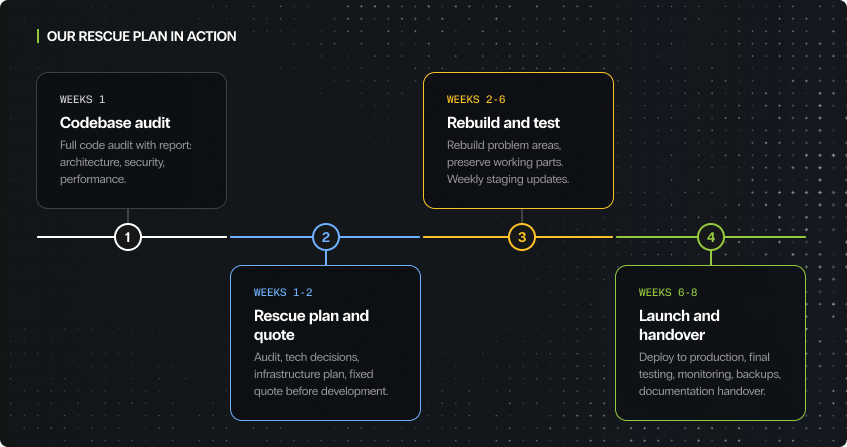
Phase 1 (Weeks 1–2): Code audit with a written, prioritised report
We pull the repo, or reconstruct it from the Lovable or Bolt export, run static analysis, read the code, and benchmark the application under realistic load. We look for the specific patterns that produce the vibe-coded-breaking-at-scale failure mode: mixed concerns, unvalidated user input, client-side business logic, missing database indexes, unbounded queries, no rate limiting, no error handling, no tests. You receive a written audit with severity ratings and a prioritised remediation plan. You can action it with us, or with any other engineering team. The audit pays for itself as a document.
Phase 2 (Weeks 3–6): Triage and stabilisation
Based on the audit priorities, we address the items that are actively hurting you right now: the auth bug letting users see each other's data, the database query that takes 40 seconds on any non-trivial account, the Stripe integration charging twice because idempotency was skipped. Stabilisation happens while users continue using the app, with zero-downtime deploys and feature flags where the risk is real. By end of phase 2, the app is not on fire.
Phase 3 (Weeks 6–12): Refactor in place, or rebuild
For apps where the foundation can be saved, we refactor module by module into proper engineering patterns: real separation of concerns, proper data model, tested business logic, structured error handling, observability. For apps where the foundation cannot be saved, we scope a proper rebuild in parallel, migrate users in cohorts, and keep the original running until the rebuild is ready. Either way, you own the code in your own GitHub organisation, not ours.
Phase 4 (Month 3 onwards): Ongoing engineering partnership
Feature development, security patching, dependency updates, incident response, performance tuning. Vibe-coded apps that reach production traction typically grow faster than the founder's ability to engineer them alone. Ongoing support from $4,500 + GST per month, scaling with hours and scope. Our track record is published here. Once stable, rescued builds move onto website support services.
Vibe Code Rescue Pricing
Rescue pricing because businesses dealing with broken vibe-coded apps do not need more uncertainty. The ranges below are real, indicative, and based on actual engagement scope. An audit is the cleanest way to know which range you are in.
Phase 1 audit only: from $2,500 + GST, fixed-price. A written report with severity ratings, prioritised remediation plan, and a fixed quote for any remediation work. The audit is a deliverable in its own right. You can action it with us, with another engineering team, or sit on it for six months until you decide.
Triage and stabilisation (Phase 1 + Phase 2, typically 6 weeks): commonly $10,000 to $30,000 + GST depending on how far gone the codebase is and how aggressive the audit findings turn out to be.
Full rescue (audit, triage, refactor or rebuild, 12 weeks): commonly $25,000 to $75,000 + GST. This is the realistic range for an app with paying users, an integration or two, and the kind of database that needs proper indexing and query work.
Greenfield AI-assisted builds (we use the same tools you would have used, with the engineering governance bolted in from day one): typically $20,000 to $80,000+ + GST depending on complexity, integrations, and fully custom web design requirements.
Ongoing engineering partnership: from $4,500 + GST per month, scaling with hours and scope. Includes feature development, security patching, dependency updates, incident response, and performance tuning.
We rescue apps built in Lovable, Bolt, Replit, Cursor, and v0 that have started breaking at scale, that have authentication bugs leaking data, or that have Stripe integrations charging twice because idempotency was skipped. Rescue is not rebuild, and we quote each engagement based on what the audit actually found. When the stalled build is an online store, it moves into our Shopify development services.
The engineer who runs your audit is the engineer leading the rescue. You own the code in your own GitHub, not ours. We care that the app keeps working for your users after we hand it back, which is why rescue often becomes an ongoing partnership. Rescue is cheaper when it starts earlier.
All pricing is indicative and exclusive of GST. No lock-in contracts. Month-to-month from day one. Vibe Code Rescue is a category we are still pricing in real engagements; ranges will tighten as we publish more case data.
Why businesses choose Paladine & CCM for vibe code rescue
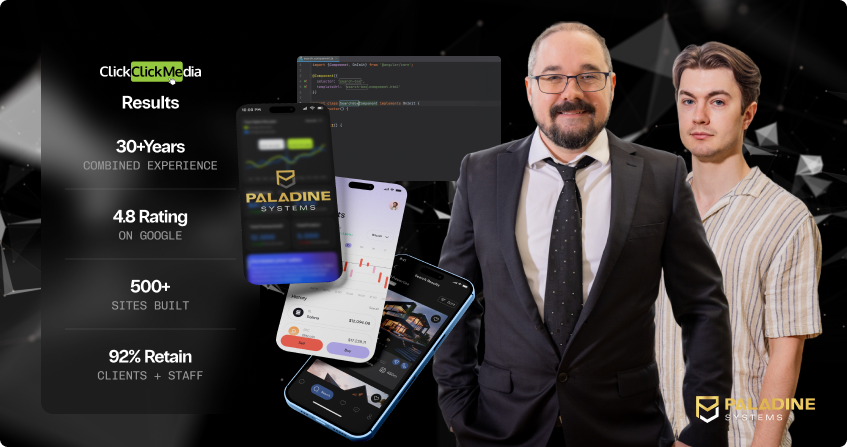
Choosing a vibe code rescue partner is not about who can prompt the fastest. It is about who can turn AI-generated output into software that actually runs a business.
AI-native engineering, not an agency that pivoted
Our developers run 4 or more parallel Claude Code instances daily. We use Cursor, Copilot, and AI-assisted workflows on our own work, not just our clients'. The difference is that every line of AI-generated code goes through senior review, automated testing, and architectural validation before it touches production. We adopted AI tools because they made our existing engineering process faster, not because we needed a marketing pivot.
We use the same stack you used to build
Lovable, Bolt, Cursor, Replit, v0, Windsurf, Claude Code, GitHub Copilot. We know these because we use them. We can read the patterns each tool tends to generate, the failure modes each one produces, and what to keep versus what to replace. You are not explaining your tooling to a senior dev who has never opened it.
Honest about what we cannot pretend
We have not been doing "vibe code rescue" for ten years because the term did not exist. What we have been doing since 2008 is shipping production software — auth, payments, databases, infrastructure, observability, the parts AI cannot generate yet. We say this directly because we expect you to be sceptical of any agency claiming deep specialism in something the industry only named in 2024.
Full stack, not just the code
Design, web development, infrastructure, SEO, accessibility, security, analytics, and ongoing support. One team, one point of contact, no finger-pointing between vendors. When your vibe-coded app also needs Google Ads or paid social to scale acquisition, we handle that too.
Month-to-month, your code, your GitHub
No lock-in contracts. No exit fees. 92% client retention because we earn the next month, every month. The engineer who runs your audit is the engineer leading the rescue. You own every line of code in your own GitHub organisation. If you decide to take it in-house or to another team, you are not waiting on us to release anything.
Platforms and tools we rescue
We are platform-agnostic. If your app was built with it, we can read it, audit it, and work with it.
- AI coding platforms: Lovable, Bolt, Cursor, Replit, v0, Windsurf, Claude Code, GitHub Copilot.
- Frontend: React, Next.js, Vue.js, Tailwind CSS, plain HTML/CSS/JS.
- Backend: Node.js, Python, PHP, Laravel, Supabase, Firebase.
- CMS and ecommerce: WordPress, Shopify, WooCommerce, Webflow, headless CMS (Contentful, Strapi, Storyblok).
- Infrastructure: hosting, Cloudflare (Workers, CDN, DNS), AWS, cPanel, Docker.
- Databases: PostgreSQL, MySQL, Redis, Supabase, MongoDB.
If your stack is not listed here, talk to our team. We have worked with most modern development environments and can assess any codebase.
Latest reviews
Last updated: August 2, 2026
Meet the vibe code rescue team
Your rescue is handled by engineers and architects who use the same AI tools you used to build, every day, on real production work. Norwest office, alongside Click Click Media.

Nicolas Wendell
Managing Director | Paladine Systems
Nicolas has been building custom software since leaving school, bringing a lifelong passion for development to every project. Before founding Paladine Systems, he ran his own video game studio and earned multiple accolades in network engineering. Known as a driving force in the custom software world, Nicolas combines deep technical expertise with visionary leadership - guiding Paladine in delivering innovative, enterprise-grade solutions.

Mark Morcom
Full-Stack Software Developer
Mark is a young prodigy in software development, bringing 5 years of experience to Paladine. Equally at home on the front end and back end, he crafts clean, scalable solutions that power complex applications. Mark’s sharp problem-solving skills and passion for innovation make him a driving force behind Paladine’s most advanced projects.
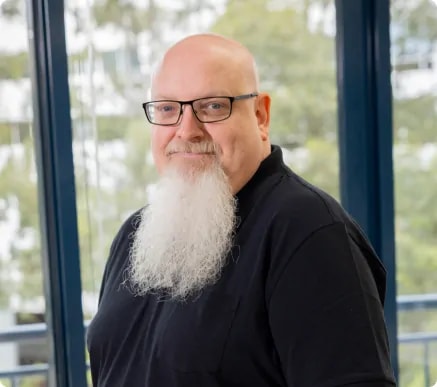
Rik Allison
Senior Manager | Website Projects
With 8 years at Click Click Media, Rik is known for getting complex builds live without the drama - scoping clean, shipping clean, and keeping scope creep firmly in a jar. A veteran of major IT infrastructure initiatives, including the Opal card rollout, Rik brings rock-solid discipline and experience to every project. His steady hand ensures websites are delivered on time, on budget, and to the highest standards.

Jerry Zhang
Project Manager | Design and UX Specialist
For the past 4 years at Click Click Media, Jerry has been dedicated to crafting seamless user experiences. A qualified UX professional, he maps user journeys, collects insights through surveys, and engages stakeholders to uncover friction points. If a form field doesn’t earn its keep, Jerry cuts it - streamlining experiences to be intuitive, efficient, and conversion-focused.
Vibe code rescue FAQs
Common questions from businesses that have built apps with AI coding tools and need professional engineering help.
Can you fix an app I built in Lovable, Bolt, or Cursor?
Yes. We audit AI-generated codebases regularly. The most common issues we find are mobile layout failures, authentication and data isolation bugs, missing database indexes, missing error handling, and Stripe integrations without idempotency. We assess what can be salvaged and what needs rebuilding, then give you a fixed-price quote before any remediation work starts.
What does the Phase 1 audit actually deliver?
A written report with severity ratings on every issue found, a prioritised remediation plan grouped by what is actively hurting you versus what is technical debt, and a fixed-price quote for the rescue.
The audit is scoped as a standalone deliverable. You can action it with us, with another engineering team, or sit on it for six months. It pays for itself as a document because it tells you exactly what shape your codebase is in, regardless of what you do next.
Do I need to start from scratch?
Usually not. Most AI-built apps have a salvageable frontend foundation. The issues tend to be in the architecture, security, payments, and infrastructure layers. We keep what works and rebuild the parts that do not. Starting over is a last resort, not a default recommendation, and the audit will tell us which it is.
How is this different from hiring a freelancer?
A freelancer can fix a bug. We fix the system that caused the bug. Our team includes designers, developers, infrastructure engineers, and SEO specialists working together. You get a production-grade result, not a patch that creates two new problems.
I am not technical. Will I understand what is happening?
Yes. We explain everything in plain language and give you staging access so you can see progress as it happens. Our written reports focus on what the issues mean for your business, not on technical jargon. The audit is designed to be readable by a founder or product lead, not just an engineer.
What if I just need help making my app mobile-friendly?
That is one of our most common requests. AI tools generate desktop-first layouts that break on smaller screens. We rebuild the responsive layer so your app works properly on every device your customers use. Most mobile-only rescue projects complete within 2 to 4 weeks.
Do you offer ongoing support after the rescue?
Yes. Most clients stay on a monthly retainer for continued development, bug fixes, hosting management, and feature additions. Vibe-coded apps that reach production traction typically grow faster than the founder's ability to engineer them alone. Ongoing engineering partnership from $4,500 + GST per month, month-to-month with no lock-in.
Can you also handle SEO and marketing for the app?
Yes. Paladine Systems is the engineering arm of Click Click Media. Across the two businesses we handle SEO, PPC, paid social, and content marketing alongside the development. One team, one relationship, no gaps between your technology and your marketing.
Vibe Code Rescue Menu

Not sure where to start?
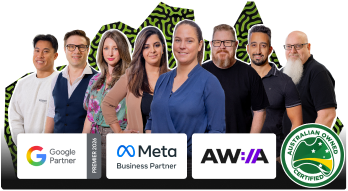
Tell us what is happening and we will tell you what we would do about it.
- 100% Australian team
- No lock-in contracts
 Google Rating - 4.8 rating