
AI SEO Agency
Get cited in ChatGPT, Google AI Overviews, Perplexity and Gemini. The 30% of search visibility most agencies are still pretending does not exist.
- GEO, AEO and AI Overviews under one roof with your existing organic search work
- Free AI Visibility Audit on the first call, no obligation, no pitch deck
- Month-to-month, no lock-in, paid only if it moves the citation metric











Cited in the answer, not just listed in the index
AI SEO is not a separate discipline. It is the next layer on top of organic search work since 2008. The same technical and content foundations that have held across every major shift in search since 2008 are 70% of what gets your brand cited by ChatGPT, Google AI Overviews, Perplexity and Gemini. We handle the remaining 30%. As a Semrush Certified Agency Partner and Google Premier Partner since 2014, Click Click Media has been running organic search for Australian businesses across the verticals where search actually moves revenue.
The numbers are not projections anymore. Google AI Overviews now appear on roughly 16% of all searches, more than double their presence in early 2025. When an AI Overview fires, the top-ranked organic result loses about 34.5% of its clicks. The traffic does not disappear. The AI absorbs it, synthesises an answer, and the brand named in that answer takes the visit. ChatGPT has crossed 900 million weekly active users. Perplexity grew search volume 858% in a single year. Gartner predicts traditional search volume will drop 25% by 2026 as more queries shift to AI interfaces. For some categories, the impact on organic traffic is already visible in GA4.
Here is the part nobody else will say out loud. Most agencies selling AI SEO today are reselling a third-party GEO tool dashboard and calling it a service. AI search optimisation is not a tool. It is a layer on top of your existing organic work that earns brand mentions in AI-generated answers. If your traditional SEO foundations are broken, AI SEO is the wrong starting point. We will tell you that on the first call rather than billing six months of GEO work against a site that does not yet rank organically. The lift is not there yet.
No lock-in contracts. No inflated retainers. No paperwork before the first conversation. We are real people, just have a chat. If we are not the right fit, we will tell you that directly and point you somewhere we think is better. Whether you are a Surry Hills professional services firm trying to be the first name ChatGPT mentions, a Parramatta clinic getting shortlisted by Perplexity, or a North Shore B2B SaaS losing share of voice to a competitor in Gemini, the discipline is the same. The scope is not.
What success looks like
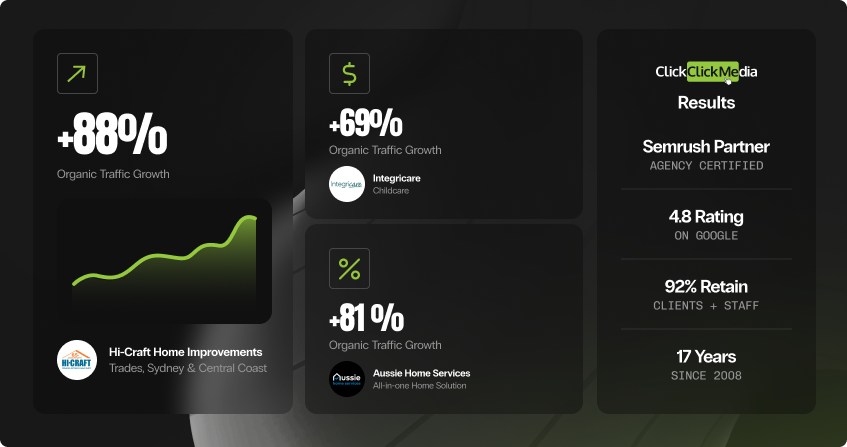
Four named cases below across trades, childcare, plumbing and national education. Different platforms, different verticals, different starting points. Each one started with the same first question: where is the brand currently showing up in AI answers, and where is it being misrepresented?
For Hi-Craft Home Improvements, the SEO foundation work that earned +88% organic traffic growth is now the foundation surfacing them in Google AI Overviews for trades queries with suburb modifiers across Sydney and the Central Coast. The diagnosis at the start was crawl-budget waste. What we did not anticipate at the time was that the same restructure cleaning up Google's understanding of their service taxonomy would later make them extractable for AI Overviews. The signals AI systems trust are the signals Google was already rewarding. For map-pack visibility, our local SEO agency does the groundwork.
For Integricare, the location page rebuild that delivered +69% organic traffic growth and +23% more family enquiries turned into something else over the following six months. Parents researching preschools were not just typing into Google anymore. They were asking ChatGPT for recommendations near specific Sydney suburbs. The same location pages, with real local content and proper schema, became the source ChatGPT now extracts from when parents ask for childcare recommendations in the suburbs Integricare serves. Templated location pages get filtered out. Real location content gets cited.
For Aussie Home Services, the domain consolidation that produced +81% organic traffic in a single month and +298% keyword growth consolidated something else: their entity signals. Two competing domains had been giving AI models contradictory information about who Aussie Home Services actually was. One domain, one set of authority signals, one entity Google and the LLMs could trust. Perplexity now surfaces them for Sydney trades comparison queries. Migration work was the AI SEO work, before anyone called it that. For stores, our Sydney ecommerce SEO services carry the same approach into product and category pages.
For LiteracyPlanet, the Australian-curriculum content that lifted branded organic traffic 168.94% and moved curriculum-specific terms like digraph to position 2.4 built topical authority on terms parents and teachers actually search. Two years on, that same topical depth is now feeding Gemini citations when parents research literacy support for primary-school children. The keyword research that targeted Australian curriculum intent was, in retrospect, the entity work that earns AI mentions today.
What this could look like for you: your brand named in the answer when buyers ask ChatGPT for recommendations in your category. Hallucination cleanup so AI systems describe your business accurately, not the version their training data assembled from outdated mentions. Growing share of AI voice relative to your direct competitors, measured at the prompt level. AI referral traffic in GA4 that converts at 3-5x the rate of standard organic search, because the buyer arriving from an AI recommendation has already had the comparison done for them.
Three years from now, the brand entity signals built in 2026 are still earning citations across AI platforms that did not exist when the work was scoped. That is the compounding value of entity authority done properly, and the reason the case studies above started as SEO engagements in 2021 but are still paying back in 2026.
For more in-depth case studies and deep dives across every vertical we work in, see our client results library.
Who we help
AI SEO works hardest where buying decisions involve a research phase. The prospect is filtering the market through AI tools before they ever land on your site, and the more complex the purchase, the more likely your buyer is to ask ChatGPT or Perplexity before they type a search query. As a full-service AI SEO agency in Sydney, we work with the businesses where the prospect's first three questions to ChatGPT determine whether they ever make contact:


Our AI SEO, GEO and AI search agency services
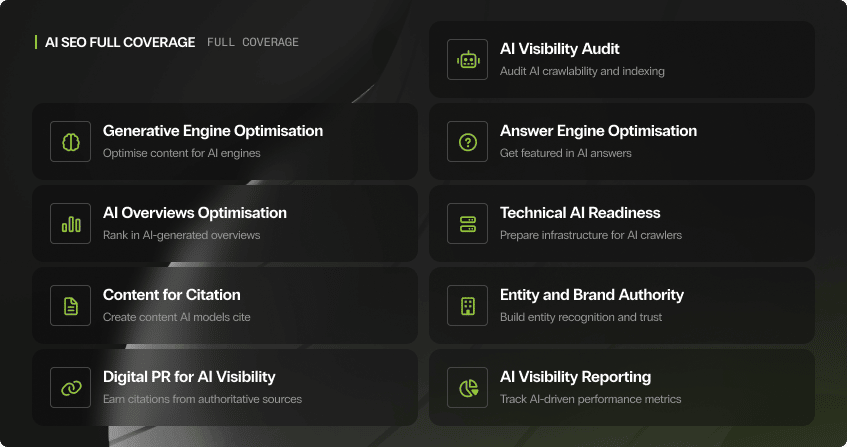
AI SEO is not a single thing. It is three overlapping disciplines that sit on top of strong organic search foundations: GEO (Generative Engine Optimisation), AEO (Answer Engine Optimisation), and AIO (AI Overviews Optimisation). The terminology moves fast and gets used loosely. Our Sydney-based team delivers each as a distinct workstream, run by the same senior strategist managing your broader organic search strategy.
- Strong traditional SEO foundations are one of the best predictors of AI citation success. AI systems extract from pages Google already trusts.
- Bing indexing matters more than most agencies realise. Bing powers ChatGPT's web search.
- Reddit accounts for nearly half of Perplexity's citations. YouTube is the most-cited domain in Google's AI Overviews. If you are not present there, you are missing the source data.
- Hallucination risk is real. AI systems repeating outdated or wrong information about your brand is actively costing you leads.
- If your entity signals are unclear, AI systems will not cite you confidently, and confident citations are the ones that convert.
AI Visibility Audit
We probe ChatGPT, Gemini, Perplexity and Google AI Overviews with the questions your buyers actually ask. Not a generic prompt list. The exact queries that drive your category. You get a scored map of where your brand is mentioned, missed, or described incorrectly, plus a competitor comparison and a baseline citation frequency we can measure against. This is the starting point on every AI SEO engagement, and it is free on the first call.
Generative Engine Optimisation (GEO)
GEO is the practice of getting your brand cited, mentioned and recommended by AI-powered generative platforms: ChatGPT, Google Gemini, Perplexity, Claude and Microsoft Copilot. The goal is to be named in the answer when someone asks an AI tool a question relevant to your business. GEO focuses on how AI models understand your brand, drawing on your content, entity signals, and your presence across the external sources these models are trained on.
Answer Engine Optimisation (AEO)
AEO is about structuring your content so answer engines can extract and present your information directly as the response. Where SEO is about ranking a page, AEO is about structuring the content on that page so the answer can be lifted out and used. Schema markup, FAQ sections, declarative writing patterns, and clear summary blocks are the tools. Done well, the same content earns Google rankings and AI extraction. Done poorly, it reads as artificial and gets filtered.
AI Overviews Optimisation (AIO)
AIO targets Google's AI Overview boxes specifically: the AI-generated summaries above traditional results, now appearing on around 16% of all searches. Brands cited in those overviews gain authority and visibility that bypasses the ranking competition entirely. AIO requires strong E-E-A-T signals, structured content, demonstrated topical authority, and sound technical accessibility for Google's crawlers. The pages that get cited in AI Overviews are mostly the same pages already ranking well. Both depend on the same underlying signals.
Technical AI readiness
Schema implementation, llms.txt configuration, Bing indexing, crawl accessibility for AI bots, and Knowledge Graph clarity. These are the signals that determine whether AI systems can correctly find, extract and attribute your content. Bing matters because Bing powers ChatGPT's web search. Schema matters because it is how AI systems disambiguate your entity from similar businesses. We work directly with our technical WordPress development team to implement fixes the same week they are diagnosed.
Content for citation
Citation-ready content is structured differently from standard ranking content. We restructure and create pages built with declarative statements, unique data points, clear entity relationships, and answer sections LLMs can lift directly. We have seen what does not work. Stuffing FAQ schema onto every page makes you look like you are gaming the system. Forcing summary boxes onto transactional pages reads as artificial. We have rebuilt content with these patterns and then rebuilt them again without. The discipline is knowing when to use each pattern, not applying all of them universally.
Entity and brand authority
Wikipedia presence, Knowledge Graph and Knowledge Panel optimisation, Google Business Profile, structured citations across authoritative directories. If AI systems cannot resolve your brand as a clear entity, they will not cite it confidently. This is slow, manual, relationship-led work. Most of it is invisible in monthly reports for the first three months and then becomes the foundation everything else compounds on.
Digital PR for AI visibility
Reddit accounts for nearly half of Perplexity's citations. YouTube is the most-cited domain in Google's AI Overviews. We earn your brand coverage in the publications, threads and video content that AI models actually learn from. Our approach overlaps significantly with traditional authority building and link acquisition work, with one major difference: the source sites we prioritise are the ones LLMs cite, not just the ones with high domain ratings.
AI visibility reporting
Prompt-level citation frequency. Brand mention sentiment. Share of AI voice. Hallucination flags. Referral traffic from AI sources, tracked separately in GA4 and conversion measurement. Plain numbers tied to business outcomes, not platform jargon. You should never have to translate your own AI SEO report into something meaningful for the board.
Why businesses choose our AI SEO agency
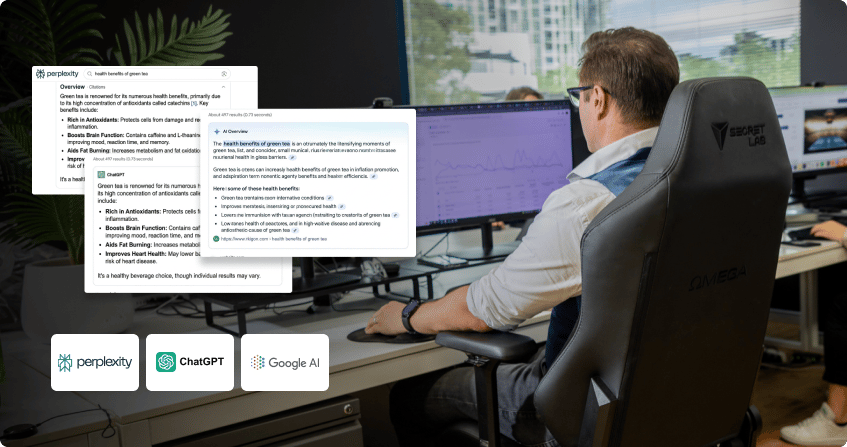
The Sydney AI SEO market is mostly two camps right now. Agencies reselling a third-party GEO dashboard tool as a service, and freelancers who learned the term last quarter. The differentiators that actually matter on a serious AI SEO engagement are the ones that compound. Here are the six that define how we work. Multi-location brands can bring in our franchise SEO agency for the same work at network scale.
Foundation-first, not bolt-on
AI SEO sits on top of your existing organic search work, not against it. A strong traditional SEO foundation is one of the best predictors of GEO success because both disciplines draw on the same signals. We do not separate the two into competing workstreams. The keyword research, parent-child page architecture, E-E-A-T signals and schema work we already do on every SEO engagement is 70% of what wins AI citations. If you bring us an existing engagement, the AI SEO layer is additive. If you are starting fresh, we sequence the work so the foundations and the AI work compound together.
Organic search since 2008, applied to AI search
We have watched every major shift in search since 2008, from Panda to Penguin, from mobile-first indexing to Helpful Content, from BERT to MUM to AI Overviews. The patterns repeat. AI search is not a different game. It is the same E-E-A-T discipline applied to a different surface. The agencies that ran black-hat tactics in 2010-2012 mostly disappeared over the following decade. The agencies promising AI citation hacks in 2026 will follow the same arc. We are not interested in joining them.
Senior strategists, not junior AI content writers
The senior strategist running your AI SEO work is the same one who would run your traditional SEO. They know your site well enough to answer any question without opening a doc. We do not have a separate AI SEO team because AI SEO is not a separate discipline. When a ranking shift needs urgent attention or a citation drop needs investigation, we respond the same day with the people doing the actual work.
92% client and staff retention, multi-year relationships
92% client retention. 92% staff retention. Those two numbers move together for a reason: the strategist building your AI Visibility Audit in month one is the same person tracking your citation growth in year three. No handoffs. No re-briefing juniors when someone leaves. Our clients rate us 4.8 on Google from multi-year engagements, which is the only kind of review worth reading.
Transparent AI citation reporting
Most AI SEO providers will not show you the citation data because they do not have it. We track at the prompt level. Every month you receive a custom Looker Studio dashboard showing brand mention frequency across ChatGPT, Gemini, Perplexity and Google AI Overviews, share of voice relative to your direct competitors, hallucination flags caught and corrected, and AI referral traffic tracked separately in GA4. Every report includes a written summary of wins, challenges and strategic focus for the coming month, written by the person doing the work.
Semrush AI Visibility Toolkit + Google Premier Partner
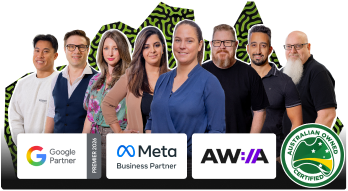
As a Semrush Certified Agency Partner, we have direct access to the Semrush AI Visibility Toolkit data that most agencies do not have, alongside Google Premier Partner status held continuously since 2014 and held by less than 3% of Australian agencies. We are 100% Australian-owned, registered as a NSW Government supplier, ABN 87 651 496 570, and operate from our Norwest office.
How we behave when AI search bites
AI search is volatile by nature. Citations move. Platforms update their models. Sometimes the work we have done lands harder than expected; sometimes it lands softer. The reason clients stay with us across multiple algorithm updates is not the methodology. The reason they stay is how we behave when the work gets hard. Below is the part of how we operate that does not fit on a credentials slide.
When citations drop, you hear it from us first
If we lose share of AI voice on a campaign, you hear it from us on the call before you see it in the report. We name what changed, what we think caused it, what we are doing about it, and what we are not doing because we think the right move is patience. The first email or call from a client about a citation drop should never be the moment we find out about it ourselves. On a campaign we are running properly, it never is.
Thinking past the first audit
The 90-day AI SEO roadmap is the start, not the contract. Every quarter we surface new ground to take: a competitor losing share of voice we can capture, a new AI platform gaining traction in your category, an entity signal we can strengthen, a Reddit thread worth participating in honourably, a Knowledge Panel field nobody has claimed. Most agencies stop scoping new work after the initial roadmap because doing so is unbillable until the client agrees to expansion. We do it anyway. The hour spent identifying next quarter's opportunity is not on the invoice, but it is the reason there is a next quarter.
When we get the prompt wrong, we absorb the rework
Sometimes we restructure content for citation and the AI does not pick it up. A content section we expected to be extracted as the answer gets ignored. A schema implementation does not produce the citation lift we predicted. When the call was ours to make and the call missed, we absorb the rework. We do not invoice you to fix our own mistake. The implicit deal in a multi-year AI SEO relationship is that the agency has skin in the game on every recommendation. We are not running a billable-hours model where bad advice is as profitable as good advice.
Who we are not for
The honest version of agency selection is that good agencies decline more business than they take on. Here are the AI SEO engagements we have walked away from, and why.
- Buyers looking for AI citation hacks. If you want fast brand mentions through prompt injection, fake Wikipedia editing, paid Reddit astroturfing, or AI-generated content at scale, we are not your agency. We will tell you on the first call. The platforms catch these tactics within months, and the recovery cost is higher than the original lift.
- Single-platform 30-day pressure. If your business model depends on being cited by ChatGPT specifically within 30 days, AI SEO is the wrong channel. The work compounds. Anyone promising guaranteed AI citations on commercial terms in week three is selling you something that will not survive the next model update.
- Businesses where traditional SEO is fundamentally broken. If your site is not indexed, your schema is wrong, your content is thin, or your authority signals are missing, AI SEO is not the fix. The fix is foundational SEO first. We will tell you that on the first call and refuse to take the engagement until the foundations are in place. Honestly, run a proper organic search strategy engagement first.
- Categories where we cannot honestly stand behind the work. Gambling, predatory lending and payday loan operators, anti-vaccine content, and multi-level marketing schemes where the revenue model is recruitment rather than product. We decline regardless of the budget. The agencies taking this work are not building businesses they will be proud of in 10 years.
- Passive vendor expectations. Our AI SEO leads will tell you when an idea will not work. They will push back on briefs we think are wrong. If you want a vendor who silently executes whatever you ask without engaging on the strategy, we are not the right team. The multi-year clients are the ones who wanted the pushback.
Saying no to revenue is itself the proof of the commitment. Any agency can claim values on a website. The agencies whose values are real are the ones who decline budget that conflicts with them.
What our partnerships actually mean for your campaign
- Google Premier Partner since 2014. Direct relationships with Google reps for policy changes, AI Mode beta access, and Search Generative Experience visibility.
- Semrush Certified Agency Partner. Direct access to the Semrush AI Visibility Toolkit. Most agencies are still building this capability from scratch.
- Bing Webmaster Tools verified. Bing powers ChatGPT's web search. The agencies skipping Bing indexing are leaving ChatGPT visibility on the table.
- AWIA member, NSW Government supplier. Industry association membership and a government-vetted procurement record.
Cleaning up bad AI visibility, our speciality
Not every AI SEO engagement starts from zero. Some start from "ChatGPT keeps recommending our competitor instead of us" or "Google AI Overviews are saying the wrong thing about our service area." A growing share of the work we take on is AI rescue work, not greenfield AI SEO. We have rebuilt brand entity signals after every major AI platform update since GPT-3.5, and the diagnostic order matters more than the volume of activity. Sometimes the honest answer is that AI is not the fix at all. The right call might be a content rebuild, a Knowledge Graph submission, or a digital PR push to specific publications. We will tell you that on the first call rather than billing 12 months of AI work against an entity that needs a different intervention.
Common AI rescue scenarios:
- Hallucination cleanup. AI is repeating outdated information, misattributing competitors' positioning to your brand, or simply drawing wrong conclusions from inconsistent content. Diagnosable in the first audit; tractable within 60-90 days if the source content can be corrected.
- Citation displacement. A competitor that did not exist in AI answers six months ago has captured the share of voice you used to own. The pattern is usually a recent digital PR push or a new Wikipedia entry. The fix is targeted, not site-wide.
- Knowledge Graph confusion. AI systems cannot resolve your brand as a clear entity because of conflicting NAP data, multiple unmerged Google Business Profile listings, or competing domain signals. This is the entity work that powers everything else.
- Post-update visibility drops. ChatGPT or Google AI Overviews refreshed their model and your share of voice dropped. Heavy editing during the volatility period extends the dip rather than recovering it. Patience is a craft skill in this work, and most agencies do not have it.
- The brand needs more than AI SEO. Sometimes the audit reveals the underlying SEO foundations are the problem and a proper organic search rebuild is the only honest answer. We will scope it through our SEO team or refer you elsewhere if AI SEO is premature.
What is included in our AI SEO packages
Our AI SEO programs combine technical AI readiness, citation-ready content, and entity authority work, all delivered transparently and aligned with your commercial goals.
- AI Visibility Audit: prompt-level probing of ChatGPT, Gemini, Perplexity and Google AI Overviews using the queries your buyers actually ask, with competitor comparison and baseline citation benchmarks.
- Hallucination check and correction: identification of where AI systems are describing your business inaccurately, with a remediation roadmap traced back to source content.
- Technical AI readiness: schema implementation, llms.txt configuration, Bing indexing, crawl accessibility for AI bots, Knowledge Graph clarity, and rel="ai-search" link tags where appropriate.
- Citation-ready content restructuring: declarative writing patterns, FAQ schema where relevant, unique data points, and clear entity relationships that LLMs can extract.
- Entity and brand authority work: Knowledge Panel optimisation, Google Business Profile, structured citations across authoritative directories, and Wikipedia where editorially defensible.
- Digital PR for AI visibility: editorial coverage on the publications, Reddit communities and YouTube channels that LLMs cite most. Manual, relationship-led, no astroturfing.
- Foundation alignment: broader organic search strategy coordination so the AI work compounds with your traditional SEO rather than competing for resources.
- Cross-channel intelligence: paid search conversion data from Google Ads campaigns feeding into AI SEO prompt prioritisation, so we target the queries that actually convert.
- AI visibility reporting: monthly Looker Studio dashboards showing citation frequency, share of AI voice, hallucination flags, and AI referral traffic tracked separately in GA4.
Add-ons: ChatGPT Ads management (paid placement alongside organic AI visibility), advanced Knowledge Graph submissions, video content production for YouTube citation visibility, and enterprise-tier prompt monitoring across 200+ category queries.
Latest reviews
Your AI SEO success timeline
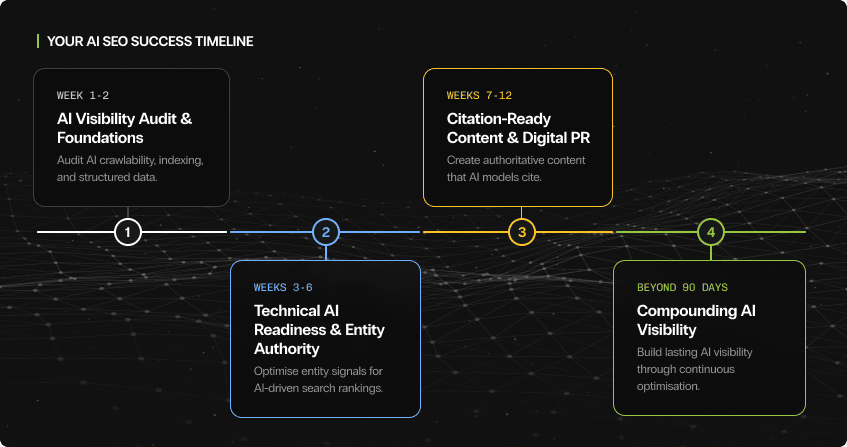
AI SEO does not happen overnight, but it moves faster than traditional SEO once the foundations are in place. The 90-day roadmap is built to deliver early citation wins on well-structured pages while setting the foundation for the slow, compounding authority work that produces the real numbers from month four onwards.
AI Visibility Audit and the baseline you measure against.
Not a generic prompt list. We probe ChatGPT, Gemini, Perplexity and Google AI Overviews with the exact queries your buyers actually ask. Where is the brand currently being mentioned? Where is it being missed? Where is AI describing it incorrectly?
We document every finding before recommending any work. The diagnostic step is the hard part. The rebuild is project management. You receive a written audit document with prioritised findings, suggested interventions, and the rationale for each call. Nothing gets actioned until we have shown you the audit and you have agreed with the priority order.
This is also where we tell you honestly if AI SEO is premature. In about 30% of audits we run, the SEO foundations need work first. When that happens we say so and adjust scope rather than billing AI work against a site that is not ready.
Technical AI readiness and entity authority foundations.
A 90-day roadmap ranked by impact and effort, with pricing attached to each phase and the explicit line where we stop automatically and wait for your approval. No work happens past that line without a conversation.
Technical fixes ship first because they unblock everything else: schema implementation, llms.txt, Bing indexing, crawl accessibility for AI bots, Knowledge Graph clarity. Entity authority work begins in parallel: Google Business Profile, directory citations, Knowledge Panel claims. Nothing goes live without a review session, and we record those sessions so the documentation matches what was agreed.
This is also where we tell you honestly if scope we initially proposed turned out to be unnecessary. The audit often says different things than the pitch said. When that happens we update the proposal, not the invoice.
Citation-ready content and digital PR for AI visibility.
Priority pages restructured for citation readiness based on the audit's intent-mapping work. Declarative writing patterns, unique data points, FAQ schema where it makes editorial sense. Digital PR outreach begins: editorial coverage on publications, Reddit communities and YouTube channels that LLMs cite most.
You feed back here, not just at the report stage. Citation quality reviews matter more than citation count because the only number that justifies the work is whether the brand mentions we are earning are the kind of mentions that drive qualified leads. We adjust prompt priorities and content angles based on what your sales team is actually saying about lead quality.
By week 12 you should be seeing the first citation lifts on priority queries. Real share of voice growth tends to show up around month four because entity authority signals take time to compound across AI training data. Anyone promising guaranteed citation gains on commercial queries in week three is either selling you something or running tactics that will not survive the next model update.
Compound mode, the part nobody else scopes.
Content expansion, entity authority scaling, continuous prompt-level monitoring, hallucination correction as platforms update their models. The kind of slow grinding improvement that looks unremarkable on a monthly report and shows up as a 3-5x AI referral conversion rate 18 months in. This is the stage where clients typically say they should have started two years ago.
Monthly reports you can actually read, quarterly strategy sessions you can actually use, and a Slack channel where we answer in hours, not days. The clients who stay with us across multiple AI platform updates are the ones who treated AI SEO as a compounding investment rather than a 90-day campaign.
Our track record is published here, including the multi-year engagements that compounded through every major search platform shift since 2008.
AI SEO Pricing Guide
Prices you can plan on. The ranges below are the real starting points we quote in discovery, and they are the same numbers that end up in the proposal once scope is nailed down.
Most Sydney businesses see strong AI visibility growth investing from $2,000 to $3,500 per month for a standalone AI SEO program covering audit, technical readiness, citation-ready content, entity authority and digital PR. Larger ecommerce, multi-platform or enterprise programs typically achieve the best results at $4,500 to $6,500 per month, where prompt-level monitoring at scale, multi-market entity work and content production velocity combine to drive measurable share of AI voice.
For businesses already running organic search with us, AI SEO is available as an add-on from $750 to $1,500 per month because much of the foundation work is already in place. This is the most honest pricing structure because it reflects the actual additional work, not a separate retainer dressed up as a new service.
We have run AI SEO for B2B SaaS clients trying to be the first name procurement teams hear in ChatGPT, and for local Sydney clinics trying to capture suburb-level recommendations in Perplexity. The discipline is the same. The scope is not.
You will be speaking to the senior strategist who runs your account, every month. We care about the citation still being there in year three, which is why we build toward it from week one. Tell us what is actually going on. The call costs nothing. The worst case from a chat is you waste 30 minutes. The worst case from picking the wrong AI SEO agency is six months billed against a site that was never going to be cited in the first place.
All pricing is indicative and excludes GST. You will receive a custom proposal for your business after your free AI Visibility Audit. Month-to-month, no lock-in, no minimum term.
FREE AI Visibility Audit & Discovery Session!
Limited spots | Offer terms apply
Last updated: October 2, 2026
Proof it works
AI SEO is a newer discipline, but the foundations that earn AI citations are the foundations we have been building since 2008. The cases below name the underlying SEO foundations and the AI citation outcomes we are currently tracking. For more in-depth case studies and deep dives across every vertical we work in, see our case study library.

Hi-Craft Home Improvements
Trades, Sydney and Central Coast

Integricare
Preschools, Sydney
Aussie Home Services
Plumbing and Electrical, Sydney

LiteracyPlanet
National Education Brand, Australia
Meet our AI SEO team
Andrei, York and Keely run the day-to-day AI SEO work alongside their broader organic search load. Phil started in SEO before responsive design existed, has watched every Google algorithm shift from Florida to AI Overviews, and is hands-on across AI strategy. All in-house from our Norwest office.

Andrei Jach
Senior Manager | SEO and Analytics Specialist
Andrei has worked in digital marketing for over 15 years, seven of them at Click Click Media. He runs the SEO and analytics practice: technical audits, schema implementation, Search Console interpretation, and reporting that connects search performance to business outcomes. When a site loses rankings for a reason no one can identify, Andrei is the one who finds it.

Richard Buckley
Search Engine Optimisation Manager
Richard has worked in digital marketing for more than a decade and has been part of Click Click Media since 2015. An expert SEO professional with a strong understanding of business, he looks beyond rankings and traffic to how search fits into the wider marketing system. His focus is making SEO, paid media, analytics, conversion and the broader customer journey work together to deliver stronger commercial outcomes for clients.

York Feix
Senior SEO Manager | On-page and Off-page Specialist
York has 12 years in SEO and works on the layer most agencies underinvest in: the architecture underneath rankings. His focus is entity building, internal link structure, and digital PR. He wrote the internal linking framework CCM applies across client accounts. His off-page work targets authority signals that compound over time rather than spike and fade.
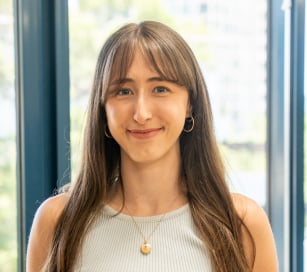
Keely Murphy
SEO Coordinator
Keely joined CCM in 2025 after a career in journalism and freelance writing. She holds a BA in Literature from Newcastle University in England. The SEO content she produces reads as it should: written for a person rather than a crawler, structured to match search intent, and specific enough to be useful once the reader lands. She handles content research, structure, and copy across SEO campaigns.
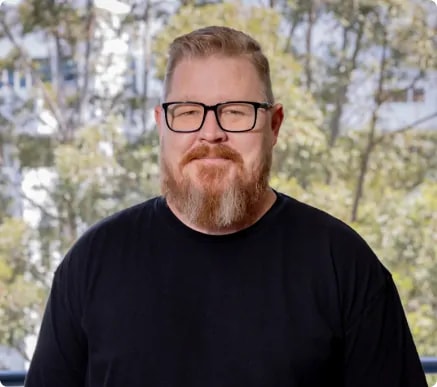
Phillip Wendell
Managing Director | Click Click Media
Phil has led Click Click Media since the beginning. His background is engineering, which shows in how the business runs: every engagement has a defined process, every claim in a client report has a source, and strategy decisions are tested against data before they go to a client. He has worked closely with over 20 long-term accounts and has been present for every significant algorithm shift from Florida to AI Overviews. When a plan needs pressure-testing, Phil reviews it.
AI SEO agency FAQs
Real questions Sydney businesses ask before signing on. If yours is not here, reach out and we will give you a straight answer.
How long does it take to see results from AI SEO?
Technical changes such as schema and llms.txt configuration improve AI crawl accessibility within days. Citation wins in Google AI Overviews typically appear within 4 to 12 weeks on well-structured, established domains. Broader GEO results across ChatGPT and Perplexity build over 3 to 6 months as entity authority compounds.
Businesses with strong existing SEO foundations tend to see earlier wins than those starting from a lower authority baseline. Anyone promising guaranteed citation gains in week three is selling you something that will not survive the next model update.
How much does AI SEO cost?
Most Sydney businesses invest between $2,000 and $6,500 per month depending on scope and platform coverage. Standalone AI SEO programs typically start from $2,000 to $3,500 monthly. Larger ecommerce or multi-platform programs usually invest $4,500 to $6,500 monthly.
For businesses already running organic search with us, AI SEO is available as an add-on from $750 to $1,500 per month because much of the foundation work is already in place. Every proposal is fully itemised, no hidden fees, no lock-in contracts. You get a custom quote after your free AI Visibility Audit.
Does AI SEO replace my existing SEO program?
No. A strong traditional SEO foundation is one of the best predictors of AI citation success. AI systems extract and trust content from pages that Google already rates as authoritative. Our AI SEO program builds on existing organic work rather than replacing it.
In most cases we run both in parallel, and the authority signals built through technical SEO and content strategy directly support AI citation outcomes. If your traditional SEO is broken, AI SEO is the wrong starting point. We will tell you that on the first call.
What if AI is already saying something incorrect about my business?
This is more common than most businesses realise. AI systems can repeat outdated information, misattribute competitors' positioning to your brand, or draw incorrect conclusions from inconsistent content across the web. This is called hallucination risk and is one of the first things we assess.
The first step in our AI Visibility Audit is to check what major AI platforms currently say about you and flag every inaccuracy. We then trace those errors back to their source content and correct them systematically. Most hallucinations are tractable within 60 to 90 days once the source is fixed.
Which AI platforms do you optimise for?
Google AI Overviews and AI Mode, ChatGPT (including Browse and search), Google Gemini, Perplexity, and Microsoft Copilot. We configure llms.txt implementation and structured data to improve AI crawler accessibility across all platforms, including emerging LLM environments.
Bing indexing is part of the technical foundation because Bing directly powers ChatGPT's web search results. Agencies skipping Bing indexing are leaving ChatGPT visibility on the table.
Can you help my local business get into AI answers?
Yes. Local intent queries in AI interfaces are growing fast. "Who is the best plumber in Parramatta?" is an established query pattern in both ChatGPT and Perplexity. Local SEO fundamentals, Google Business Profile authority, entity clarity and Knowledge Graph accuracy translate directly into local AI visibility.
For multi-location businesses past 15 to 20 locations where complexity outgrows a standard engagement, see our automated location pages platform. We can assess your current local AI footprint as part of a free audit.
How is AI SEO different from GEO, AEO or AIO?
They are overlapping terms for the same underlying discipline. AI SEO is the umbrella term. GEO (Generative Engine Optimisation) targets all generative platforms including ChatGPT, Gemini and Perplexity. AEO (Answer Engine Optimisation) is about content structure that gets extracted as direct answers. AIO (AI Overviews Optimisation) targets Google's AI Overview boxes specifically.
CCM covers GEO, AEO and AIO as distinct workstreams under the AI SEO umbrella. The technical and content foundations overlap significantly, but each has specific tactics worth running as a separate stream.
Why choose Click Click Media over other AI SEO providers?
Three things set us apart: foundation-first methodology, senior people on every account, and transparent citation reporting. Most AI SEO providers are reselling a third-party GEO tool dashboard and calling it a service. We treat AI SEO as the next layer on top of organic search discipline built since 2008.
As a Semrush Certified Agency Partner and Google Premier Partner since 2014, we have direct access to the Semrush AI Visibility Toolkit, plus we also run Google Ads in-house, so your AI SEO benefits from real conversion data across channels.
What is an AI SEO agency, and is that the same as a GEO agency?
An AI SEO agency gets your business cited and recommended inside AI answers: ChatGPT, Google AI Overviews and AI Mode, Perplexity and Gemini. A GEO agency (generative engine optimisation) is the same job under a newer name, and AEO (answer engine optimisation) is the same job again with the emphasis on the question-and-answer formats those engines prefer. Whatever the label, the work is technical readiness, content the engines can quote, entity and brand authority, and reporting that shows which prompts cite you. We do all of it from Sydney for clients across Australia, on top of the organic search foundations we have built since 2008.
Is SEO still worth it in 2026?
Yes, and AI search is the reason. Every AI answer is assembled from an index of pages the engine has crawled, judged and ranked, which is the same index classic SEO has always worked on. The technical and content foundations are about 70% of what gets a business cited; the remaining 30% is the AI-specific layer this page describes. A business that stops doing SEO disappears from the AI answers as surely as from the ten blue links. What has changed is the measure: citations and recommendations across the engines, not only rankings and clicks.
Can ChatGPT or another AI do my SEO for me?
It can draft, summarise and analyse, and we use it for that too. It cannot earn a citation, fix a crawl or indexing fault, build the entity signals that make an engine trust a brand, or tell you which prompts mention you and which do not. Where AI tools help most is in volume work; where they fail is in judgement and measurement, and in content that says nothing an engine wants to quote. The free AI Visibility Audit shows which of your pages are already cited and which are invisible, before you decide what to do yourself and what to hand over.

Not sure where to start?
Tell us what is happening and we will tell you what we would do about it.
- 100% Australian team
- No lock-in contracts
 Google Rating - 4.8 rating