
UX Design Agency in Sydney
Your website gets traffic. UX decides whether it converts.
- Designing user experiences that convert, since 2008
- Research-led UX with measurable 90-day results
- User research, prototyping, and testing built into every project












The word "UX" has been hijacked
Half the agencies claiming UX practice are doing visual design with better vocabulary. You have probably sat through a pitch where someone put a "user journey map" on a slide, printed "personas" in a binder, and showed you wireframes that were just screenshots with the colours greyed out. Then they redesigned your homepage.
That is not UX. That is visual design with a trench-coat.
Real UX is decisions about information architecture, interaction flows, and the sequence in which users encounter content. Made with evidence, tested with real people, and measured by what happens to the metrics that matter. Conversion rate. Task completion. Time-to-value. Support ticket volume. Cart abandonment. UX that does not move those numbers is not UX. It is decoration that happens to use the word. We have been running UX engagements since 2008 across ecommerce, SaaS, professional services, and multi-location brands, and we measure every project against the metrics that matter to your business. Our GA4 and GTM team sets up the tracking on day one so you can prove the lift. UX findings feed straight into how we approach website design in Sydney.
Why businesses choose us for UX design

Choosing a UX design agency is not about dashboards. It is about outcomes. You need experiences that drive engagement, reduce friction, and increase conversions.
92% client and staff retention
The UX strategist on your project in week one is the same person optimising it in month twelve. A 92% retention rate means continuity, deep knowledge of your platform, and no re-briefing. Our clients rate us 4.9 on Google from multi-year engagements.
Evidence-led, not opinion-led
Every interface is validated with real users before launch. Moderated and unmoderated sessions, heatmaps, session recordings, and scroll-depth tracking. Decisions follow the Nielsen Norman Group's usability heuristics as a baseline, then get tested against your actual users.
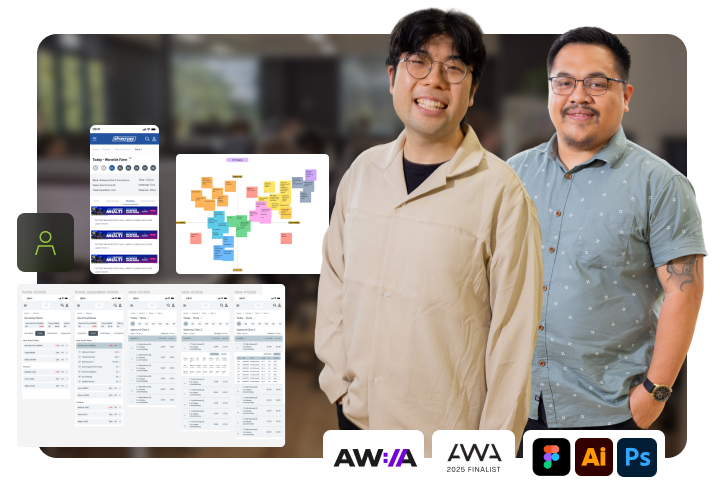
2025 Australian Web Awards finalist
Recognised in 3 categories by the Australian Web Industry Association for design and innovation. Proven UX results with case studies showing measurable conversion lifts and revenue growth.
Mobile-first and accessible
UX designed for responsiveness, speed, and WCAG 2.2 AA compliance. Core Web Vitals targeted from day one (LCP under 2.5s, CLS under 0.1, INP under 200ms). No lock-ins, month-to-month from day one. You own your designs, your assets, and your optimisation roadmap.
Who we help with UX design


What success looks like in UX design
Success in UX design is not about making a site look clean on the surface. It is about ensuring every interaction is purposeful, intuitive, and aligned with business goals. That means avoiding designs that frustrate users, bury key actions, or ignore accessibility standards.
Our team creates user-focused experiences that streamline journeys and make interactions effortless. We combine research, testing, and strategy to design pathways that reduce friction, improve engagement, and increase conversions. Navigation is kept simple, logical, and responsive, so users can find what they need quickly across any device.
And because a great user experience drives growth, we build with accessibility, SEO, and performance in mind from the start. Our SEO team often collaborates on UX projects because the architectural decisions made at wireframe stage affect organic performance for years afterwards. When full custom website design services are needed, our UX research feeds directly into the build.
UX design: our approach
1. Research and mapping
Customer-journey audits, stakeholder interviews, heatmaps and analytics to locate friction and opportunity. Most of the answers to "why is this not working" are already in your data, nobody has just looked yet.
2. Structure and flow
Information architecture and navigation aligned to user intent. Clear hierarchies for both mobile and desktop journeys. Decisions on what to remove are usually more valuable than decisions on what to add.
3. Design and testing
Wireframes and interactive prototypes in Figma. Moderated and unmoderated testing with real users before build. Five participants uncover roughly 85% of usability problems, so we run small well-recruited rounds rather than expensive 50-person studies.
4. Speed and accessibility
Core Web Vitals targeted (LCP under 2.5s, CLS under 0.1, INP under 200ms) with WCAG 2.2 AA from day one. Built on WordPress, Shopify, Webflow, or headless stacks depending on what fits your operations.
5. Ongoing optimisation
A/B tests, behavioural tracking, and a weekly test cadence so performance compounds over time. Design never finishes on a site that is actually getting used.
UX design services: what is included
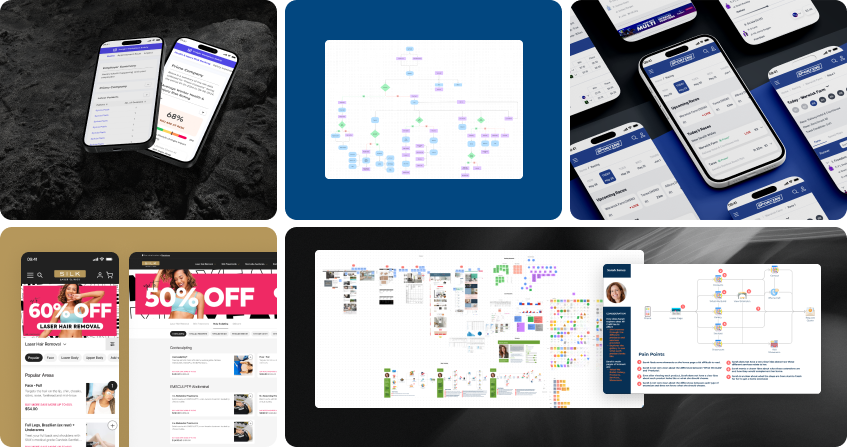
- Full UX research, audit and strategy: behavioural analysis, competitor review, and prioritised recommendations.
- Wireframes and interactive prototypes: tested with real users before development begins.
- Design-system recommendations: consistent patterns across your entire site.
- Conversion-focused landing page builds: paired with our landing page design service.
- Weekly testing and optimisation cadence: A/B tests, behavioural tracking, and iteration.
- Transparent reporting plus monthly strategy call: clear metrics and next steps.
Add-ons: usability studies, accessibility audits, heatmap and session recording setup, CRO consulting.
The tech behind winning UX
- CMS and platforms: WordPress/WooCommerce, Shopify, Webflow, Headless (WP/Shopify + Next.js).
- Tooling: GA4 and GTM, Hotjar/Clarity, Looker Studio, VWO/Optimizely.
- Delivery: Cloudflare CDN/WAF, Git-based CI/CD, New Relic/Datadog.
- Standards: OWASP Top 10 practices, WCAG 2.2 AA, Australian Privacy Principles (APPs).
- Ecommerce: PCI-aware patterns with tokenised payment flows.
How we measure UX that matters
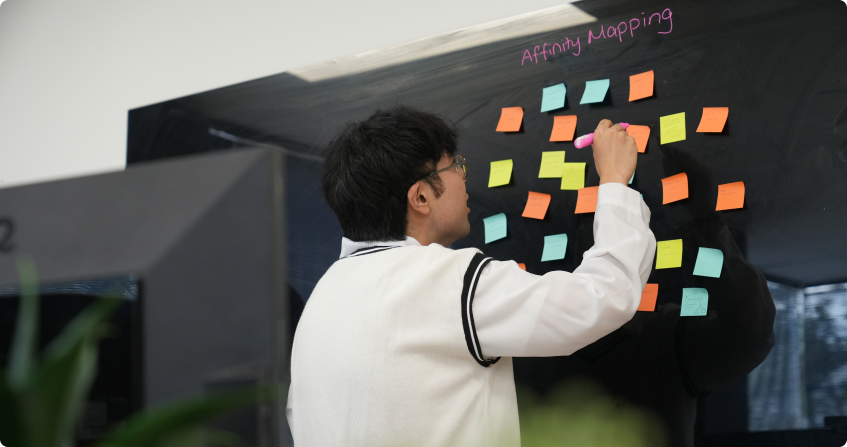
- North-star metrics: conversion rate, revenue/lead quality, task success, time to value.
- UX scorecard: page-type benchmarks for CVR, bounce, scroll depth, INP/LCP, form completion.
- Attribution clarity: GA4 events plus server-side tagging where required, so UX impact is provable.
Latest reviews
How we actually run UX engagements
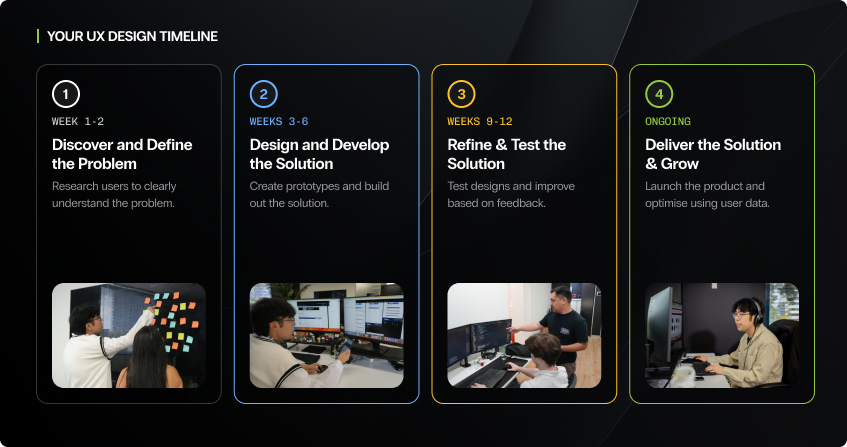
UX is a discipline, not a deliverable. Here is how the work actually runs.
Evidence gathering, not guesswork
Discovery starts with analytics and session recordings you already have. Roughly 60% of the answers to why something is not working are already in your data, nobody has just looked yet. We pull heatmaps, funnel drop-off, bounce-rate-by-page, device split, form-field abandonment.
We watch 20 to 30 session recordings cold. We interview 3 to 5 of your actual customers. Every finding is written up against the specific data that supports it.
You receive a written UX diagnosis document before any design work starts.
Prototype and test, not present and hope
Wireframes that are testable, not decorative. We run moderated usability testing with 5 to 8 participants per round. Five participants uncover roughly 85% of usability problems, which is why expensive 50-person studies rarely outperform small well-recruited ones.
Every tested variant gets ruthless feedback. What survives the usability testing becomes the design direction.
You watch the testing sessions live if you want, so you hear the feedback firsthand.
Visual design and build
Once the structure is decided, visual design happens on top of it, not instead of it. Interaction patterns, spacing systems, and a component library defined for reuse across the site so future updates maintain consistency without another UX round.
Build through our in-house dev team. Staged, reviewed, iterated. Core Web Vitals validated. Accessibility audit (WCAG 2.2 AA as baseline).
Design reviews on real devices, not just Chrome desktop.
CRO as an ongoing discipline
After launch, we run CRO as an ongoing programme: hypothesis, test, measure, iterate. Design never finishes on a site that actually gets used. Monthly reporting on what has moved, what has not, and what to test next.
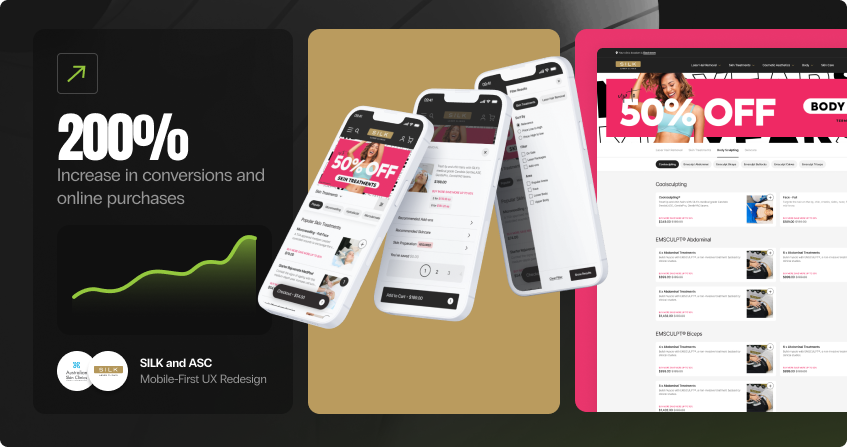
SILK's 56% conversion lift happened across six months of iterative UX work, not one big redesign. That is the model: compounding improvements that hold up over years.
Our track record is published here, including the 2025 Australian Web Awards three-category finalist work.
UX Design Pricing
Our UX clients pay between the ranges below, and we will tell you during the audit whether a full redesign is actually the right spend.
UX Audit and Strategy ($3,500 to $6,000, excl. GST): heatmap analysis, user journey mapping, and prioritised recommendations report.
UX Design Project ($8,000 to $15,000, excl. GST): wireframes, prototypes, and user testing across key pages with Figma deliverables and handoff documentation.
Ecommerce and SaaS UX ($15,000 to $30,000, excl. GST): complex user journeys, multiple conversion funnels, and checkout optimisation. Often paired with ecommerce web design.
Monthly UX Optimisation ($1,200 to $3,500/month, excl. GST): A/B testing, conversion tracking, and iterative improvements.
We rebuilt SILK Laser Clinics’ experience with a 56% conversion lift that is still in place three years later. We have also run audits that concluded the client did not need a redesign, just targeted fixes, which saved them $30K+ on a rebuild they were about to pay for.
The UX lead running your engagement is watching the real session recordings and the real funnel data. We care more about the decision holding up in year three than about the wireframe looking clever in week two. Call us. The audit tells you honestly what is worth fixing.
All pricing is indicative and exclusive of GST. No lock-in contracts. Month-to-month from day one.
FREE UX Audit & Quote!
Limited spots | Offer terms apply
Last updated: August 2, 2026
Real results from real clients
For more detailed breakdowns, visit our client results library.

SILK Laser Clinics
56% Conversion Lift, Sustained 3 Years

WuCraft
Digital Fitout, Genuinely Custom Build

Kangaroo Courts
From Invisible to Dominant

Jacob's Creek
Global UX for a Heritage Wine Brand

Phriendly Phishing
UX That Builds Trust in a Sceptical Category

Motiv8sports
UX That Scales for a Training Portal
Meet our UX design team
Your UX project is led by senior strategists and designers who have been solving conversion problems for Sydney businesses since 2008, all in-house from our Norwest office.

Belinda Baynes
Senior Manager | Design and Creative Specialist
For the past 7 years at Click Click Media, Belinda has shaped the look and feel of countless high-performing campaigns. Her designs sit at the intersection of brand and conversion - beautiful, fast, and built to excel in PPC and SEO environments. As a seasoned creative specialist, Belinda ensures every layout not only captures attention but also drives measurable results for clients.

Jose Marie De Guzman
Senior Manager | Website Design
With 11 years at Click Click Media, Jose has shaped the look and feel of countless high-performing websites. He’s known for designing pages that make “Book Now” feel inevitable - where every pixel has a purpose. Jose’s exceptional focus on crafting beautiful, intuitive experiences ensures that design isn’t just eye-catching, but also guides visitors seamlessly toward action.

Mark Dollente
Web and Digital Asset Designer
For the past 6 years at Click Click Media, Mark has been behind countless crisp ad creatives and high-quality page assets that load fast and look premium. Known for his keen eye and creative flair, Mark consistently delivers designs that not only catch attention but also elevate brand perception - bringing a polished, professional edge to every campaign.
UX design FAQs
Common questions about UX design, pricing, and what to expect.
How much does UX design cost in Sydney?
Most UX projects start from $8,000 (excl. GST), with monthly optimisation packages from $1,200/month (excl. GST). Ecommerce and SaaS projects with multiple user journeys typically invest $15,000 to $25,000.
All proposals are fully itemised so you know exactly what you are paying for.
How fast will we see results from UX improvements?
Engagement lifts can appear within weeks. Meaningful conversion gains typically show within 30 to 90 days.
Timelines depend on your traffic volume and test velocity. Higher-traffic sites can validate changes faster. We set up tracking from day one so you can see the impact as it happens.
Do you test with real users?
Yes, we run both moderated and unmoderated sessions with representative users. We also use ongoing behavioural analytics including heatmaps, session recordings, and scroll-depth tracking.
Real user testing catches friction points that internal reviews miss.
Can you improve our current site without a full rebuild?
Yes. We prioritise high-impact incremental UX changes that move metrics now. Many clients see significant gains from navigation improvements, form optimisation, and CTA refinement without a full rebuild.
We only recommend larger refactors when the data shows the current foundation is limiting your growth.
Do you handle accessibility compliance?
We design to WCAG 2.2 AA standards from day one. This includes reducing cognitive load, ensuring keyboard and screen-reader support, and documenting decisions for compliance records.
Accessible design is not just a legal requirement: it improves usability for all visitors.
Will UX improvements help SEO?
Yes, better UX directly improves Core Web Vitals, dwell time, and conversion signals. Google uses these metrics as ranking factors.
We also create search-friendly information architecture and internal-linking patterns. Our SEO team often collaborates on UX projects for this reason.
Do you work with our dev team or CMS?
We collaborate with in-house or partner devs across WordPress, Shopify, Webflow, and headless stacks. We use Git-based workflows and provide design handoffs in Figma with detailed specs.
If you have existing developers, we integrate with their process. Our development team also handles builds directly when needed.
Who owns the designs and research?
You do. Figma files, research outputs, prototypes, and test results are delivered to your team. We do not hold your assets hostage.
Everything we create is yours to use, modify, and build on, whether you continue working with us or not.
UX Design Service Menu

Not sure where to start?

Tell us what is happening and we will tell you what we would do about it.
- 100% Australian team
- No lock-in contracts
 Google Rating - 4.9 rating