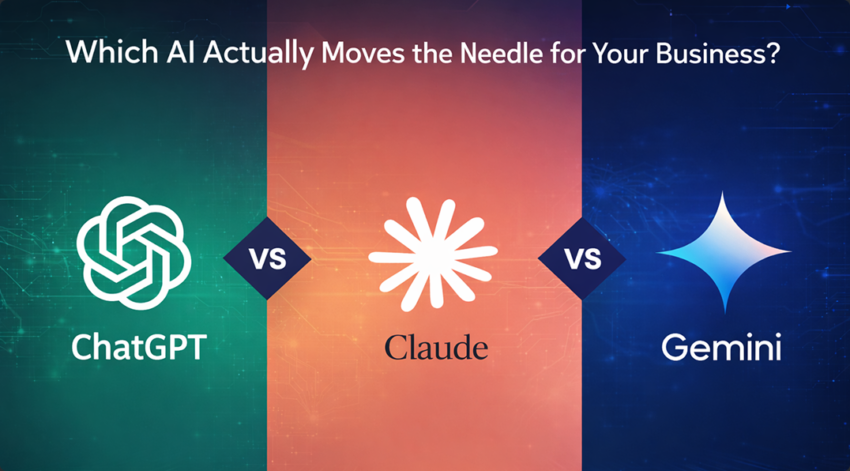
ChatGPT vs Claude vs Gemini: Which AI Actually Moves the Needle for Your Business?
AI tools are no longer a novelty in digital marketing. They’re embedded in how campaigns are planned, executed, optimised, and scaled. At Click Click Media, we’ve spent 17 years managing campaigns and building websites that generate real leads and in that time, we’ve learned one thing above all else: the right tool for the right job makes all the difference.
The real question isn’t whether to use AI. It’s which AI delivers the most commercial value for the task in front of you.
Three platforms dominate the conversation: ChatGPT, Claude, and Gemini. Each has distinct strengths, different personalities, and very different performance profiles depending on what you’re trying to achieve. Choosing the wrong one, or worse, using any of them without a clear strategy, can cost you time rather than save it.
If you’re unsure how AI fits into your broader digital marketing strategy, you’re not alone. Here’s our honest, practical breakdown.
First, a Quick Orientation
ChatGPT (developed by OpenAI) is the most well-known AI assistant in the world. The current flagship model, GPT-4o, has a massive user base, a mature plugin and integration ecosystem, and a head start on most competitors in terms of mainstream adoption. Think of it as your brilliant, imaginative general manager: fast, fluent, and adaptable.
Claude (developed by Anthropic) has quietly become a favourite among professional users who need nuanced, long-form output. The latest Claude models are trained with a strong emphasis on following complex instructions and producing content that reads like it was written by a thinking human. It’s less about rapid output and more about structured thinking and depth: your super-organised technical analyst who doesn’t believe in fluff.
Gemini (developed by Google) is deeply integrated into the Google ecosystem: Search, Workspace, Ads, and Analytics. For businesses already operating within Google’s stack, Gemini offers native connectivity that neither ChatGPT nor Claude can currently match out of the box. It’s the ecosystem multimodalist: less about raw output quality, more about where it lives.
Not sure which tools belong in your workflow? Our AI consulting services can help you map out a practical implementation plan for your business.
Content Creation: Where Each Tool Shines
Content is where most businesses first encounter AI and it’s also where the differences between tools become immediately obvious.
ChatGPT is strong for producing content at scale. It handles tone adaptation well, which is critical when managing multiple brands or verticals. It can write a blog post, product description, social caption, and meta description in the same session without missing a beat. The challenge: its default output tends toward a certain generic quality that requires significant editing before it reflects your brand. Left unguided, it confidently produces content that sounds competent but lacks distinctiveness.
Claude is where output quality noticeably shifts when depth, careful tone, or complex instruction-following is required. Give Claude a detailed brief: your brand voice guidelines, a specific target audience, a word count, a structure and it executes that brief with more fidelity than the alternatives. For long-form content like whitepapers, SEO-rich service pages, or email sequences, Claude is our preferred tool. It also handles nuanced tasks well, such as rewriting existing content to improve readability without losing original meaning. It produces more natural, less “AI-sounding” outputs.
Gemini is still finding its feet in terms of raw writing quality, but it has a meaningful advantage in content research workflows for businesses embedded in Google Workspace. If you need to pull real-time data, reference recent search trends, or connect your content creation to what’s actually ranking in Google Search, Gemini’s integration with Google’s data ecosystem gives it a lane that neither competitor can easily occupy.
Bottom line: Use Claude when quality and precision matter most. Use ChatGPT when speed and volume are the priority. Use Gemini when you need your content workflow connected to Google’s data.
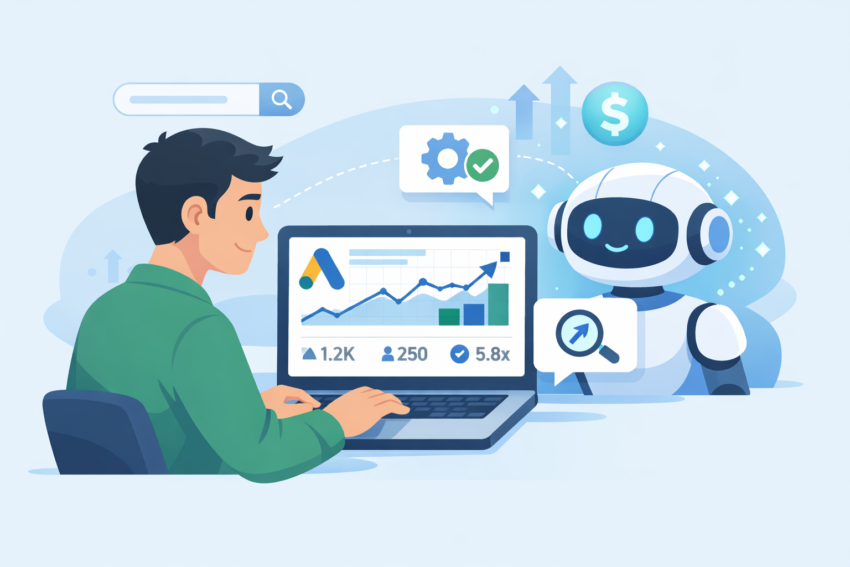
Google Ads and Paid Media: Where the Dollars Are on the Line
uses AI tools daily across campaign creation and copy testing: here’s how each one performs.
ChatGPT can draft Google Ads copy at volume. It understands character limits, writes in responsive search ad format, and generates multiple variations quickly. For businesses that need to test a wide range of messaging across a campaign, ChatGPT’s speed is a genuine advantage.
Claude brings a more considered approach to ad copy. When briefed with the audience’s pain points, the product’s specific differentiators, and the tone you want to stand apart from, Claude tends to produce copy with sharper angles and more deliberate language. For high-value campaigns where a single well-crafted headline can meaningfully shift your ROAS, this precision matters.
Gemini is where the story gets genuinely interesting for paid media. Through its integration with Google Ads, Gemini can surface performance insights, suggest bid adjustments, generate ad variations informed by what’s already working in your account, and connect ad performance data directly to the creative process. For businesses managing significant Google Ads budgets, this data-to-creative loop is a meaningful operational advantage that neither ChatGPT nor Claude can replicate without manual data imports.
Bottom line: Use ChatGPT or Claude for copy generation. Use Gemini if you want your copy creation informed by live performance data from your actual Google Ads account.
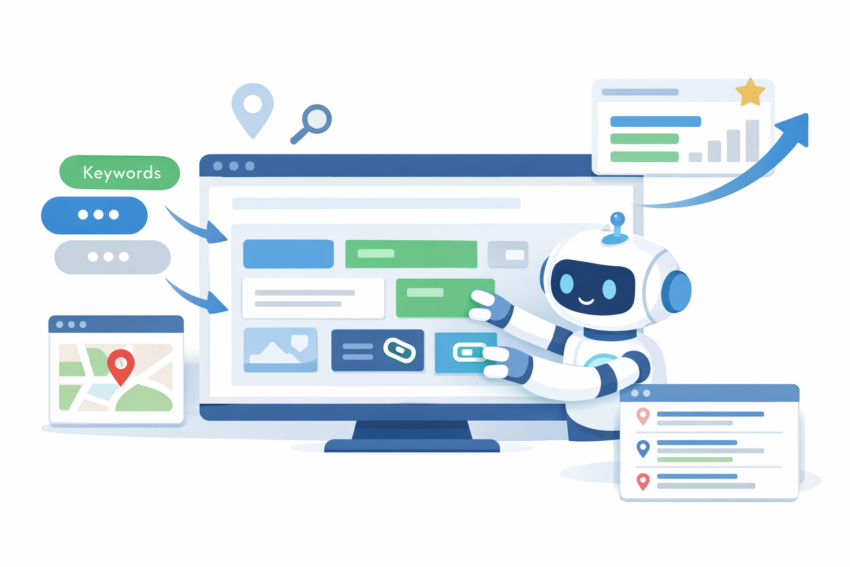
SEO: The Tool That Understands Search Intent
SEO remains one of the highest-leverage digital marketing activities for most businesses.
ChatGPT can generate keyword lists, produce FAQ content, and help structure service pages. Its broad general knowledge makes it a reasonable starting point for topic ideation and content outlines. Its limitation: no direct connection to live search data, which means keyword suggestions and competitive insights can quickly become stale or miss local nuances entirely.
Claude excels at the execution side of SEO. Given a keyword brief, a target audience definition, and a set of ranking signals, it consistently produces content that is semantically rich, appropriately structured, and genuinely useful to a reader. For rebuilding service pages or developing location-specific landing pages, Claude requires less revision and better reflects the intent signals we’re targeting. It also handles the finer points of SEO copywriting well: heading hierarchy, natural keyword variation, and internal link anchoring.
Gemini has real potential here because of its ability to pull current Google Search data. Integration with Google Search Console and Google Ads data means Gemini can, in theory, help you understand what your audience is searching for right now and build content strategy around live ranking signals. In practice, the full depth of this integration is still maturing, but it’s worth watching closely.
Bottom line: Claude is currently the strongest pure execution partner for SEO content. Gemini is the most promising long-term partner for SEO strategy informed by live Google data. For businesses that want expert-led local SEO execution alongside AI-assisted content production, combining the two is where the real gains are.
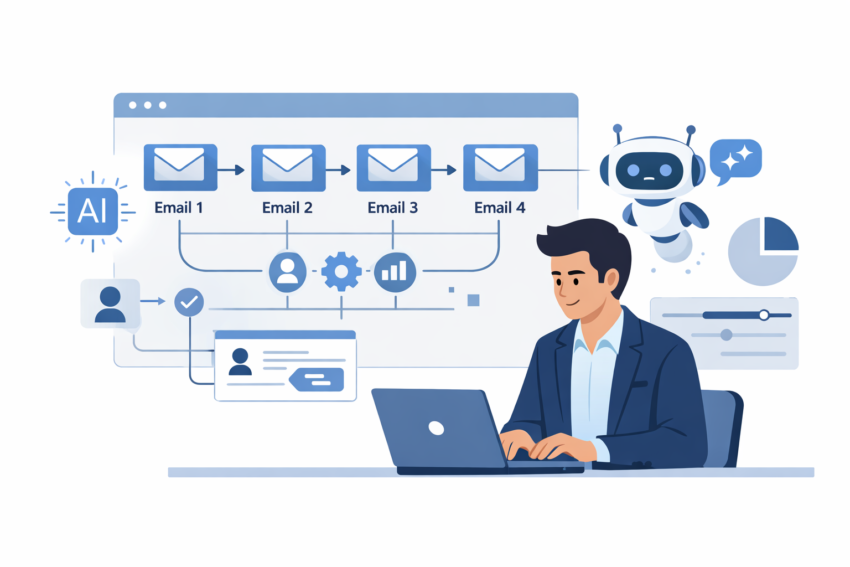
Email Marketing: Quality vs. Volume
Email remains one of the highest-ROI digital marketing channels, and AI can meaningfully accelerate how quickly you build campaigns.
ChatGPT is well-suited for generating email sequences at volume: welcome series, nurture flows, promotional campaigns. It can produce a five-email drip campaign in a single session. The same caveat about generic quality applies; you will need to layer in your brand voice carefully.
Claude handles complex, personalised email sequences particularly well. For B2B businesses where email tone needs to be professional, specific, and relationship-building rather than promotional, Claude’s output is consistently stronger. It’s also better at maintaining consistency across a long sequence: email four of a nurture series won’t suddenly feel like it was written by a different author.
Gemini integrates directly with Gmail and Google Workspace, which has practical implications for teams building email campaigns inside a Google-native stack. The raw creative output may not match Claude or ChatGPT, but reduced friction for teams already living in Google tools is a real operational benefit.
Bottom line: Claude for quality and consistency. ChatGPT for speed and volume. Gemini if your team is fully embedded in Google Workspace.

Social Media: Volume Meets Voice
Social media demands high output and consistent brand personality: two things AI handles differently. Our paid social team integrates AI tools into campaign creative workflows across Meta, LinkedIn, and TikTok.
ChatGPT is strong here. It adapts tone across platforms (LinkedIn, Instagram, and X all require different registers), and can produce a month’s worth of content calendar ideas in a short session. For teams that need social content at scale, ChatGPT is the most practical tool.
Claude is better suited to social content where the individual post needs to do real work: a LinkedIn thought-leadership piece that reflects a founder’s voice, a product announcement that needs to land precisely, or a response to a sensitive customer interaction.
Gemini can surface trending topics from Google Search data and connect those trends to your content calendar. For businesses that want their social strategy informed by what people are actually searching for right now, that’s a genuinely useful capability.

Data Analysis and Reporting
This is often an overlooked AI use case, but one of the most immediately valuable for marketing teams.
ChatGPT with its Advanced Data Analysis plugin, can analyse uploaded CSV files, identify patterns, generate charts, and surface insights from raw data. This is particularly useful for teams doing ad-hoc analysis without a dedicated data analyst.
Claude handles large volumes of text-based data exceptionally well. If you need to analyse customer feedback at scale, summarise competitor positioning from a set of documents, or extract themes from survey responses, Claude’s ability to process and reason across long documents is a distinct advantage.
Gemini connects directly to Google Analytics 4, Google Ads, and Google Search Console, which means it can answer questions about your marketing performance without any data export required. Ask Gemini what drove the spike in traffic last Tuesday, and it can actually go and find out. For most marketing teams, this is the most immediately practical AI-powered analytics capability currently available.
The Honest Pros and Cons
ChatGPT
Strengths: Speed, versatility, strong integration ecosystem, broad general knowledge, ease of adoption across teams.
Weaknesses: Default output quality can be generic; requires careful prompting to reflect specific brand voices; no native connection to live marketing platform data.
Claude
Strengths: Highest quality long-form output, exceptional instruction-following, best for complex briefs, professional tone, nuanced reasoning, less prone to hallucination.
Weaknesses: Smaller third-party integration ecosystem; not natively connected to marketing platforms; interface is designed for deeper work, which can feel like overkill for quick tasks.
Gemini
Strengths: Deep integration with Google’s entire marketing ecosystem (Ads, Analytics, Search Console, Workspace), access to live search data, native tools for Google Ads users, sophisticated multimodal capabilities including video analysis.
Weaknesses: Raw writing quality still lags behind Claude and ChatGPT in many content tasks; integration features are still maturing; most value is realised only if you’re operating within Google’s stack.
How We Use These Tools in Practice
At Click Click Media, we don’t believe you have to choose just one. In fact, relying on a single AI for everything is usually a mistake. The most effective approach is a toolkit strategy: you deploy each tool for its strengths.
A typical workflow might look like:
- ChatGPT for ad copy generation, landing page drafts, social media content, and SEO frameworks
- Claude for strategy documents, long-form content, content refinement, and client-facing narratives
- Gemini for keyword validation, Google Ads alignment, data analysis, and trend checking
To learn more about how we build AI into scalable workflows, explore our AI consulting services or browse the latest thinking on our insights blog.
One Important Caveat
The biggest mistake businesses make is treating AI outputs as final. Common issues include publishing unverified content, using generic messaging that doesn’t convert, and missing brand nuance and differentiation.
There is no single “best” AI platform. The competitive advantage doesn’t come from access to these tools: it comes from how they are used within a structured marketing strategy. Businesses that treat AI as a shortcut will get average results. Businesses that integrate AI into a performance framework will scale faster, test more, and ultimately outperform competitors.
AI accelerates execution. It does not replace the thinking, the audience understanding, or the analytical rigour that sits behind a high-performing digital marketing campaign. If you’re investing in web development or rebuilding your digital presence, that same principle applies: AI can assist in the build, but strategy and expertise drive the outcome.
Ready to See How AI Fits Into Your Strategy?
At Click Click Media, we’ve been integrating AI across our content, SEO, and development workflows because it allows our team to do more of what actually matters: thinking strategically, communicating clearly, and delivering results that show up in client accounts.
If you want to understand how AI can fit into your specific marketing strategy, or if you’re concerned that your current content and SEO performance isn’t where it needs to be, reach out to our team for a discovery session. We’ll map out what will actually move the needle for your business.