
Misleading Metrics: Why Your Data Looks So Good But Your Revenue Doesn’t
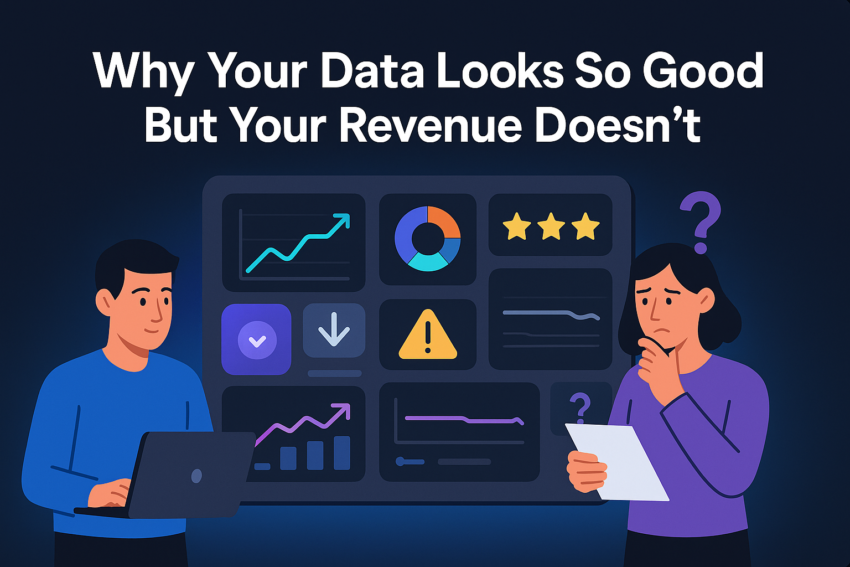
Over the past six months, nearly every Google Ads audit we have conducted has revealed the same setup. Accounts running one to three Performance Max campaigns, and very little else.
On the surface, these accounts looked healthy. Impressions were high. Clicks were flowing. Conversion numbers appeared to be improving.
But when we spoke to the business owners, the story changed.
Revenue was flat. Lead quality was poor. Sales teams were frustrated. Growth had stalled.
This gap between reported performance and real business outcomes became impossible to ignore.
Performance Max can be powerful when used with intention. But all too often, we see it deployed as a shortcut… a convenient switch that promises reach, automation, and efficiency.
The result? Great-looking metrics. But weak business outcomes.
Let’s break down why.
The Problem: Pmax Alone Is Not a Strategy
Performance Max is not inherently flawed. When structured correctly, it can be one of the most effective scaling tools in Google Ads.
The issue we uncovered was how it was being deployed.
In most cases, Performance Max had replaced strategy rather than supporting it. Instead of being part of a broader ecosystem, it was the ecosystem. No supporting Search campaigns. No brand protection. No segmentation by intent. No control over where spend was actually going.
The result was predictable.
The account was easy to build, but not designed to drive meaningful growth.
When an account leans entirely on Pmax, we can almost guarantee one thing: It wasn’t built strategically. It was built easily.
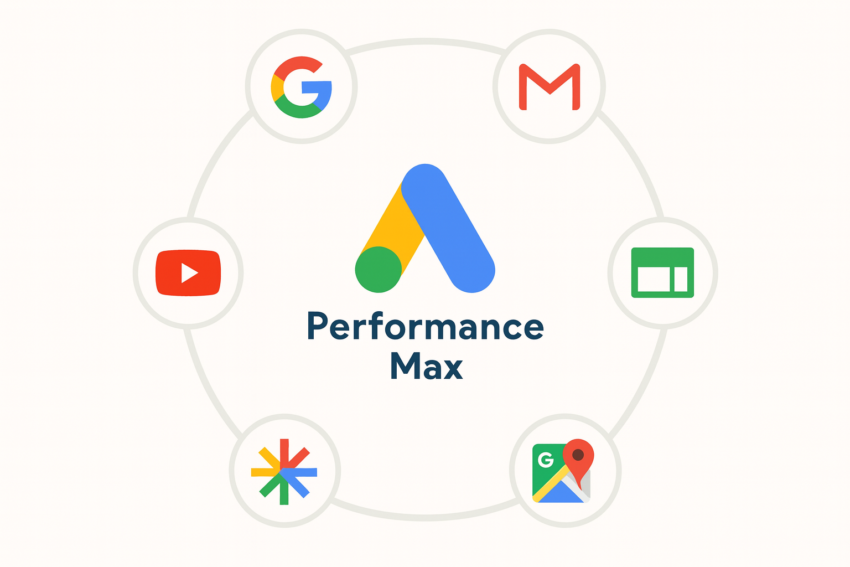
Performance Max touches every major Google placement, but without clear guidance, it will push your spend wherever it can find the easiest wins on paper.
This is where the disconnect begins: the platform says you’re doing great, but your business says otherwise.
The Symptom: High Activity, Low Relevance
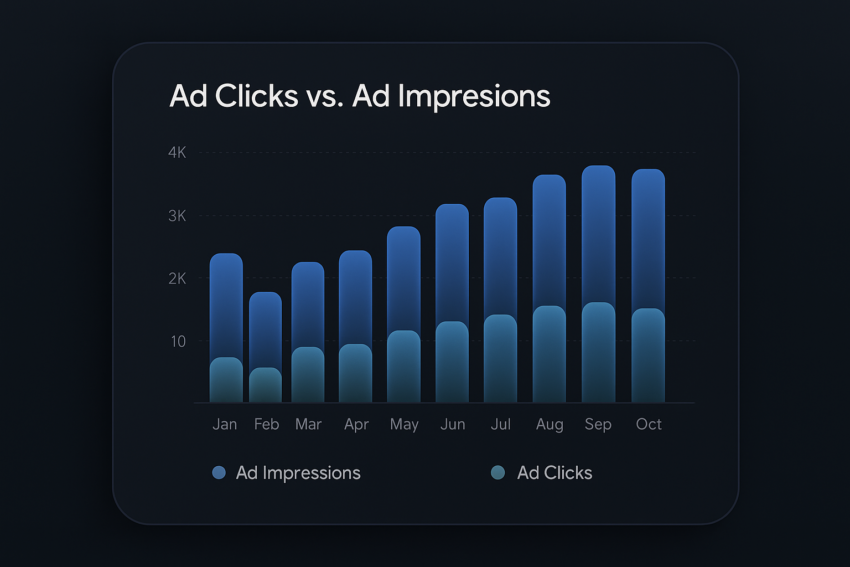
One of the first red flags we consistently identified was the relationship between impressions, clicks, and click-through rate.
Performance Max distributes ads across Search, Display, YouTube, Discover, Gmail, Maps, and mobile placements by default. Without strong intent signals and structural guidance, Google optimises toward volume rather than relevance.
This creates a familiar pattern:
Impressions climb rapidly. Clicks follow. CTR declines
From a reporting perspective, activity looks strong. From a buyer intent perspective, it is diluted.
The platform is doing exactly what it has been asked to do, just not what the business actually needs.
It’s the inevitable outcome of letting Google optimise for volume, not relevance.

The Hidden Issue: Your Assets Are Working Against You
One of the most overlooked aspects of Performance Max is its reliance on creative assets.
Performance Max is not just a bidding system. It is a creative assembly engine. Headlines, descriptions, images, videos, and brand signals are constantly combined and tested across placements.
In the accounts we audited, asset libraries were often thin, mismatched, or repurposed from other campaign types.
What happens if your asset library is thin or mismatched?
- Google fills the gaps with auto-generated creatives
- Ads look generic, off-brand or low quality
- You pay to make your business look worse than it is
- Poor creative performance leads the algorithm to optimise toward the wrong traffic
The impact is compounding. Once the system starts optimising around poor signals, performance deteriorates quickly.
Strong Performance Max campaigns require assets built specifically for Search, Display, YouTube, Discover, Gmail, and mobile-first environments, in every required format and size.
Without this, you aren’t just leaving performance on the table, you’re paying to do your brand a disservice.
Weak assets don’t just underperform; they teach the algorithm the wrong lessons.
And once it starts optimising around low-quality signals, your results spiral fast.
The Illusion of Conversions
Another recurring issue was how conversions were being reported.
On paper, conversion numbers were improving. In reality, very little new business was being generated.
Performance Max naturally gravitates toward low-resistance outcomes unless explicitly controlled. This often means:
- Heavy spend on brand search
- Traffic with little commercial intent
- Spam leads and low-quality form submissions
When these aren’t excluded or controlled, you end up paying for conversions you were always going to get anyway and the ones you get, aren’t looking for your services, inflating the numbers without driving real growth.
You’re Getting More “Leads”… But Not More Sales
We hear this constantly:
“Leads are up, but they’re all junk.”
This happens when Pmax over-optimises toward the easiest actions rather than the most valuable ones. Without proper conversion prioritisation and quality signals, the algorithm floods your pipeline with:
- Spam submissions
- Irrelevant enquiries
- Unqualified traffic
More budget won’t fix it. It actually makes the problem worse.

The Reality: Performance Max Is Not the Problem
Across every audit, the conclusion was consistent.
Performance Max works. Poor strategy does not.
High-performing accounts shared the same foundations:
- Clear intent-based signals
- Tightly controlled campaign structure and budgets
- High-quality assets built for each placement
- Conversion tracking focused on quality, not volume
- A multi-campaign ecosystem supporting Pmax rather than replacing everything else
When all of these pieces work together, Pmax becomes a powerful scaling tool. When they don’t, it becomes a very expensive guessing machine.
The Takeaway: Don’t Let Good-Looking Metrics Fool You
Most advertisers struggling with Performance Max do not have a Google Ads problem.
They have a strategy problem disguised as good results.
Platforms report efficiency. Businesses feel effectiveness.
And when the wrong placements, wrong audiences, and wrong assets collide, Pmax spends your budget efficiently… just not effectively.
Want to Know What Your Pmax Data Really Means?
If you feel like your metrics are improving but your business isn’t, it might be time for a deeper look under the hood.
We help businesses uncover what is really happening by:
- Identifying wasted spend
- Fixing tracking and signal issues
- Closing asset gaps
- Rebuilding campaign structure
- Refocusing performance on real revenue growth
If you want to understand what your Performance Max data is actually telling Google, and what it is quietly hiding from you, we can help uncover it.
Just say the word. Get in touch with our team and we will help you uncover what is really driving performance, and what needs to change to unlock real growth.