
Is Your Logo Quietly Damaging Your Brand Credibility?
A logo is often the first brand asset a customer recognises. It appears on websites, ads, proposals, social media, invoices, signage, and email signatures. Done right, it builds familiarity and trust. Done wrong, it quietly erodes credibility.
In agency work, we regularly see brands invest heavily in strategy, web design, and campaigns, only to let inconsistent logo usage chip away at the perceived professionalism of their brand. The issue is rarely the logo itself. It’s how it’s handled day-to-day.
Below are the most common logo usage mistakes that undermine brand credibility, and how to avoid them.
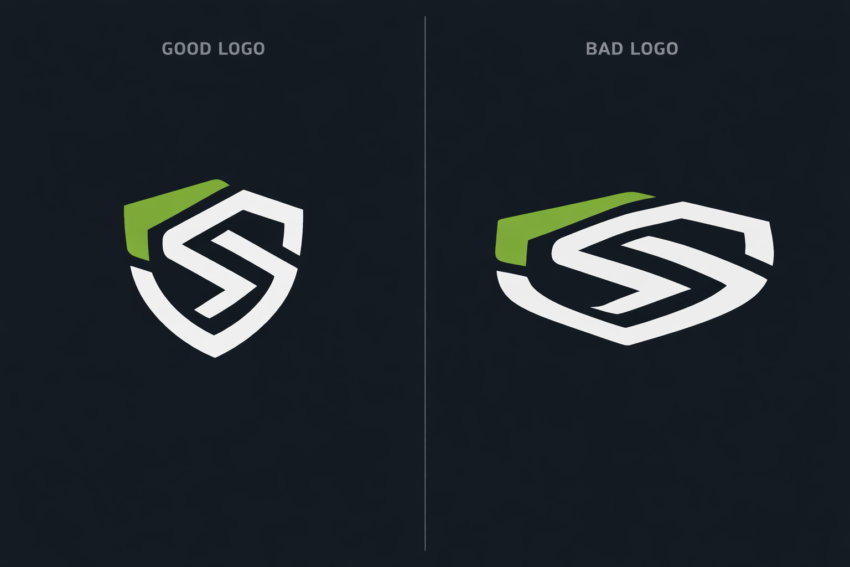
Stretching or Squashing the Logo
One of the most frequent errors is resizing a logo without maintaining its proportions. A stretched logo might seem like a small detail, but to users it signals a lack of polish and care.
Consistency in aspect ratio ensures your logo always appears intentional and professionally placed. Every logo file should have defined scaling rules, especially for responsive web environments where logos need to adapt across breakpoints without distortion.

Using the Wrong File Format
A pixelated logo on a high-resolution screen instantly communicates low quality. This typically happens when raster files are used where vector files are required, or when compressed images are reused across platforms.
Brand systems should include:
- Vector formats for print and scalable digital use.
- High-resolution transparent PNGs for web and presentations.
- Optimised SVGs for modern websites.
When teams don’t know which file to use, inconsistencies appear quickly across touchpoints
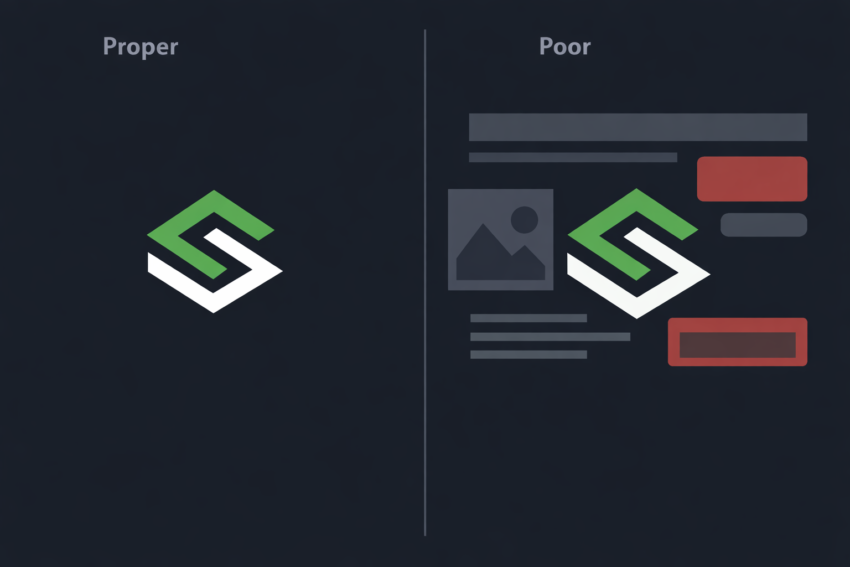
Ignoring Clear Space Rules
Every logo needs breathing room. Placing text, buttons, images, or page edges too close to the mark makes it feel cramped and reduces legibility.
Clear space rules protect the logo’s visibility and ensure it remains distinct in busy layouts. Without these rules, even a well-designed logo can look cluttered in application.
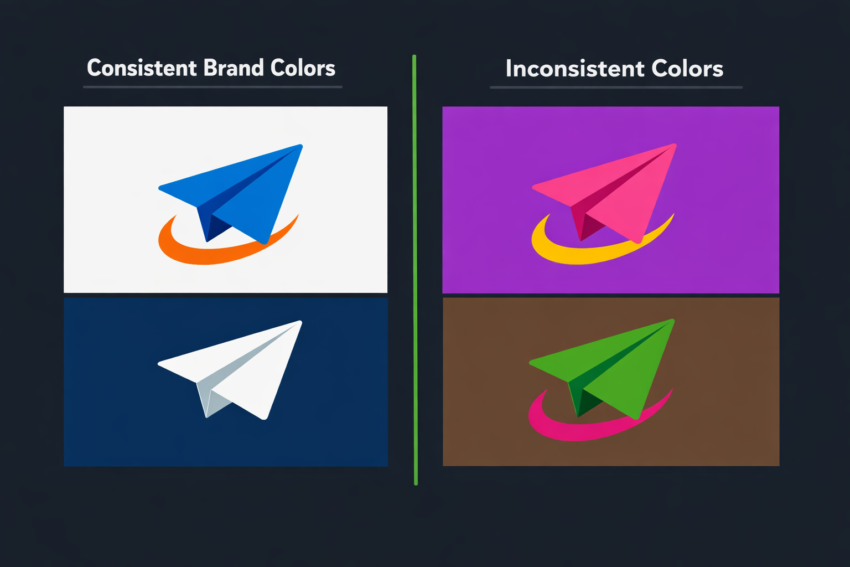
Changing Colours Arbitrarily
Swapping brand colours for convenience, personal taste, or background contrast weakens brand recognition. Over time, customers stop associating consistent visual cues with the brand.
Colour rules should define:
- Primary logo colours.
- Approved single-colour variations.
- Backgrounds the logo can and cannot sit on.
Without defined colour standards, brand identity slowly drifts.
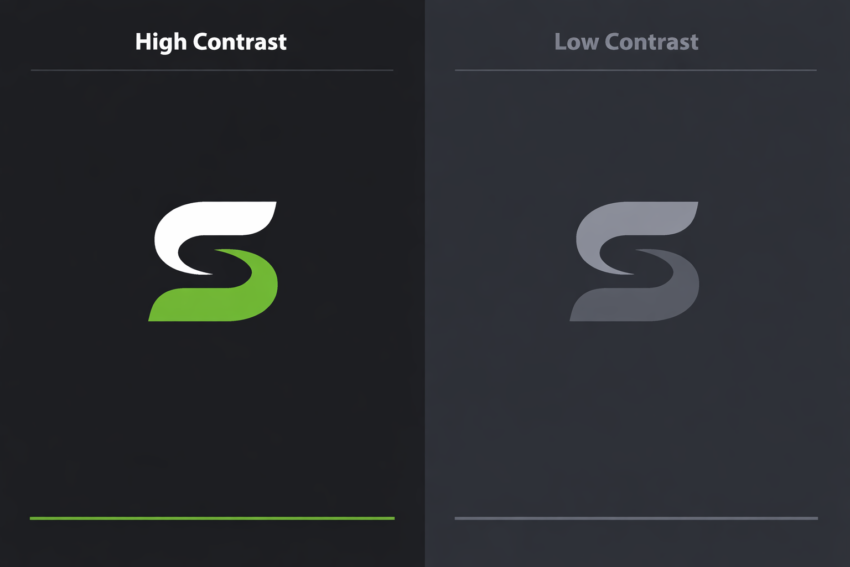
Placing Logos on Poor-Contrast Backgrounds
Logos must remain legible at a glance. Low contrast between logo and background leads to accessibility issues and weakens visual impact.
Every brand should define approved background treatments, including when to use reversed or mono versions of the logo. This becomes especially important in social tiles, website banners, and ad creative.
Using Outdated Logo Files
As brands evolve, logos are refined. But old files have a habit of resurfacing in proposals, partner decks, or internal documents.
Version control matters. A centralised brand resource library ensures everyone is using the current approved assets.

Creating Unapproved Variations
Rotating the logo, adding effects, rearranging elements, or rebuilding it manually introduces inconsistency. Over time, these small deviations dilute brand integrity.
A logo is not flexible artwork. It’s a fixed brand asset. Flexibility comes from approved alternate lockups, not improvisation.
Lacking a Logo Usage Guide
Almost all of these problems stem from the same root cause. There is no clear, accessible logo usage guide.
A proper guide removes ambiguity by defining:
- File formats and usage.
- Clear space rules.
- Minimum sizes.
- Colour variations.
- Background treatments.
- Do’s and don’ts.
It becomes the single source of truth for internal teams, external partners, and suppliers.
How We Handle It at Click Click Media
We’ve seen firsthand how small inconsistencies in logo usage can quietly weaken a brand’s perceived professionalism. That’s why our own Click Click Media Logo Use Guide lives inside our Digital Marketing Resources hub.
It outlines exactly how our logo should appear across websites, proposals, presentations, social media, and partner materials, including spacing rules, colour applications, file formats, and incorrect usage examples. It keeps our brand consistent even as multiple designers, developers, and marketers touch our assets daily.
The same principle applies to every brand we work with. A logo isn’t just a design file. It’s a brand trust signal. Protecting its integrity protects the credibility of the entire business.
Fix Your Logo Usage, Strengthen Your Brand
Your logo is one of the most visible assets your business owns. When it’s applied consistently, it quietly reinforces trust at every touchpoint. When it’s handled inconsistently, it introduces doubt, even if everything else in your marketing is working hard.
If you’re seeing inconsistent logo use across your website, ads, presentations, proposals, or social channels, it’s time to tighten the system.
Get in touch with Click Click Media to create or refine your brand guidelines, logo usage framework, and digital asset library. We’ll help ensure your brand shows up consistently, professionally, and with the credibility it deserves.