
Sydney PPC Agency Management Done Properly: Granny Flats’ Turnaround

A Google Ads account left untouched for seven months doesn’t just stall. It gets worse, month after month, and you don’t find out how much worse until someone actually opens it up and looks.
Granny Flats Australia builds secondary dwellings across Sydney, and returned to Click Click Media in August 2026 for hands-on PPC agency management after a period without dedicated oversight. It’s not a low-volume account. Enquiries come in every week, and every week without anyone watching was a week of leads slipping through the cracks.
By June and July, the strain was showing. Conversion rate had dropped to 3.25%, the worst month in the dataset, and cost per lead had blown out to its highest point in the dataset. This is where proper PPC agency management earns its keep, catching the drift before it costs a business real leads, not just noticing it after the fact.
TL;DR
- Seven months without active management left conversion rate at 3.25% and cost per lead at its highest point in the dataset.
- One month back in, conversion rate jumped to 6.20% (from a 4.35% average) and CPL dropped to its lowest point since January.
- The fixes were foundational: campaign structure cleanup, phone call tracking, enhanced conversions, and a reset on smart bidding targets.
- A clear next move is already on the table: the Afternoon/Evening campaign has room to grow now there’s a real CPL to plan against.
- Neglected accounts don’t hold steady, they decay, and a senior team’s first weeks back are about resetting the foundations smart bidding needs to work at all.
Seven Months of No One Watching
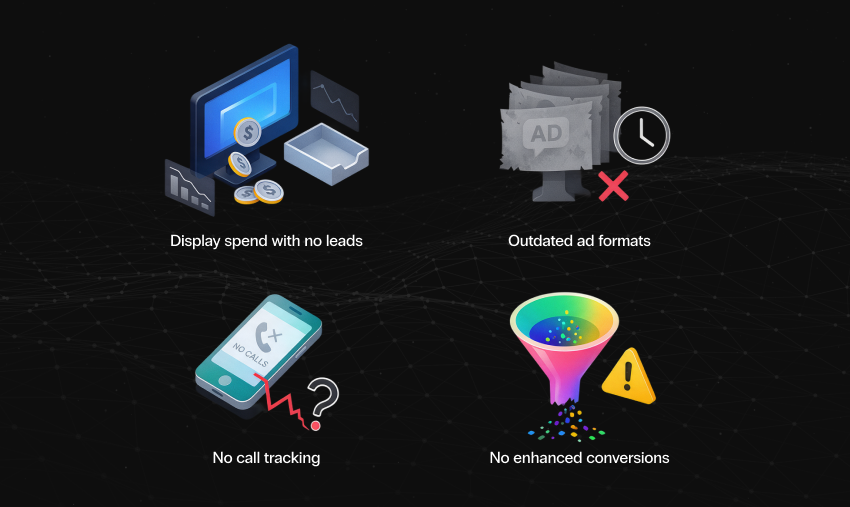
Nothing about the account had changed since the handover. No structural changes, no bid strategy updates, the same campaigns running the same way they had back in January. On paper, that might sound stable. In practice, it’s the opposite. An account without active oversight doesn’t hold its ground for long.
A quick audit of the account turned up exactly what seven months of neglect usually leaves behind:
- Display campaigns still spending every day, generating impressions but not leads
- Old ad formats that had quietly fallen out of best practice everywhere else in the account
- No phone call tracking, despite phone enquiries being how most prospects actually request a quote
- No enhanced conversions, meaning the conversion data reaching Google was incomplete from the start
That gap in call tracking was the quiet one. For a business where a phone call is typically how a prospect requests a quote, it meant a significant volume of actual leads was never being counted.
Smart bidding had nothing useful to learn from, because the data it needed didn’t exist. An algorithm optimising toward incomplete data will always find the wrong answer with total confidence.
Performance didn’t just stay flat while nobody was watching and drifted a little further every week, with the bidding system learning the wrong lesson more confidently each time, until the account was actively optimising itself in the wrong direction.
The Fix: Foundations Before Anything Else
The first month back wasn’t about new strategy. It was about fixing what should have been maintained all along, before touching anything more ambitious. Proper Google Ads agency management in month one looks like a return to basics, not a rebuild.
Four changes did almost all of the work. A campaign structure cleanup, switching on phone call tracking, adding enhanced conversions, and resetting the smart bidding targets that had drifted months earlier.
That matters more for an account with real, ongoing enquiry volume than for one running a handful of ads a month. A quiet account can sit neglected for a while without much changing. A busy one compounds every mistake, every week, into a bigger gap between what the account could be doing and what it’s actually doing.
Fixing What the Account Could See
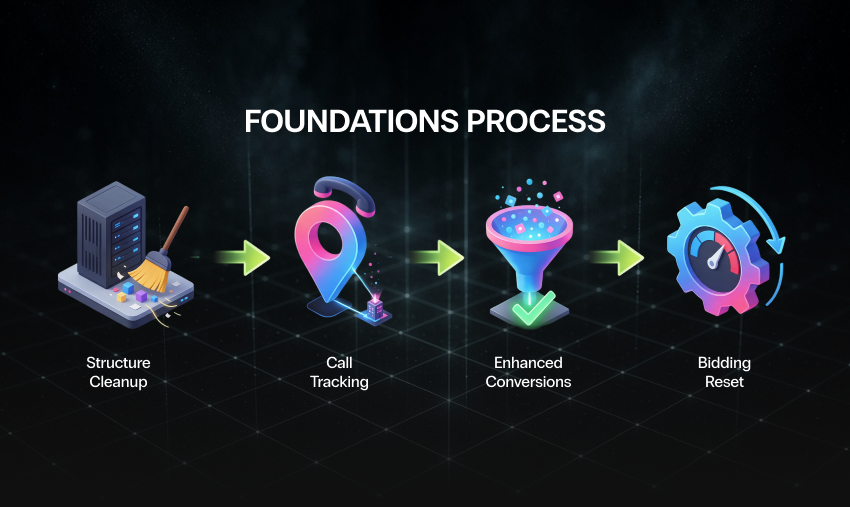
Two of the four changes were about giving the account eyes it didn’t have. No call tracking had been in place, which for a business built on quote requests over the phone was a serious gap, not just in reporting, but in what smart bidding could learn from.
Call tracking now captures and counts every inbound call from ads, giving the account a genuine picture of demand for the first time in seven months. Some calls come in outside business hours, from someone who’s been comparing options for weeks before finally picking up the phone, and without that tracking, there’d be no way of knowing that lead ever existed.
Enhanced Conversions
We added enhanced conversions to improve the accuracy of the conversion data passed back to Google. Better data going in means better bidding decisions coming out, and that data had been degrading quietly the whole time the account sat untouched.
On their own, enhanced conversions are a small technical change. Paired with call tracking, it lets smart bidding start learning from the full picture of demand instead of the partial one it had been working from.
Fixing How the Account Spent
The other half of the fix was about where the budget was actually going. Seven months of no management had left the account with accumulated inefficiencies. We audited and consolidated each campaign where it made sense, while pausing display campaigns that were consuming budget without generating leads.
Some of what surfaced only shows up when someone actually looks: placements and audiences left over from offers the business wasn’t even running anymore, and ad spend that should have gone toward campaigns actually generating leads.
That kind of cleanup is really a proper Google Ads audit done as the first act of management, not a favour tacked on afterwards. It finds the waste before deciding what to do about it.
Smart Bidding, Reset
With tracking now reflecting real lead activity, bidding targets and strategies were to align with current CPL goals, replacing targets that had gone stale after seven months without review. A bidding target set in January and never revisited isn’t a strategy anymore. It’s a guess the account is still following out of habit.
None of these four changes is advanced. Auditing the structure, switching on call tracking, tightening the conversion data, resetting the bidding targets. That’s PPC fundamentals, applied properly.
The Numbers: One Month Back
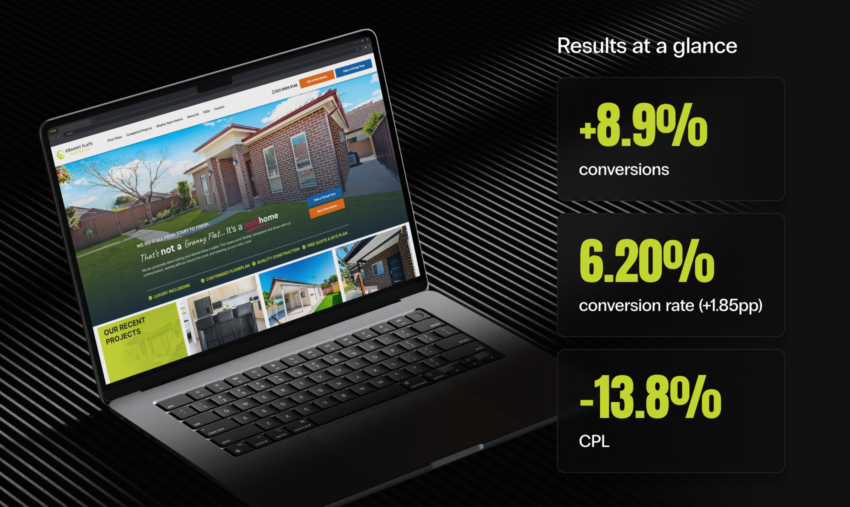
The reversal showed up immediately:
| Metric | Jan to Jul 2026 avg | August 2026 | Change |
|---|---|---|---|
| Conversions | Baseline | Higher | +8.9% |
| Conversion rate | 4.35% | 6.20% | +1.85pp |
| Cost per lead | Elevated | Reduced | -13.8% |
More conversions, a lower cost per lead, and a 6.20% conversion rate made this the strongest month in 2026 by a clear margin. The June-July slide didn’t just level out, but it reversed in the same month the account came back under active management.
The Standout: Leads That Were Always There
The most telling number in this account isn’t the conversion rate, but the calls that were happening the entire time and simply weren’t being counted.
A phone call is how most Granny Flats Australia prospects request a quote, yet for seven months, an unknown share of those calls never appeared in reporting or influenced where the algorithm put its next dollar. Those were real lead generation opportunities the account was designed to support.
Fixing that isn’t a technical footnote. It’s the difference between an account making decisions based on real demand and one working from only a fraction of the picture. A secondary dwelling isn’t an impulse purchase, and an account that can’t see those calls is optimising blind at exactly the moment it matters most.
What’s Next in the First 90 Days
One month in, the next move is clear. The Afternoon/Evening campaign is currently limited by budget, and with call tracking now in place and CPL trending down, there’s finally a real performance baseline to plan a budget increase against.
That decision is better made with a full month of reliable data behind it than by guessing, and paid search rewards that patience over time. The next two months are about seeing whether the recovery holds and using the data to decide where the next dollar of budget belongs.
The Takeaway
Granny Flats Australia’s account didn’t need a new strategy. It needed someone to manage it, the kind of ongoing attention good PPC campaign management is built on, and a pattern that holds well beyond one account.
Left alone, campaigns don’t just stay flat, but get worse. Smart bidding without accurate conversion data drifts, and display placements without oversight quietly drain budget.
And without call tracking, a real share of inbound leads stays invisible to both the reports and the algorithm deciding where to spend. None of what changed in August was complicated, and the results came through in the first month, as they did for Granny Flats Australia.
FAQs
What happens to an unmanaged Google Ads account?
Performance doesn’t stay flat, it decays. Bidding targets go stale, and budget drifts into weak placements, while conversion tracking gaps widen until the account is optimising toward incomplete data.
Why does call tracking matter for Google Ads?
For businesses where quote requests come by phone, untracked calls are invisible leads that never reach the reporting or the bidding algorithm. Adding call tracking gives smart bidding the real conversion data it needs to make good decisions.
How fast can a neglected PPC account recover?
Granny Flats Australia saw conversion rate and cost per lead both improve within the first month of active management resuming. Meaningful, lasting recovery still depends on consistent oversight in the months that follow.
What are enhanced conversions?
Enhanced conversions improve the accuracy of the conversion data sent back to Google, closing gaps that standard tracking can miss. More accurate data leads directly to better automated bidding decisions.
How often should an account be reviewed?
An account benefits from regular, active oversight rather than being set up once and left alone, since bidding targets and campaign structures both drift out of date over time. Waiting until performance visibly drops means recovering ground that didn’t need to be lost.
More Leads From Proper PPC Management
CCM’s Sydney-based team treats PPC management as ongoing work, not a set-and-forget service. That reliability goes back to 2008, backed by Google Premier Partner status and no lock-in contracts. If you want to see whether your own campaigns have gone stale, book a strategy chat, and we’ll take a look.