Smashville: 50% More Catering Enquiries. Same Budget. Two Years of Compounding Results.
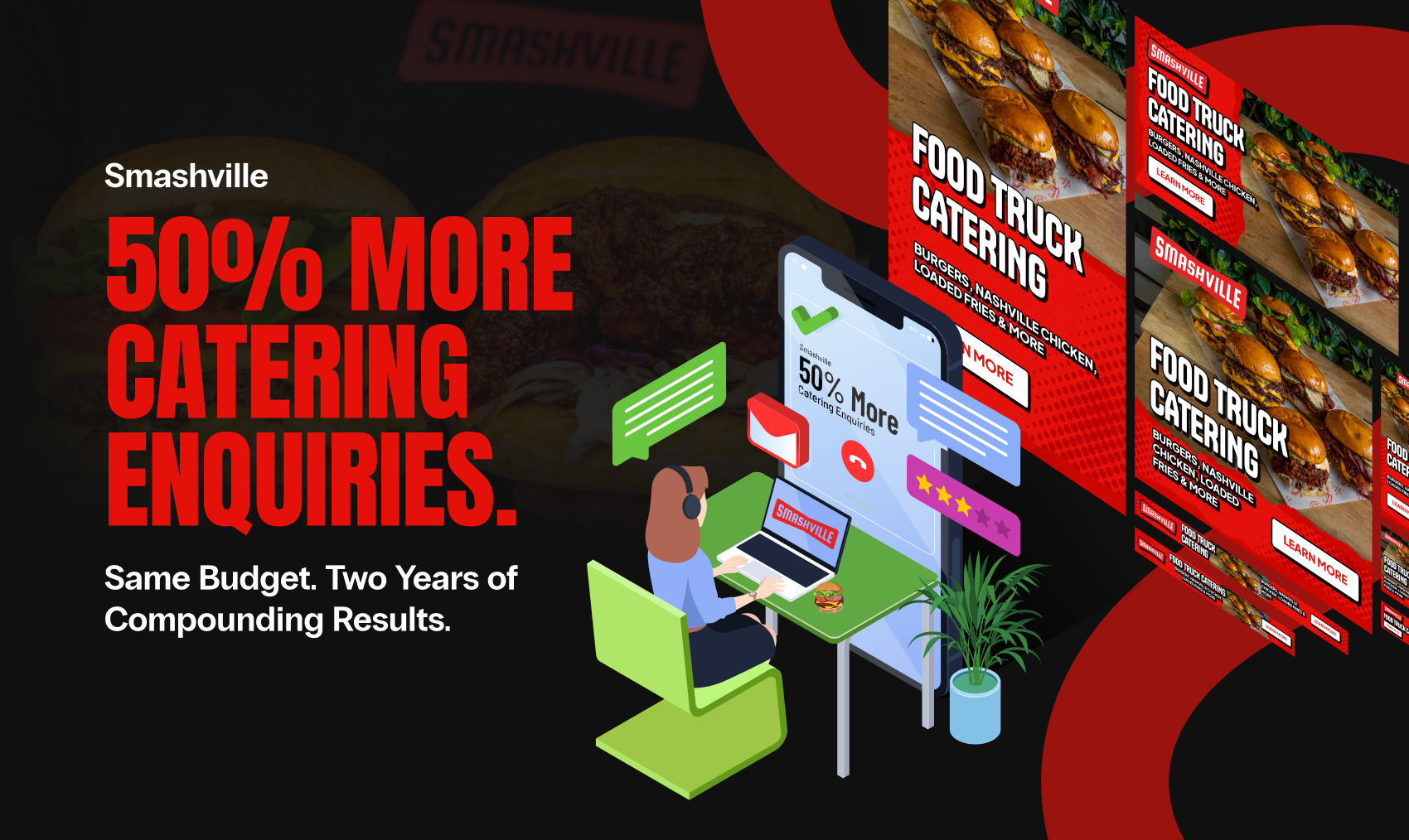
Two Google Ads campaigns. A quarterly budget that was not going to increase. A brief that could not have been simpler: more catering enquiries.
Over two years, Google Ads agency management in Sydney optimised and compounded those campaigns until they were generating 50% more inbound leads than when they launched. Conversion rate nearly doubled. Cost per lead fell. And 2026 is tracking ahead of where 2025 was at the same point.
The Client
Smashville is a hospitality business with an established catering offering. Corporate events, end-of-year functions, Christmas parties: catering is a significant revenue line, and each booking carries real weight. The business had been running Google Ads to drive catering enquiries but was looking for more from the channel without committing to a larger budget.
The Challenge
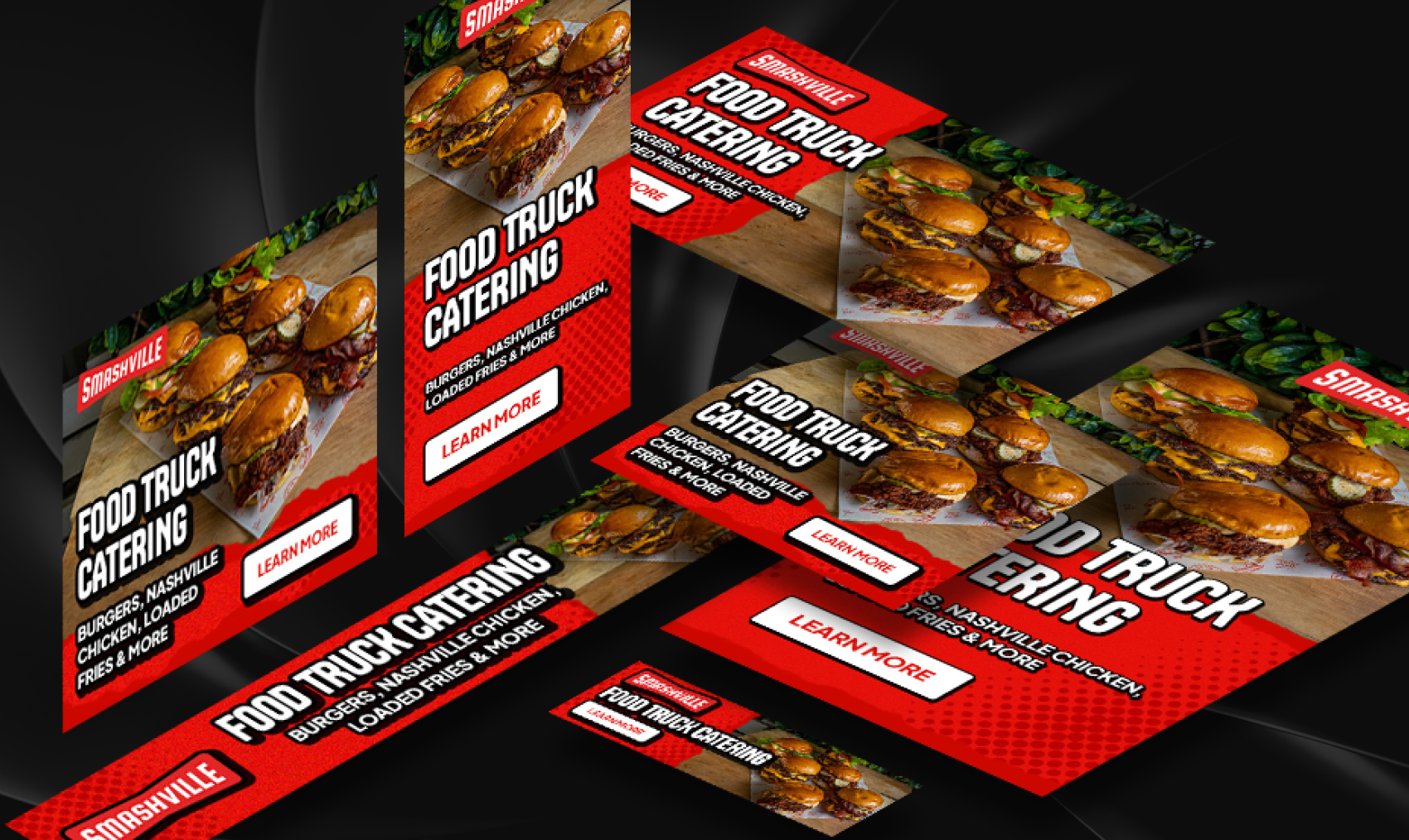
Two campaigns were live when Click Click Media came on board. One targeted general catering searches. The other focused on event-specific demand. Neither was broken. But the structure had gaps, the keyword targeting was broad, and the relationship between what people clicked on and what they landed on was looser than it needed to be.
The campaigns were generating enquiries. They just were not generating as many as they could. Budget was fixed. The only path forward was making each dollar work harder, and sustaining that improvement quarter after quarter.
What We Did
The approach across the engagement was systematic optimisation rather than wholesale change. No pivots, no experiments for their own sake. Each quarter built on the last.
Separated intent within the campaigns
General catering searches and event-specific searches represent different buyers at different stages. Someone searching “catering companies Sydney” is still comparing options. Someone searching “Christmas party catering CBD” is closer to a decision. Mixing them in the same campaign forces a compromise on keywords, bids, ad messaging, and landing pages. Separating them meant each audience could be served ads and a landing experience that matched where they actually were.
Improved ad relevance and Quality Scores
Better ad relevance has a compounding effect: higher Quality Scores lower effective cost per click, which means the same budget generates more clicks. Tighter keyword-to-ad alignment was applied across both campaigns. Each ad group was reviewed so the message matched the search term rather than covering a broad cluster.
Tightened the conversion path
Click-through rate improvements only matter if the clicks convert. The match between what the ad promised and what the landing page delivered was reviewed and tightened. When someone clicks on a corporate Christmas catering ad, they should land on a page that speaks to that specific need, not a general catering overview page that requires them to do more work to find what they were looking for.
Let the data compound
Quarterly learnings fed into the next quarter. Bid strategies were adjusted based on which searches were converting, not which searches were getting clicks. An account optimised over two years looks very different to one that was set up and left running. The CVR trajectory across the engagement reflects that directly.
The Results
Year-on-year: 2024 vs 2025
The headline comparison is 2024 to 2025. One note on the data: 2024 covers Q2 to Q4 only (the campaigns launched mid-year), while 2025 is a full calendar year. On a like-for-like quarterly basis, the campaigns were generating more enquiries from the same budget throughout the year.
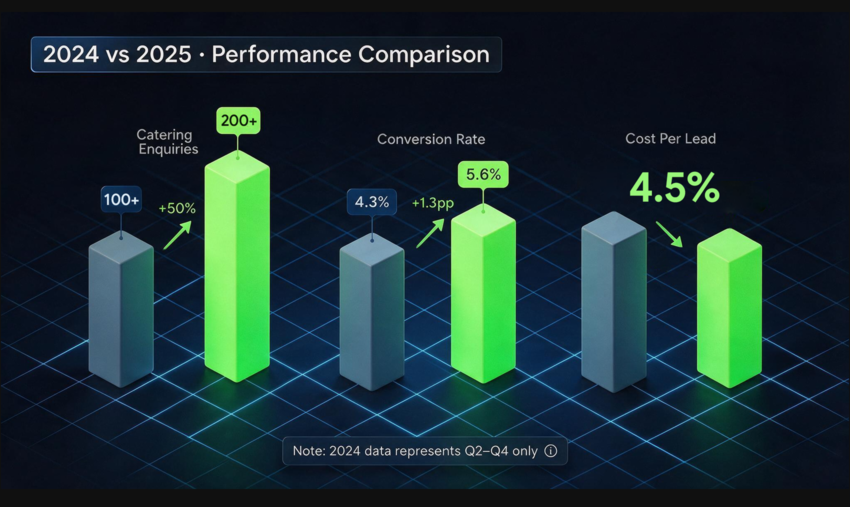
| Metric | 2024 | 2025 | Change |
|---|---|---|---|
| Catering enquiries | baseline | 1.5× | +50% |
| Conversion rate | 4.3% | 5.6% | +1.3pp |
| Cost per lead | baseline | 0.95× | −4.5% |
Conversion rate trajectory
The clearest signal of sustained improvement is the CVR trend. Starting at 4.2% at launch, conversion rate climbed as optimisation compounded quarter on quarter. Q4 2025 reached 7.0%, the strongest quarter the campaigns have run, timed with peak corporate catering demand.
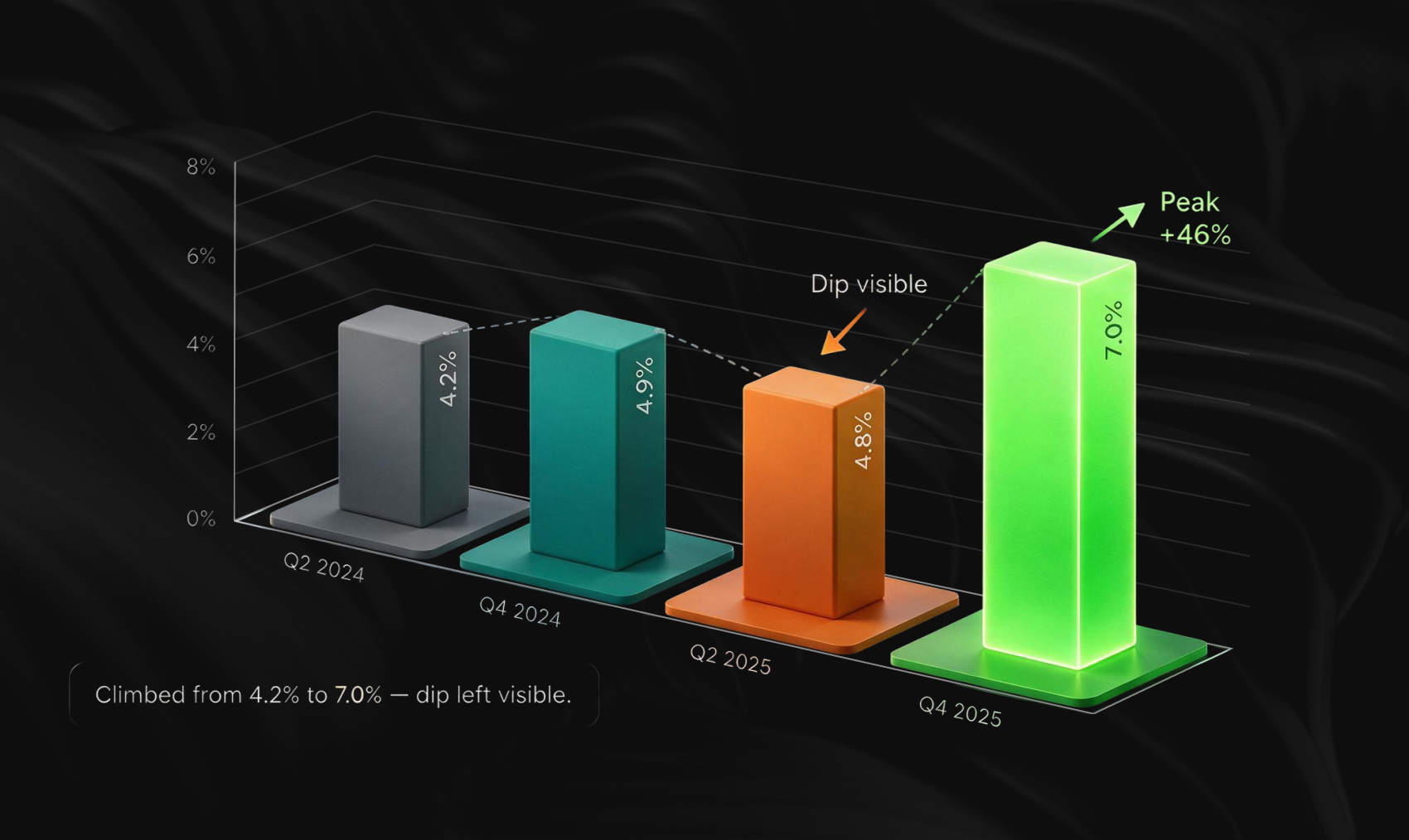
| Period | Conversion Rate |
|---|---|
| Q2 2024 (campaign launch) | 4.2% |
| Q4 2024 | 4.9% |
| Q2 2025 | 4.8% |
| Q4 2025 | 7.0% |
The Standout: Q4 2025, the Best Quarter on Record
Q4 2025 produced 70 catering enquiries at a cost per lead of $51.93. Both figures are the best the campaigns have generated. The timing was not coincidental. Q4 is peak season for corporate catering demand: Christmas functions, end-of-year events, farewell dinners. Having the campaigns in their most optimised state heading into that period meant Smashville could fully capitalise on demand rather than leaving enquiries to competitors.
The 2026 data supports the trajectory continuing. Early Q3 2026 is tracking at 7.2% conversion rate against 6.2% in the same period in 2025. With Q4 still ahead, the campaigns are positioned to set another record.
243 catering enquiries in a year is a pipeline. For a hospitality business where each booking carries real revenue weight, that volume of inbound leads, generated consistently month after month, is a reliable and growing source of new catering business.
The Takeaway
The campaigns did not need a budget increase. They needed time, structure, and consistent optimisation directed at the right metric: enquiries.
That is a pattern that repeats across well-managed Google Ads accounts. The channel rewards sustained attention. Better Quality Scores compound into lower CPCs. Better ad relevance compounds into better conversion rates. Better landing page alignment compounds into fewer wasted clicks. None of these happen overnight, and none are permanent without maintenance. But applied consistently, the cumulative effect shows up clearly in the numbers, as it did for Smashville.
The structural decisions (separating intent types into distinct campaigns, building tight keyword-to-ad alignment, matching landing pages to ad messages) are not advanced tactics. They are the fundamentals of Google Ads agency management in Sydney. Applied consistently over two years, they turned a pair of underperforming campaigns into the most efficient lead generation channel in the business.
Frequently Asked Questions
How long did it take to see results from the optimisation?
The campaigns launched in Q2 2024. By Q4 2024, conversion rate had climbed by close to a fifth. By Q4 2025 it sat at roughly 1.7× the launch rate. The improvement was not immediate. It was the result of quarterly optimisation cycles, where each period’s learnings shaped the next. Meaningful compound improvement typically takes six to twelve months of consistent work.
How did the campaigns improve without increasing the budget?
The quarterly campaign budget remained consistent. Gains came from better keyword intent matching, improved ad relevance lifting Quality Scores and reducing effective cost per click, tighter alignment between ad messages and landing page experience, and bid strategy adjustments based on what was actually converting. Each change reduced wasted spend and improved the proportion of clicks that turned into enquiries.
What is a realistic conversion rate for Google Ads catering enquiries?
For a well-optimised catering or hospitality campaign targeting high-intent searches, conversion rates of 4 to 6 percent are achievable in a competitive market. Smashville’s campaigns finished Q4 2025 comfortably above that range, reflecting both campaign quality and strong catering demand during the peak corporate events and Christmas functions period.
Why was Q4 the strongest period?
Q4 aligns with peak corporate catering demand in Australia: end-of-year functions, Christmas parties, and business event wrap-ups drive the highest search volume for catering services from October through December. Having campaigns in their best shape heading into this period meant Smashville could capitalise on seasonal demand rather than leaving enquiries to competitors.
Can Google Ads work for hospitality and catering businesses?
Yes, and often more effectively than social channels for high-intent enquiries. People searching for catering services have an active, near-term need. Google Ads puts your business in front of that intent at the right moment. The key variables are campaign structure, keyword intent matching, ad relevance, and landing page quality, all of which compound over time with consistent optimisation.
More Enquiries From Your Existing Budget
A free Google Ads audit from Click Click Media reviews your campaign structure, keyword targeting, ad relevance, and conversion path. Google Premier Partner. In business since 2008. No lock-in contracts. Book your audit here.