
ChatGPT Ads in Australia: What Business Owners Actually Need to Know
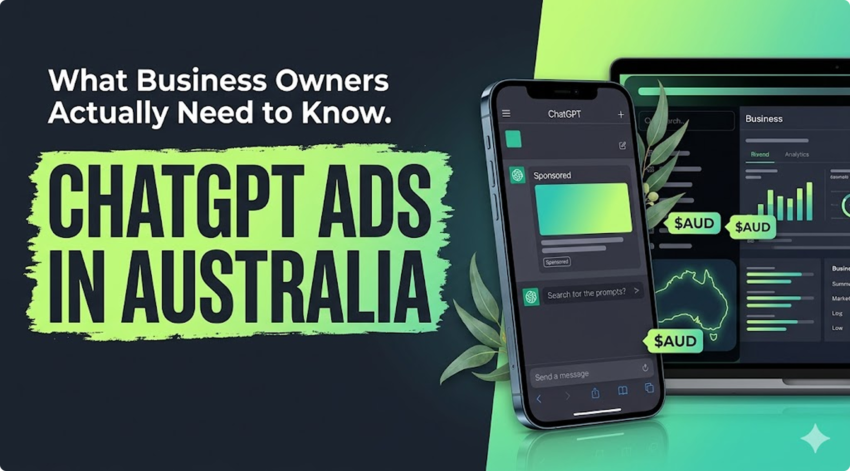
ChatGPT ads launched in Australia on 17 April 2026. Australia was among the first international markets to get access, alongside New Zealand and Canada, and the rollout moved fast. Brands paying attention had campaigns live within days. Most Australian businesses still haven’t heard about it.
That’s the window. It won’t stay open for long.
This article covers what ChatGPT ads actually are, how they work, what they cost right now, and most of all, whether your business should be spending on them. We’re not going to oversell it. The platform is three months old in Australia, and the measurement tooling has real limitations. But the underlying shift in how people search is real, and sitting it out entirely is a bigger mistake than engaging with it imperfectly.
As a Sydney PPC agency that has managed over $115 million in Google Ads spend for Australian businesses, we’ve seen new ad channels come and go. ChatGPT advertising is different. Here’s what you need to know. We offer ChatGPT Ads management for advertisers who want in early.
What ChatGPT ads actually are
ChatGPT now has 900 million weekly active users globally. Australian usage more than doubled in the 12 months before the ad product launched here. That’s a large, engaged audience using ChatGPT the way they once used Google: researching purchases, comparing services, and working through decisions before they ever type a search query.
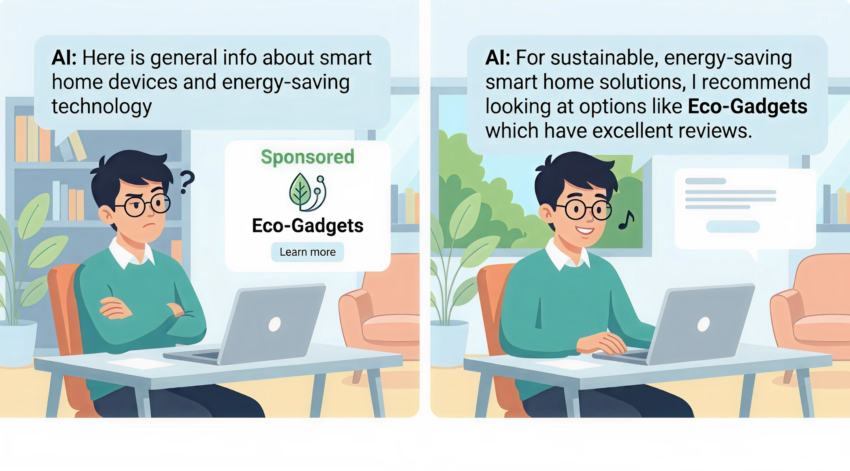
The ad format itself is simple. Ads appear at the bottom of a ChatGPT response, clearly labelled “Sponsored” and visually separated from the AI’s answer. On product queries, they can appear as sponsored product cards, similar to Google Shopping. The AI’s answer above the ad is organic and unchanged. OpenAI has been explicit on this point: advertising never influences what ChatGPT recommends in its actual response. A PPC audit will show where the budget is actually going.
That separation matters. Appearing in a ChatGPT ad and being recommended by ChatGPT are two completely different things. Understanding the distinction is the most important starting point for any business evaluating this channel.
Ads are only shown to users on the free tier and the $8/month Go plan. ChatGPT Plus, Pro, Business, Enterprise, and Education users see no ads at all. The addressable audience skews toward casual users and early-stage researchers, not the people who have paid to remove ads.
If you’re on the free tier, you may already be seeing sponsored placements beneath responses. If you’re on a paid plan, you won’t see them.
Why is this a different kind of advertising
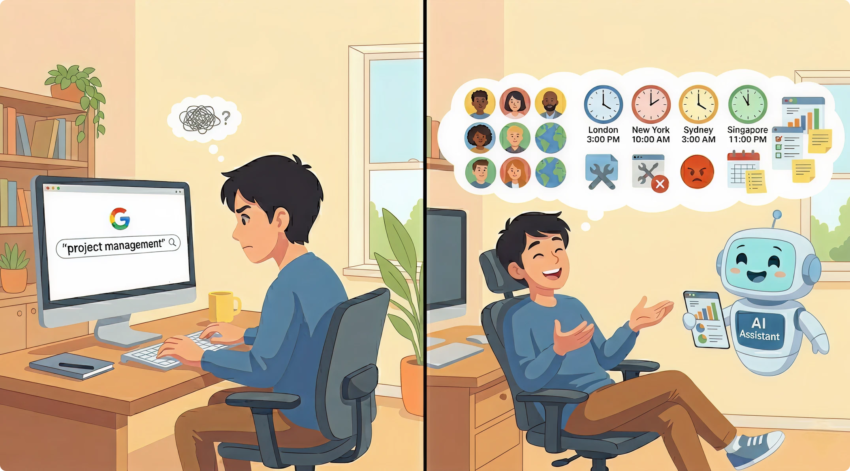
When Google introduced search ads in 2000, the insight was simple: reach someone at the exact moment they’re looking for what you sell. A keyword told you what they wanted.
ChatGPT advertising works differently. A conversation tells you what they’re thinking through.
Someone who types “project management software” into Google has declared a keyword. Someone who asks ChatGPT, “We have eight people across three time zones, and our current tool keeps breaking down. What do you recommend?” has described their situation, constraints, frustration, and buying stage. That’s a richer signal than any keyword string can carry.
This is contextual advertising at a depth that display and programmatic formats have never reached. The question is whether the current tooling is mature enough to act on it effectively. The honest answer is: partially. Which is why this article exists.
How targeting and ad inventory work
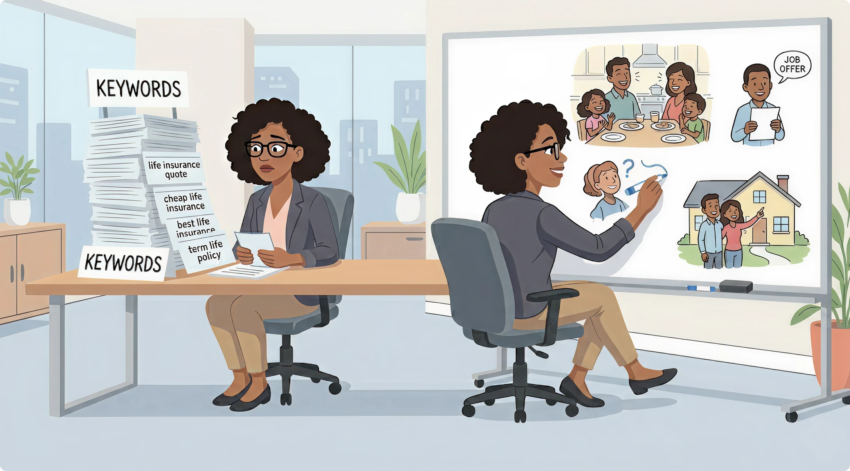
ChatGPT ads use contextual targeting, matched to the topic of the current conversation. There is no keyword bidding. There is no demographic targeting yet. Advertisers provide “context hints”, short descriptions of the conversational scenarios where their ad is relevant, and OpenAI’s systems match those to live conversations.
The shift in thinking required here is real. On Google Ads, you build keyword lists. On ChatGPT, you describe scenarios. An insurance company does not target “life insurance quote.” It describes the financial planning conversations, family protection discussions, or career transition moments where life insurance naturally fits. The platform does the matching.
Here’s what’s available now versus what’s on the roadmap:
Live now
- Contextual conversation matching (topic-based, with optional chat history for personalised ads)
Coming later in 2026
- Audience syncing and lookalike audiences (upload your customer list and match to ChatGPT users)
On privacy: advertisers cannot see user conversations, chat history, names, emails, or IP addresses. You receive aggregated performance data only, covering total views and clicks. That privacy boundary is deliberate, and it’s also why conversion tracking is currently limited. ChatGPT advertising is, by design, a cookieless advertising environment from day one. That will matter more as third-party cookies disappear from the open web.
What ChatGPT ads cost right now
OpenAI launched the ad product in February 2026 at $60 CPM with a $200,000 to $250,000 minimum spend. Both figures have come down considerably since then. As of May 2026, the self-serve OpenAI Ads Manager is open globally with no minimum spend requirement.
| Platform | Avg CPM | Avg CPC | Avg CTR | Min Spend |
| ChatGPT (May 2026) | $15-$40 | $3-$5 | 0.91% | None |
| Google Search (AU) | Varies | $2-$15+ | 6.4% | None |
| Meta (AU avg) | $10-$25 | $0.50-$3 | 0.9-2% | None |
| Google Display | $5-$20 | $0.50-$2 | 0.46% | None |
Sources: OpenAI Ads Manager; Google Ads industry benchmarks. Data as of May 2026.
The CTR comparison needs honest framing. ChatGPT’s current 0.91% is roughly seven times lower than Google Search’s 6.4% benchmark. That does not make it a bad channel. It makes it a different kind of channel at a different stage of maturity. Set expectations accordingly. Do not evaluate it against direct-response KPIs; it is not yet designed for that.
The measurement picture is the other real constraint. Current reporting gives you aggregated impressions and clicks. There is no pixel-based attribution, no demographic breakdown, no view-through conversion data. If your primary success metric is attributed revenue or cost per acquisition, you will find it hard to prove ChatGPT’s contribution with the tools available today.
ChatGPT ads vs Google Ads: what’s actually different
These two channels are not the same type of advertising. They are not competing with each other, at least not yet. They require different creative approaches, different measurement frameworks, and different conversations when you’re explaining results to a board or a CFO.
| ChatGPT Ads | Google Ads | |
| Targeting | Conversational context (topic + chat history) | Keywords, audiences, demographics |
| Intent signal | Full conversation thread | Keyword string |
| Ad placement | Below AI response, labelled Sponsored | Search results, Display, YouTube |
| Average CTR | 0.91% (currently) | 6.4% (Search benchmark) |
| Attribution | Aggregated views and clicks only (for now) | Full conversion tracking, CRM integration |
| Demographic targeting | Not yet available | Age, gender, income, in-market |
| Best use right now | Brand awareness, upper funnel reach | Direct response, lead gen, and ecommerce |
| Platform age in AU | 3 months (May 2026) | 20+ years, full tooling |
ChatGPT’s conversational format captures intent that keyword searches miss. Users working through a problem in a conversation, not yet ready to type a query, are a distinct and valuable audience. But the tooling to capture and prove that value is still being built. Google Ads, run well by a Sydney Google Ads agency, remains the more mature, more measurable, and more directly accountable channel for most Australian advertisers today.
Who should be running ChatGPT ads right now
Not every business is in the same position here. The right move depends on your objectives, your budget, and your tolerance for investing in a channel where attribution is still catching up to potential.
Strong case for testing now
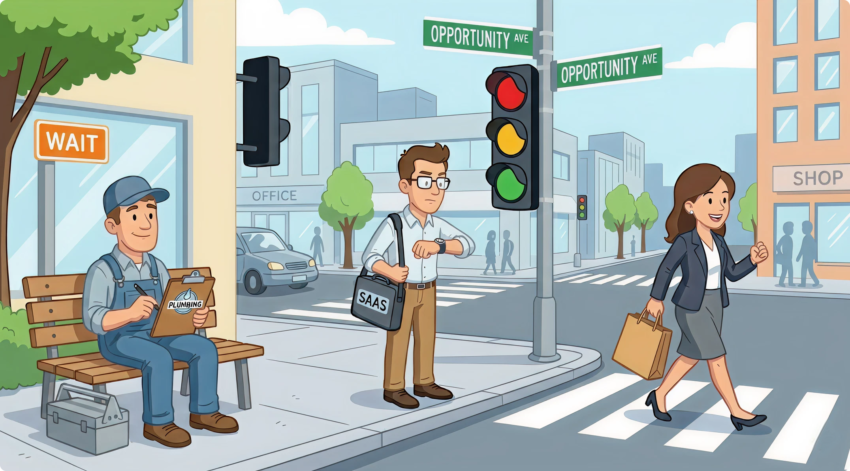
- Retail and consumer brands with awareness objectives. If your campaign goals are reach and brand recall, and you can carve out a $50,000 test budget without pulling from proven performance channels, then ChatGPT is worth exploring. The free-tier audience skews toward consumers in early-stage research mode, which aligns well with upper-funnel goals.
Wait 90 days
- B2B brands and lead-generation advertisers. B2B SaaS, professional services, and B2B ecommerce brands whose buying cycles depend on proven attribution should wait for the CRM integration and multi-turn attribution tooling. The potential for B2B is real because conversational context is rich in vendor research signals, but current reporting cannot yet prove that value.
Skip for now
- Health, mental health, and political advertisers. OpenAI has explicitly restricted ads from appearing adjacent to these topics. Even in adjacent health categories, content safety filters will significantly reduce available ad inventory.
The organic play: what most businesses are missing
ChatGPT ads and organic AI visibility are entirely separate channels. Most coverage of ChatGPT advertising misses this point, which is the most important for most Australian businesses.
A paid ChatGPT ad appears at the bottom of a response, clearly labelled as sponsored. An organically cited brand appears inside the answer itself, recommended by the AI as the right solution, with no label and no ad spend. These look completely different to a user. Being organically recommended carries far more trust than appearing in a sponsored box below it.
OpenAI has confirmed that advertising never influences ChatGPT’s organic recommendations. The two are separate systems entirely.
Two ways to appear in ChatGPT
| Paid: ChatGPT Ads | Organic: GEO and AEO |
| Appears below the AI’s answer in a “Sponsored” box | Appears inside the AI’s response as the recommended answer |
| Clearly labelled as advertising | No label. The AI is recommending you. |
| Requires ad spend ($3-$5 CPC or CPM bidding) | Driven by content structure, schema, and entity authority |
| Available now via the OpenAI Ads Manager | Requires time and strategy investment, not ad spend |
| Does not influence the AI’s organic recommendation | Compounds over time and strengthens with each citation |
For most Australian businesses in 2026, investing in organic AI visibility is the highest-priority action. This means structuring your content, schema markup, entity signals, and third-party citations so that AI systems can confidently extract and recommend your brand in organic search results. It gets you inside the answer, not below it.
This approach is known as Generative Engine Optimisation (GEO) and Answer Engine Optimisation (AEO). Brands appearing organically in AI answers earned it through content quality and digital authority. That visibility compounds over time in a way that paid placements do not. It is also why a strong foundational SEO strategy is more valuable now than ever.
The broader AI advertising picture
ChatGPT is not the only platform in this space. Understanding how the category is developing helps you make smarter decisions before committing budget to any single channel.
Perplexity launched its own ad product in November 2024, becoming the first major AI search platform to monetise through advertising. It uses sponsored follow-up questions rather than display-style placements, keeping the format closer to the research experience users expect.
Google has integrated advertising into AI Overviews and its AI Mode conversational interface, extending its existing Google Ads infrastructure rather than building a separate product. For most Australian advertisers, this is the most accessible entry point into AI advertising right now because it works within the tools and campaigns they are already running.
Anthropic (Claude) has positioned itself as ad-free, on the basis that advertising compromises AI trustworthiness. As of May 2026, Claude does not carry advertising.
Brands building channel-specific understanding now, rather than treating all AI advertising as interchangeable, will be better placed as the tooling matures.
What to do right now
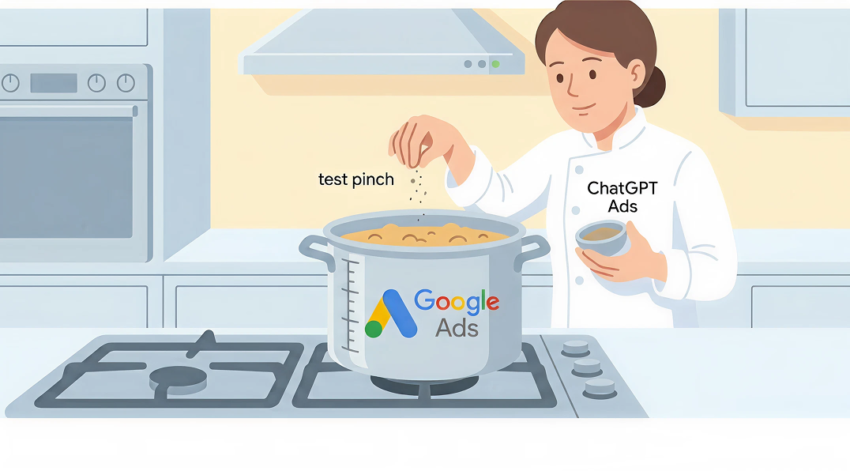
If you’re running Google Ads, keep running them. ChatGPT advertising is an additive channel, not a replacement. Pulling budget from a proven, measurable channel to experiment with an unproven one is the wrong move for most businesses.
If you have an awareness budget and can carve out a $50,000 test allocation, ChatGPT is worth exploring now. Go in with clear awareness-stage KPIs rather than direct-response targets. Use the channel to learn how conversational ad formats perform for your category, and keep it ring-fenced from your core performance budget.
If you are not yet getting strong results from established digital channels, focus there first. The foundations of search advertising, the local visibility work of a Sydney local SEO agency, and properly structured Google Ads will deliver more measurable returns in the short term.
Regardless of where you land on paid ChatGPT advertising, make sure your organic AI presence is being worked on. The brands appearing in AI answers without paying for placement are building a compounding visibility asset. That is the work that will matter most over the next two to three years.
Want to know where ChatGPT ads fit in your current digital mix? Book a free discovery session with our team, and we’ll give you an honest read on where your budget is best deployed right now.
FAQs
Can you advertise on ChatGPT in Australia?
Yes. ChatGPT ads went live in Australia on 17 April 2026, making it one of the first international markets after the US. The self-serve OpenAI Ads Manager is open globally with no minimum spend requirement. Both CPM and CPC ($3 to $5 per click) bidding are available. You can access it at ads.openai.com. Attribution reporting is currently limited to aggregated impressions and clicks.
How do I start advertising on ChatGPT?
Go to ads.openai.com and create an account. The self-serve manager launched in mid-April 2026 and is open to all advertisers globally. You’ll set up campaigns using “context hints” rather than keyword lists, choose CPM or CPC bidding, set your budget, and upload creative. The interface is relatively lean at this stage compared to Google Ads, largely because the targeting options are still limited.
Does ChatGPT show ads, and will I see them as a user?
Only if you’re on the free tier or the $8/month Go plan. Users on ChatGPT Plus, Pro, Business, Enterprise, or Education plans see no ads. Ads appear as a clearly labelled “Sponsored” box beneath the AI’s organic response, visually separate from the answer itself. OpenAI has confirmed that paid advertising never influences the content of ChatGPT’s organic responses.
Do ChatGPT ads influence what ChatGPT recommends?
No. OpenAI has been explicit on this. Paid advertising does not influence ChatGPT’s organic responses. Ads appear in a “Sponsored” box at the bottom of the response, separated from the AI’s answer. This is why organic AI visibility through Generative Engine Optimisation (GEO) and Answer Engine Optimisation (AEO) is an entirely separate strategy from paid ChatGPT advertising, and typically the higher-priority investment for most businesses.
How does ChatGPT ad targeting differ from Google Ads?
Google Ads targets users based on explicit keywords and audience segments, including age, gender, income, and in-market behaviour. ChatGPT ads are targeted based on the semantic content of the active conversation. There is no keyword bidding, no demographic targeting yet, and no cookie-based tracking. Advertisers describe the conversational scenarios in which their ad is relevant, and OpenAI’s systems handle the matching. The intent signal is richer in depth but narrower in the targeting controls currently available.
Should I move the budget from Google Ads to ChatGPT?
No. ChatGPT ads are an additive channel, not a replacement. Google Search’s 6.4% average CTR versus ChatGPT’s current 0.91% tells a clear story about where performance-oriented spend delivers measurable outcomes today. Keep your Google Ads campaigns well managed, and treat ChatGPT as an upper-funnel complement, with a separate test budget and realistic KPIs.
What’s the difference between a paid ChatGPT ad and appearing organically in a ChatGPT answer?
A paid ad appears below the organic answer in a “Sponsored” box, bought through CPC or CPM spend. An organic citation appears inside the AI’s actual answer as the recommended solution, with no label and no ad spend, because your content and entity presence are structured for AI visibility. Being organically recommended carries far more perceived trust. For most Australian businesses, building organic AI visibility through a strong SEO and content strategy is the highest-priority action in 2026.
When will city or suburb-level targeting be available in Australia?
OpenAI has not confirmed a timeline. As of May 2026, campaigns can only target Australia at the country level. This is a significant limitation for local and regional businesses, and the main reason most SMBs should hold off before committing budget to the platform. When geo-targeting arrives at the suburb or postcode level, the case for local businesses will strengthen considerably.
Are ChatGPT ads available on Perplexity or other AI platforms?
Perplexity launched its own ad product in November 2024, the first major AI search platform to do so. It uses sponsored follow-up questions rather than traditional display placements. Google has integrated ads into AI Overviews and its AI Mode interface, extending its existing Google Ads system. Anthropic (Claude) remains ad-free as of May 2026. Each platform operates differently, and a considered AI advertising strategy should ultimately account for all of them rather than treating the category as a single entity.