Instagram Ad Formats in 2026: Where Reels Fits for Australian Brands
Search for advice on Instagram ad formats, and most of it tells you to put your budget into Reels. Other formats, such as Stories and carousel ads, usually get a line or two at the end, if they come up at all.
That advice is only partly useful for a business deciding where to put the budget. Reels is good at putting a brand in front of new people, but a campaign usually also needs ads that explain the offer and reach people who have already shown interest.
Australian brands have an extra reason to be careful, because the case for Reels often relies on overseas results. The safer approach is to understand what each format does well and to test any shift towards Reels in your own account before moving more budget.
TLDR
- Reels is Instagram’s main full-screen reach format, but each format still does a different job.
- Published guides disagree on Reels ad specs, so check Meta’s current Ads Guide before briefing creative.
- Reels creative needs to be built for vertical, sound-on viewing, not cropped from feed assets.
- Many benchmarks online are US figures, so Australian brands should test Reels against their existing formats before shifting budget.
What Each Instagram Ad Format Does

AInstagram ad types suit different stages of the buying process, from first discovery to purchase. The right format for an Instagram advertising campaign depends on the objective, such as reaching new audiences or retargeting past visitors.
- Reels ads fill the screen between organic Reels, so they work best for reach and discovery.
- Stories ads also fill the screen but disappear quickly, so they suit time-sensitive deadlines.
- Feed image and video ads are the standard option for clear offers and retargeting.
- Carousel and catalogue ads let you show several products or points at once, so they suit people still comparing.
For current specs, check Meta’s Ads Guide rather than third-party roundups, as some are out of date. A campaign can use several Instagram ad formats at once, each with its own objective and judged on its own results.
Format choice also affects how much creative a campaign needs. A carousel can hold up to 10 images or videos, and Meta’s Ads Guide notes that longer Stories videos may be split into separate cards, so both formats take more planning than a single feed image.
Where Reels Fits in the Mix
Reels is most useful for reaching new audiences and getting a brand discovered. It is less suited to detailed messaging for people still comparing options, which other formats and conversion-focused landing pages usually handle better.
What Reels Is Good At
Reels is a full-screen video feed people browse for entertainment, making Instagram Reels ads well suited to reaching new audiences. Meta describes them as full-screen vertical ads that appear between organic Reels, and viewers can engage with them or skip them like any other Reel.
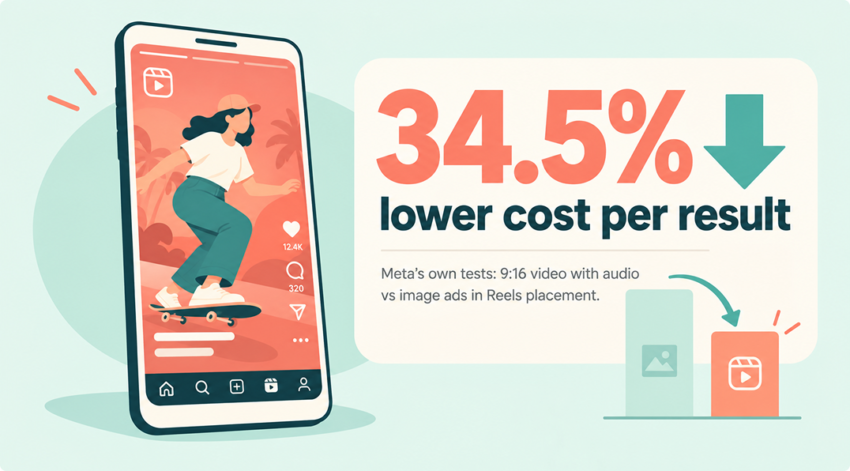
Meta’s own Reels ads page reports a 34.5% lower cost per result for ads built as 9:16 video with audio than for image ads in the same placement. Those ads also kept key text clear of Instagram’s on-screen buttons. These figures come from Meta’s own tests, so results in an individual account may differ.
What Reels Does Not Do on Its Own
Because people browse Reels for entertainment, detailed product comparisons and price-led offers often perform better in other formats. For example, a buyer comparing two mattresses on price and warranty will usually need more information than a short video can show.
A Reels ad can drive the click, while a landing page provides the detail needed to make a decision. Some published guides claim Reels outperforms other formats on every metric, but they usually don’t cite sources.
What Changes for Creative When You Build for Reels
Creative has a big influence on ad quality and delivery in Reels, and assets made for other placements often don’t translate well. The main changes involve the video format and the ad’s first few seconds.
Build for Vertical and Sound-On
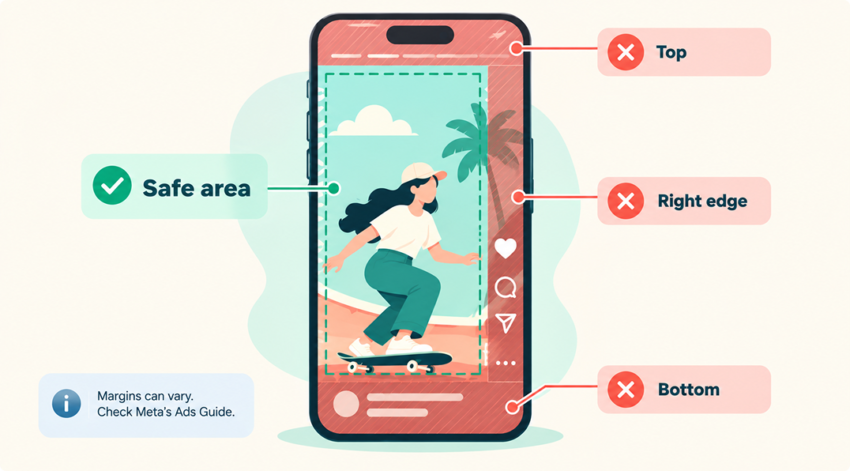
Reels uses a 9:16 vertical format, so footage cropped from a square or landscape video leaves unused space and can look unfinished. Keep text and logos inside the safe zone, clearing them of the buttons and captions Instagram places over the video.
Captions help people who watch with the sound off, and the first few seconds should show what the ad is about. Take dimensions and safe zone margins from Meta’s Ads Guide, because third-party roundups disagree with each other and some are out of date.
Native Content Versus Polished Content
Native-feeling content, shot in the style of the organic Reels around it, is widely recommended for this placement. The evidence behind that advice is thin, so treat it as something to test rather than a rule. Brand and compliance requirements also limit how informal some brands can be.
Creative fatigue affects Reels in the same way as other Meta placements, so both polished and native ads need to be refreshed regularly. As an ad becomes familiar to its audience, ad quality and delivery usually decline and costs tend to rise.
What Australian Brands Should Weigh Before Shifting Budget

Many published cost and performance figures come from US data quoted in US dollars, so treat them as a rough guide at best for Instagram ads in Australia. Audience sizes and seasonal buying patterns are different in Australia, so overseas benchmarks may not reflect local results.
The most reliable check is a controlled test in the brand’s own account, running Reels against the other Instagram ad formats already in use. For the results to be useful, a few conditions should stay the same.
- The test runs in one account, so audiences and tracking match.
- Budgets are comparable, so neither format has an advantage.
- Creative quality is comparable, so the comparison reflects the format rather than the creative.
- Both formats are judged on leads or sales, not views.
Views alone don’t show whether an ad is generating enquiries or sales. A format should start to receive more budget once it produces leads or sales at an acceptable cost. Cost per lead or cost per sale gives a clearer basis for comparing formats.
Timing also affects the result. Running a comparison across a major sales period, such as the end of the financial year in June or the lead-up to Christmas, can distort it, because costs and buyer behaviour change during those weeks.
How CCM Approaches Format Mix on Instagram
Format decisions on Instagram are part of a brand’s wider paid social advertising plan, so base the mix on the campaign’s objectives. We choose each format based on what the campaign needs to achieve, and we test Reels against existing formats before moving budget.
We create separate creative for each placement rather than cropping one video for all of them. If a format stops performing, we review it and adjust the budget, so Reels only uses more budget when it starts to show results in the account.
Checking Your Creative Before You Commit Budget
Before moving spend into Reels, review what is already running across your Instagram ad formats. Check each active ad against the placement it serves, and note which ones were built for that placement and which were adapted from another format.
An Instagram creative audit of current ads shows where the gaps are before more budget goes in. Ads with cramped text or a slow opening are usually candidates for a rebuild, and fixing them early avoids spending budget on ads unlikely to perform.
Removing those ads before a test starts keeps the comparison fair, because a poorly adapted ad would make the format look worse than it is. It also makes the results easier to act on, since any performance differences are more likely to come from the format itself.
FAQs
How long can an Instagram Reels ad be?
The current limit is whatever Meta’s Ads Guide lists for the Reels placement, and it’s worth checking there because other sources quote anything from 15 seconds to well over 90. Treat that limit as a ceiling rather than a target when briefing creative.
Are Reels ads better than Stories or feed ads?
It depends on the job. Reels suit reach and discovery, while Stories and feed ads suit time-bound offers and retargeting. Meta’s published cost-per-result figure compares video with image ads inside Reels, so it can’t settle how Reels stacks up against Stories or feed.
Can feed creative be reused for Reels ads?
Feed creative can run in Reels, and Meta encourages advertisers to opt in with whatever assets they already have. Its own tests still favoured 9:16 video with audio over image ads, so rebuilding for the placement is worth the effort where budget allows.
Do Reels ads suit service businesses as well as ecommerce?
Service businesses can use Reels well to show the work and the people behind it. However, Reels ads have limited time to explain a service, so the landing page needs to provide the detail.
How should Australian brands test Reels against other formats?
Run Reels and an existing format side by side in the same account on comparable budgets, and leave the test running until it has produced a meaningful number of leads or sales. Judge the result on cost per lead or sale rather than views, and keep creative quality comparable so the format is what is being tested.
Weighing a Shift Towards Reels
Reels works best as one part of a wider format mix. If you’re considering moving more budget into it, reviewing your existing creative is a sensible first step. For advice on the right balance, speak with the CCM team about your current Instagram campaigns.