
Design and Marketing Under One Roof: The Handoff Is Where Websites Die

TL;DR
- The handoff between design and marketing teams is where most website underperformance actually starts, not the design or the build itself.
- Beautiful sites without technical or content foundations rarely recover ranking lost at launch; retrofitting SEO costs more than building it in.
- The most common failure points are structural: URL changes, missing redirects, gutted copy, missing schema, and page speed traded for visual polish.
- A shared brief, agreed before design starts, is what prevents most of this.
- Agencies where design and marketing sit under one roof sidestep this risk automatically, since there’s nothing to hand off.
Most website projects don’t fail because of the designer, and they don’t fail because of the developer either. They fail in the gap between the two: the moment a finished design lands with a team that had no part in shaping it and has to reconstruct the reasoning behind it from scratch.
That’s easy to miss, because nothing about it looks like a failure at the time. The launch looks like a win by every visible measure. It’s not until months later, once your organic traffic stalls or rankings start slipping, that anyone traces the drop back to what happened in that handover.
By then, fixing it costs your team far more than getting it right the first time.
Why the Handoff Is Where Sites Break
Most businesses that have been through a redesign know the sequence. Designers finish the work, stakeholders sign off on the visuals, and developers pick up the project from there. What rarely makes that journey with them is the thinking behind the decisions.
Developers usually inherit finished screens, not the reasoning behind them. That’s why they often can’t tell you why the homepage leads with one service over another. Calling this a handoff undersells what’s actually happening: it’s less a checkpoint between two project phases and more a transfer of institutional knowledge that has to happen almost instantly.
Our in-house web design team sees this all the time when auditing sites that come to us after a rebuild elsewhere. A page at /services/emergency-plumbing/ becomes /plumbing-services/, nobody had mapped the redirect, and the site had quietly lost the ranking history that page had built up. Not because anyone did anything wrong, but because nobody had owned the job of carrying that context forward.
This is what makes it so hard to catch early. The site looks clean right up until it isn’t.
What Gets Lost in the Handoff
That kind of silent loss happens more often than most teams realise. It tends to show up in the same handful of places on almost every rebuild, yet none of them looks broken in a design review because reviewers are judging finished screens, not indexed pages.
URL Structures and Redirects

Redesigns restructure URLs without anyone meaning to. Designers build a new sitemap around how the site looks and reads on screen, organised by visual hierarchy and user flow, not around what Google has already indexed and ranked over years of accumulated signals.
Pages get renamed, folders get reorganised for clarity, and categories get merged or split to match the new navigation. Unless someone maps every old URL to its replacement before launch, Google follows the ones it trusted straight into a 404, with no way of knowing the page still exists somewhere on the new site.
This is a design decision as well as a technical one. Designers make it at the information architecture stage, long before a developer ever touches a redirect rule.
Content Trimmed for Visual Balance
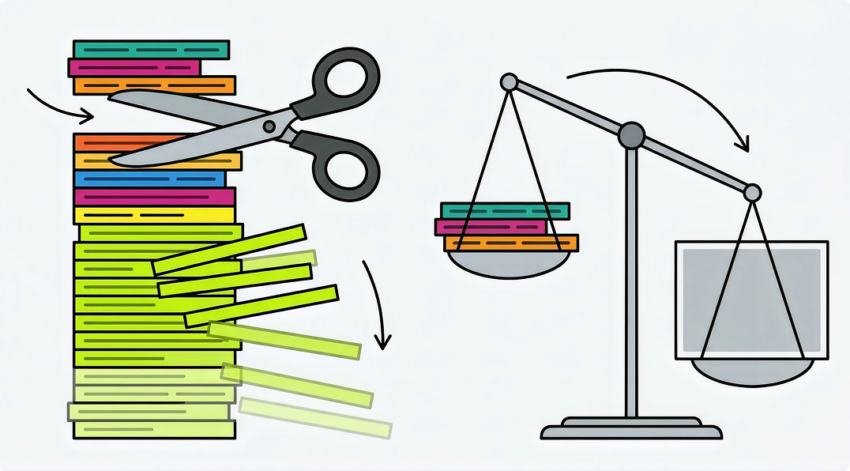
Copy is one of the easiest things for a designer to cut when a layout needs to breathe. A paragraph that made a page rank, one that answered a question in real depth, gets trimmed to two lines because it looks heavy next to the hero image or breaks the visual rhythm they were building toward.
Headings get flattened for consistency across templates, while internal links (the ones that build topical authority from page to page) get removed because they interrupt the design flow. A design review won’t catch this, because a signed-off page can look finished and still be missing what it needs to rank.
It only becomes a mistake once the thin page that replaced a detailed one has nothing left to rank on.
Page Speed Traded for Polish
Image-heavy hero sections, embedded video, and custom animations all look impressive in a design presentation. Without a performance budget written into the brief, though, a design team has little reason to weigh that impact against Core Web Vitals. Running the new site through PageSpeed Insights a week before launch is often the first time anyone checks.
Design teams rarely choose speed over beauty on purpose. It’s what happens by default when performance isn’t written into the requirements, and by the time it’s flagged, the site’s visual identity is already built around the assets causing the problem.
Structured Data and Metadata Left Behind
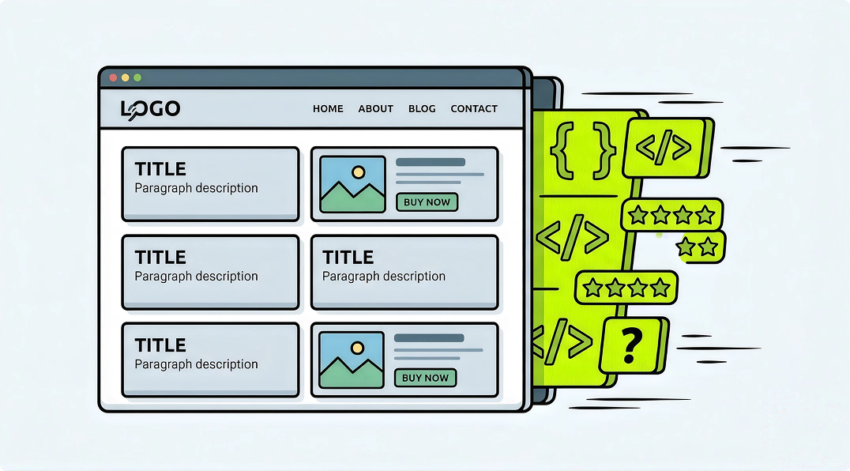
Schema markup, meta titles, and structured data rarely make it into a design file, because none of it is visible on screen. That leaves them entirely dependent on whoever inherits the page knowing what needs rebuilding.
On a rebuild, this is often the single biggest gap between what a site had before launch and what it has after, which is exactly what our web development team checks for on every project: schema, FAQ markup, and structured data, rebuilt by hand until it matches what launched before. Teams under deadline pressure often push that work to phase two, and in practice, that often means never.
What a Shared Brief Locks In
Most of the failure points above share the same origin: none of it was written down before design work began. Before a designer opens a blank canvas, these five decisions need to already be on paper.
| Lock In Before the First Mockup | What It Prevents |
| URL structure and redirect mapping for any changed pages | Lost ranking equity and 404s at launch |
| Target word count and content depth per page type | Copy gutted for visual balance |
| Page speed budget for images, video, and animation | Core Web Vitals traded for polish |
| Schema and structured data requirements | Missing markup rebuilt reactively post-launch |
| Tracking and conversion goals | Broken analytics continuity across the rebuild |
Nothing here is complicated once it’s written down. The trouble is that these decisions usually live in different people’s heads: the SEO lead knows the URL history, the content strategist knows the depth needed, and the developer knows what’s realistic at launch. A shared brief puts everything into the same document before anyone starts designing.
Why “SEO Later” Costs More Than It Saves
Retrofitting your SEO strategy into a finished design isn’t a polish pass for a developer. It’s usually closer to a rebuild: restructuring pages that were never built to hold the content depth they now need, and rewriting navigation a designer finalised before anyone considered search intent. Redoing those layout decisions from scratch takes far longer than it would have inside the original brief.
Promising to fix the SEO after launch can end up costing your team more time and money than addressing it during the build. A two-week content review before launch can easily become a six-week rebuild after it, since every change has to be justified against a design that’s already signed off.
The reverse mistake is just as real: A team that prioritises structure so heavily that the user experience suffers will lose conversions even while the site ranks well, which defeats the purpose just as thoroughly as a beautiful site that never gets found. Neither discipline can solve this alone because they measure success differently.
When Design and Marketing Share a Brief

None of this is inevitable, though, and it doesn’t take a bigger budget to avoid. It takes a brief both teams work from at the same time, using something like the conversion-focused design brief template, instead of one handed off once the first draft is finished.
In practice, that looks like a working session before the first mockup exists, not a formal review. A designer and an SEO lead agree on redirect mapping, content depth, and page speed in the same conversation where they agree on colours and layout.
That doesn’t mean every project will be faster. Good work still takes the time it needs. What it removes is a specific, avoidable category of failure: two teams solving two different problems and each assuming the other one already solved the third.
Signs a Redesign Cost You Rankings
Some of this is easier to recognise in hindsight than it is to prevent in the moment. A handful of patterns tend to show up consistently on sites where the handoff broke down between design and launch, even when no one could point to a specific mistake at the time.
- Organic traffic dropped sharply in the weeks immediately following launch, rather than gradually over time.
- Search Console shows specific pages that used to rank well now returning 404s or redirecting to unrelated content.
- PageSpeed Insights or Core Web Vitals scores are noticeably worse than the previous version of the site.
- Pages that used to have detailed, specific content now read as generic or templated.
- Rich results or FAQ snippets that used to appear in search no longer show up
None of these signs is proof on their own, since rankings move for plenty of reasons unrelated to a redesign. Line them up against your launch date, though, and together they’re usually enough to confirm where the problem started.
If several of these look familiar, a proper SEO audit is the fastest way to confirm what’s actually happening and how much of it is still fixable.
What This Comes Down To
Every failure covered here comes back to the same root cause: the person building the site didn’t have enough visibility into what the designer was trying to achieve. Close that gap early, and SEO, content, and design stay aligned throughout the build.
That’s what separates a redesign that holds onto its rankings from one that quietly gives them away: not better designers or better developers, just less distance between the two.
FAQs
What Is a design-to-marketing handoff?
A design-to-marketing handoff is the point where a finished website design is passed to the team responsible for building, optimising, and maintaining it. Your technical SEO requirements, content strategy, and page speed considerations either carry through intact or get lost between the two disciplines.
Why do websites lose rankings after a redesign?
Most post-redesign ranking drops trace back to changes made during the design and build process: restructured URLs, trimmed content, and slower page speed from image-heavy layouts. These issues are rarely intentional, which is why they’re easy to miss until your traffic data confirms them.
Should SEO be involved before or after design?
SEO input works best when it’s part of the brief from the very beginning, not applied after the design is finished. Retrofitting requirements later typically costs more in time and rework than building them in from the start.
What should be in a design brief?
Your brief should define URL structure, redirect mapping, content depth, and a page speed budget before design work begins, alongside the usual visual and brand requirements. These are exactly the details a standard creative brief often leaves out.
Is one agency better than separate specialists?
Both approaches can work well, and the deciding factor is usually communication, not headcount. A single agency handling both disciplines removes the handoff risk by default, simply because there’s no handoff left to manage.
What Is a page speed budget?
A page speed budget sets limits on image file size, script count, and video or animation use before design work begins. It gives your design team a concrete target, rather than optimising for speed only after the visual identity is locked in.
How long does ranking recovery take?
Recovery can take longer than the redesign itself, especially when a site has lost significant ranking equity or SEO issues are not identified quickly. If you catch and fix redirect and content issues within the first few weeks, recovery tends to be faster than when the problem goes unnoticed for months.
Getting the Handoff Right
If you’re considering a redesign, this is usually the first thing to get right, because almost everything else is easier to fix later than a lost handoff. Speak with our team about creating a brief that keeps your design and marketing decisions aligned from the start.