
Why Developers Still Matters in the Age of AI
Open LinkedIn for ten minutes and you’d think every developer in the country is about to be replaced by a chatbot. The takes are loud. The thumbnails are dramatic. The vibe is somewhere between “end of an era” and “told you so.”
We’ve heard this before. It played when work started getting offshored. It played again with no-code platforms. Then low-code. Then headless. Now AI.
Here’s what we’ve actually learned, running AI web development projects every single day for real clients: developers haven’t been replaced. They’ve been promoted.
Stick with us.
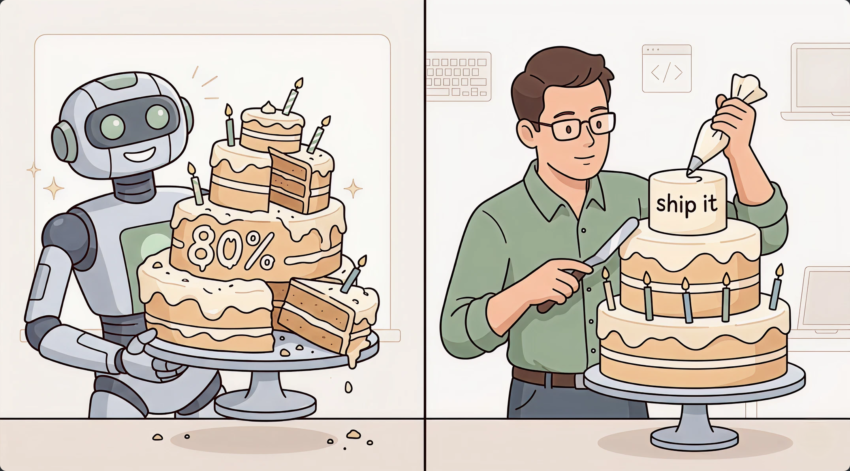
The First 80% Is Cheap. The Last 20% Is Everything.
AI is genuinely impressive at the first 80% of a build. Describe a feature, paste in a wireframe, watch a tool like Claude Code generate working software in minutes. It still feels like magic.
But the last 20% is where projects live or die. And that 20% is almost entirely human work.
We learned this the hard way on our own kit. In February 2026, we built an internal SEO tool called the SEO Companion. The autonomous build phase ran one Saturday morning while a senior team member slept. The tool churned for hours. It produced something that looked finished.
It wasn’t.
When we came back and started clicking through, we found 47 issues across 28 files. Buttons that did nothing. Flows that broke. A dashboard that technically existed but didn’t actually solve the problem we’d set out to solve. We scrapped the entire AI analysis layer and rebuilt from wireframes.
The result? A tool our team uses every day. But the gap between “AI-generated software” and “software you’d actually trust” was 47 fixes, one painful pivot, and a senior developer who refused to ship something half-baked.
That’s the 20%. No AI does it alone.
The same principle applies to every custom software build we deliver. The AI handles volume. The humans handle everything that actually matters.
What AI Actually Does Well
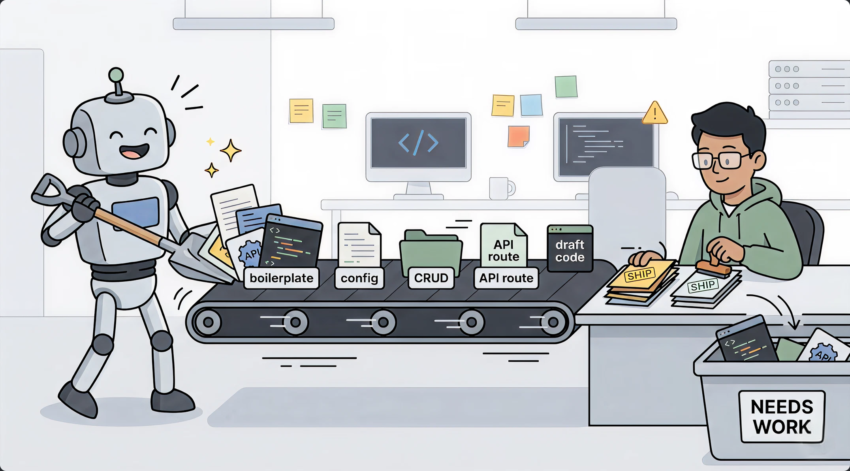
Let’s be fair to the technology. AI has changed how we work, and we’re not going back. Here’s where it genuinely excels:
Volume. A developer using AI well produces three to five times more code than one writing every line by hand.
Boilerplate. All the repetitive scaffolding, config files, CRUD endpoints, basic forms, gets handled in seconds.
First drafts. AI gives you something to react to. Reacting is faster than starting from a blank page.
Translation. Need to convert a Python script to TypeScript? Done. Refactor jQuery to React? Done.
Knowledge lookup. No more trawling Stack Overflow at 11pm. Just ask.
These aren’t small wins. They’re significant. A developer with strong AI fluency is operating at a level that would have looked impossible three years ago.
But that’s the key phrase: a developer with strong AI fluency. Not “AI without a developer.” Those are two completely different products. And one of them is about to ship 47 broken buttons to your customers.
Where AI Quietly Falls Over
Here’s what we’ve watched AI struggle with, consistently, on real client projects.
Judgment. AI doesn’t know when something is wrong. It will confidently produce broken code, then mark the task complete. It will write green checkmarks next to features that don’t actually work. Someone has to click every button and test every flow. That someone is a developer.
Context. AI doesn’t know your business. It doesn’t know that a particular CRM integration has been unreliable for two years, that the supplier’s dev team is offshore and slow to respond, or that marketing needs this live before Monday’s campaign. A senior developer holds all of that in their head. That’s exactly why our web development team leads every build rather than delegating it to a prompt.
The pivot moment. Halfway through the SEO Companion build, the whole concept needed to change. The original idea, an AI-powered analysis dashboard, was producing generic, low-value output. The right call was to strip out the AI analysis entirely and rebuild it as a pure data aggregator that feeds into a Claude conversation loaded with project context. That decision wasn’t in any prompt. It came from a human looking at the work, feeling something was off, and trusting the instinct.
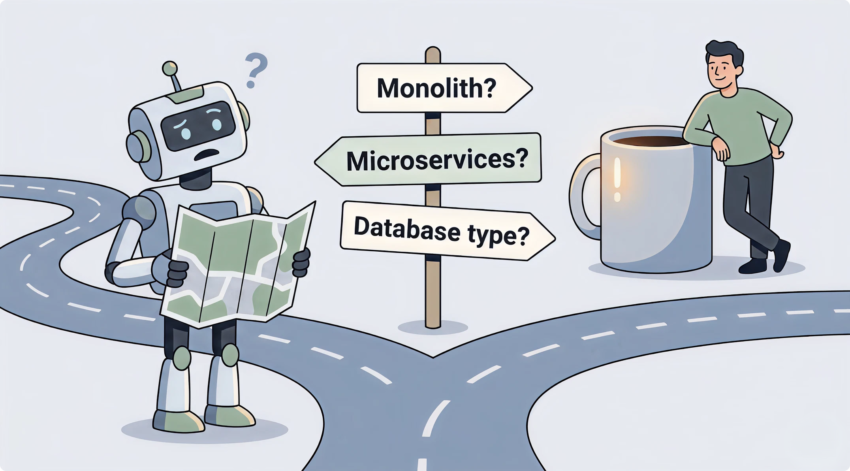
Architecture. AI can build what you tell it to build. It cannot tell you whether you should build it that way in the first place. Monolith or microservices? Relational or document database? Custom build or integration with an existing platform? Those decisions shape projects for years. They require human expertise brought in before a single line of code is written.
Security and compliance. AI doesn’t distinguish between code that works and code that’s safe. We’ve seen AI cheerfully suggest patterns that would have leaked customer data if shipped. A developer who knows OWASP catches that. A prompt-and-paste workflow doesn’t.
What This Looks Like on a Real Client Project
We manage the WooCommerce store for SILK Laser Clinics, one of Australia’s largest beauty networks with 72 clinics nationally. Every purchase on silklaser.com.au triggers a downstream clinic workflow: it has to land in the right clinic, match the correct treatment configuration, and sync into a live booking system in near real-time, without any manual intervention. Keeping that running is WooCommerce development at its most demanding, where the store is only one part of a larger system.
In early 2026, customers were experiencing checkout slowdowns during high-traffic periods. AI tools helped us identify the likely source quickly. But the fix itself, a targeted database index that reduced a query from 37 seconds to less than one millisecond, required a senior developer who understood the full stack: the WooCommerce codebase, the integration layer, the server infrastructure, and the downstream clinic management system.
A prompt-and-paste workflow would not have found that. A human who has been across the account for years did.
That is what AI-assisted web development looks like in practice. The AI accelerates the investigation. The human makes the call.
The New Job Description: AI-Augmented Developer
So what does a developer actually do in 2026?
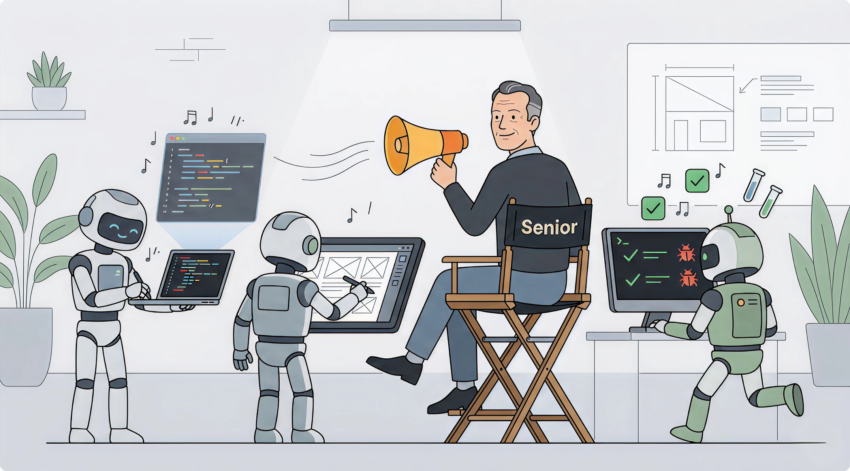
They direct. They review. They make judgment calls. They write the prompts that turn AI into a force multiplier. They wireframe before they build. They click every screen and verify every claim of completion. They make the call to pivot when the original plan isn’t landing. They know when to let AI run and when to slow down and think.
This is a more senior, more strategic role than coding ever was. The developer who used to spend three days writing CRUD endpoints now spends three hours on the endpoints and three days on the architecture, the integrations, and the user experience.
Output of a great developer? Better than ever. Importance of a great developer? Higher than ever.
What This Means for Your Next Build
If you’re a business owner weighing your options, here’s the practical bit.
The agencies promising pure-AI workflows at rock-bottom prices will look impressive in week one. They’ll fall apart in week ten. You’ll be the one paying twice: once for the AI build, again for the rescue mission.
What you want is an agency with senior humans using AI as a tool. People who can sit across from you, hear what your business actually needs, and translate that into a system that works. People who’ll catch the 47 issues before they reach you. People who know when to pivot and when to push through. Clients can use AI on their side too, and our guide to using AI to brief your agency better includes prompts you can copy.
As a Google Premier Partner with 31 senior specialists and building for Australian businesses since 2008, that’s the model CCM is built around. We use AI extensively and unapologetically. We even offer AI consulting to help clients adopt it sensibly within their own operations. And we have humans reviewing every line of code that goes anywhere near a client environment.
The tools have changed completely since 2008. The principle hasn’t: you need experts who care about the work. AI made those experts more powerful. It didn’t make them optional.
The Short Version
“AI replaces developers” makes for a great headline. It’s also wrong.
What’s actually happening is more interesting. Developers are getting better tools than they’ve ever had. The good ones are using those tools to produce work that would have taken three times as long a few years ago. The ones who aren’t up to it are getting found out faster, because broken AI-generated code is easier to spot than broken hand-written code.
The skill is no longer “can you write a for-loop.” The skill is “can you direct a powerful tool toward a useful outcome, catch its mistakes, and make the judgment calls that matter.” Our content team learned the same lesson working with AI as an SEO writer: structured guidance and human judgment make the output reliable.
That’s a human job. It always will be.
If you’re thinking about a build, whether a website, a custom integration, or a piece of internal tooling, the question to ask isn’t “are you using AI?” Of course we are. The real question is: who’s reviewing the output, and what’s their experience?
That’s the answer that tells you whether you’re getting a tool you can actually use, or 47 issues waiting to happen.
Frequently Asked Questions
Will AI replace web developers?
Not in any meaningful near-term sense. AI significantly increases what a developer can produce, but it cannot make judgment calls, understand your business context, catch its own mistakes, or make architectural decisions. The developers who adapt to use AI as a tool are producing better work than ever. Those who don’t are falling behind. The human role has not disappeared – it has become more strategic.
Can I use AI to build my website without a developer?
For simple sites, basic landing pages, or internal tools with low stakes, AI-assisted no-code platforms can be effective. For anything that handles real transactions, integrates with third-party systems, involves customer data, or needs to perform reliably at volume, you need a developer overseeing the build. The gap between u0022looks finishedu0022 and u0022actually finishedu0022 is where most AI-only builds fall apart.
How does an AI-augmented development process actually work?
In practice, a developer uses AI to generate code faster, explore solutions more quickly, and handle repetitive scaffolding work automatically. The developer then reviews every output, tests every function, and makes the architectural and judgment calls that AI cannot make. The result is a faster build without sacrificing quality or reliability. Think of it as giving an experienced tradesperson better tools, not replacing them with a machine.
What should I ask an agency about their AI development process?
Ask who reviews the AI output and what their experience level is. Ask how they test before shipping. Ask what their process looks like when an AI-generated solution doesn’t work as expected. An agency with a genuine AI-augmented workflow will be able to answer those questions specifically. One relying on prompt-and-paste will struggle.
Is AI-assisted development cheaper?
It can reduce build time, which can reduce cost for certain types of work. But the savings are in execution time, not in the expertise required to direct the work, make sound architectural decisions, and verify the output. Agencies offering dramatically lower prices on the basis of u0022AI does itu0022 are cutting corners elsewhere, usually on the human review that catches the problems.
Does CCM use AI in its web development work?
Yes. We use AI tools across our development and digital marketing work every day. We’ve built our own internal tools using AI-assisted development and learned first-hand where AI adds genuine value and where it needs a human to step in. Our AI consulting service also helps clients think through how to integrate AI sensibly into their own operations.
How do I know if my project needs a developer or if AI tools are enough?
If your project involves third-party integrations, user data, payment processing, custom business logic, or needs to perform reliably under load, you need a developer. If you’re building a simple informational site or an internal tool with low stakes, AI-assisted no-code tools may be sufficient. Not sure which category you’re in? Book a free consultation and we’ll give you a straight answer.
Click Click Media is a boutique digital consultancy based in Norwest, Sydney. We’ve been building websites, running campaigns, and developing custom software for Australian businesses since 2008. We use AI every day, and we’d love to show you what that looks like in practice. Book a free consultation.