
Picture your next customer. Before they Google you, before they compare three quotes, before they click a single link, they open ChatGPT and ask one question. “Who’s the best commercial electrician in Parramatta?” Then they trust the answer.
That is not a hypothetical. In February 2026, OpenAI confirmed ChatGPT had passed 900 million weekly active users. A huge share of those conversations are people deciding what to buy and who to hire. If your business is not in those answers, you are invisible to a market that is growing every single week.
So let’s get you into the answer. Here’s exactly how.
The short version:
- Let the AI crawlers read your site. If you’re blocking them, nothing else matters.
- Write content that’s easy to lift. Clear answers, near the top, in plain language.
- Build authority off your own site. Brand mentions across trusted sites are the real currency.
- Prove your expertise. Real authors, real data, real results.
- Add schema and keep it fresh. Help the machines read you, and give them a reason to come back.
ChatGPT is not Google. Stop Treating it Like it is.
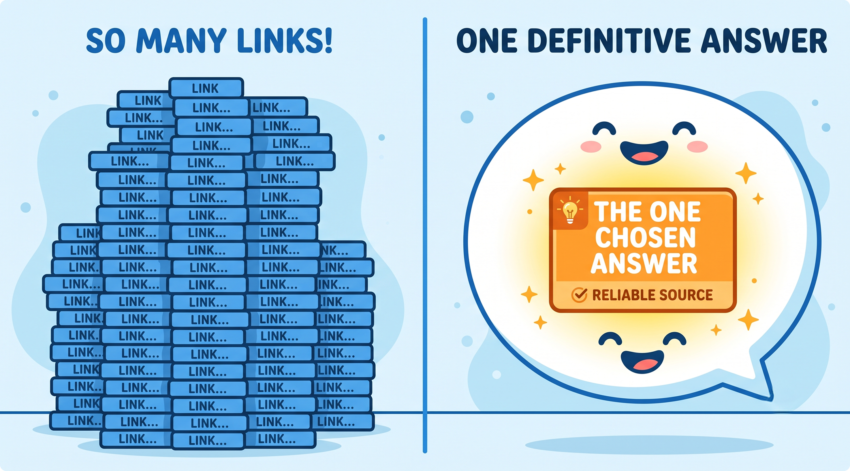
Here’s the mental shift that changes everything. Google ranks pages and hands you a list of links. ChatGPT writes one answer and mentions the sources it trusts.
It builds that answer from two places. First, its training data, the vast library of content it learned from. Second, live web search. When you ask about something current, ChatGPT searches the web, reads the best pages it finds, and writes a reply with citations.
So you are not chasing position number one. You are chasing the citation. The goal is to be the source ChatGPT reaches for when someone asks a question in your world.
And here’s the part that surprises most people: ranking well on Google does not guarantee you show up in AI answers. According to EMARKETER’s research, fewer than one in ten sources cited by ChatGPT, Gemini, and Copilot sit in Google’s top ten for the same query. AI search is its own channel. Your traditional SEO is the foundation, but it is not the finish line.
Step 1: Let the AI Crawlers In
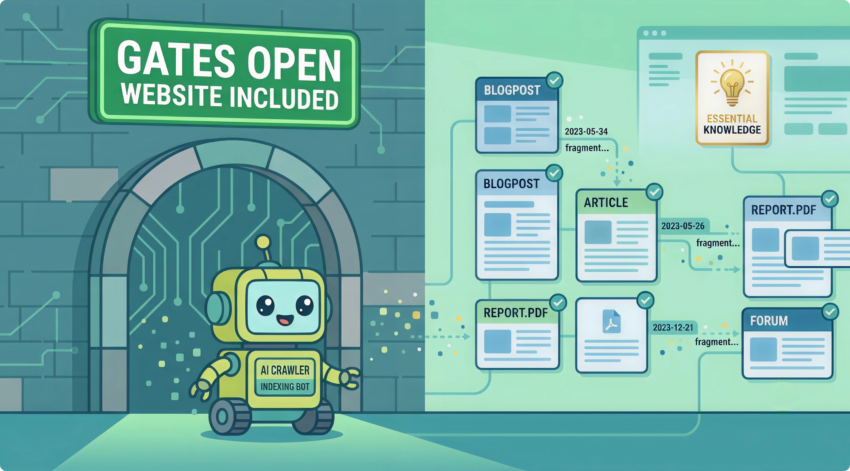
This is the one that quietly wrecks businesses. If ChatGPT’s crawlers cannot read your site, you will never appear. No exceptions. It doesn’t matter how brilliant your content is.
Check your robots.txt file. Make sure you are not blocking the main AI user agents, including GPTBot, OAI-SearchBot, and ChatGPT-User. Plenty of sites block these by accident when they tighten security or copy a template from somewhere else.
While you’re in there, make your key content easy to read. AI crawlers struggle with pages that hide their important information behind heavy JavaScript. If your core copy only appears after a script runs, serve it as plain HTML instead. The easier it is to read, the more likely it is to be used. This is bread-and-butter technical work, and it’s the same foundation our SEO team lays on every engagement.
Step 2: Write So Your Content is Easy to Lift
ChatGPT loves content it can extract cleanly. That means a clear answer, stated plainly, right near the top.
Put the direct answer in the first sentence or two. Then expand. Do not bury your point under three paragraphs of throat-clearing. Use short sections. Use clear headings. Use lists where they help. And make sure each sentence can stand on its own, because the AI might lift just that one.
Think about the questions people actually ask out loud. “How much does SEO cost in Sydney?” “What’s the best CRM for a small trades business?” Structure your pages to answer those questions head-on, in normal human language. Marketing fluff gets skipped. Clear answers get quoted.
Step 3: Build Authority Off Your Own Website
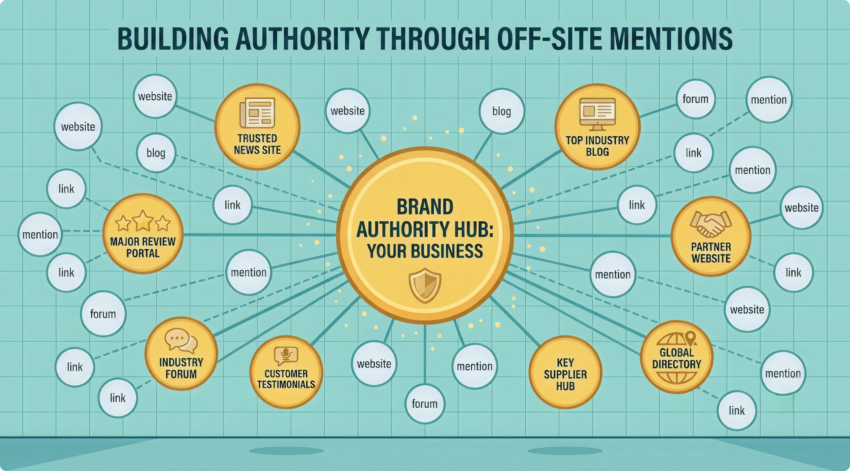
Here’s the step most businesses miss entirely. ChatGPT doesn’t just read your website. It weighs how often your brand shows up across the wider web, on sites it already trusts.
Brand mentions are the currency. When your name appears again and again on reputable third-party sites, industry publications, and community platforms, ChatGPT learns to link your business to your category. Off-site authority and brand mention frequency are among the strongest signals of whether you get surfaced at all.
Community and reference sites punch above their weight, too. Platforms like Reddit and Wikipedia get cited heavily in AI answers. You can’t fake your way onto them, and you shouldn’t try. But genuine reviews, honest contributions, and earned coverage all add up. If your brand only ever talks about itself, on its own website, you’re missing the trust signals that matter most.
This is exactly where strong SEO and digital PR earn their keep. Earned links and mentions from quality Australian sources build the authority that AI is hunting for. It’s a core part of our AI SEO work, and it sits on top of your organic search foundation, not against it.
Step 4: Show Real Expertise, with Proof
AI answers reward content that shows genuine experience and expertise. Marketers call this E-E-A-T: Experience, Expertise, Authoritativeness, and Trust.
In plain terms: prove you know what you’re talking about. Add original data. Share results you’ve actually delivered. Name the author, show their credentials, and make it obvious a real expert wrote the page. A specific claim from a named expert beats a generic opinion every time.
Original research is pure gold here. A stat, a study, or a number that only you have is exactly the kind of thing ChatGPT loves to quote, because it can’t get it anywhere else. Want to know which AI tools are worth building into your own workflow to produce that content? We break it down in our guide to Claude vs ChatGPT vs Gemini for marketing.
Step 5: Add Structured Data
Structured data, also called schema, is code that tells AI systems what your content actually is. It labels your business details, your articles, your reviews, and your author information in a format machines read easily.
Pages that use schema have a far better shot at being pulled into AI answers, because you’ve removed the guesswork. Add clear, accurate schema across your key pages. It’s a low-effort, high-value step that too many sites skip. If you’re not sure where to start, the right tools make short work of it, and we’ve listed the SEO tools we rely on day to day.
Step 6: Keep it Fresh
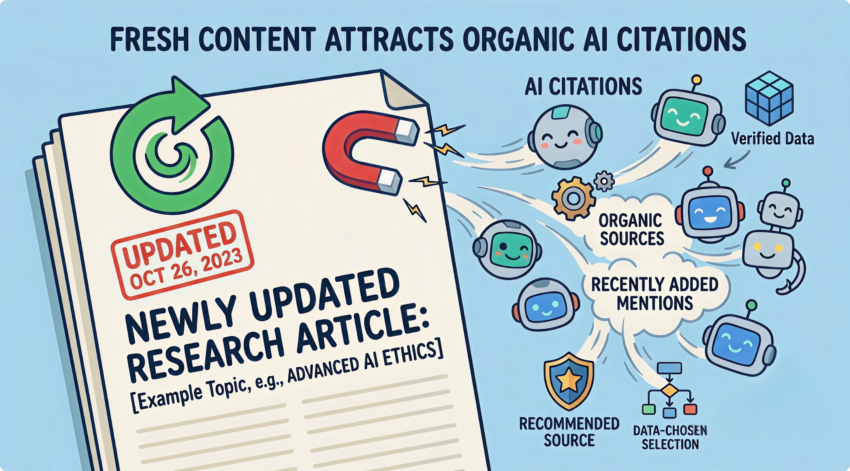
AI answers lean hard towards recent content. Pages updated in the last month tend to get cited far more often than pages that have sat untouched for a year.
You don’t need to rewrite everything on a loop. But your most important pages, the ones you want ChatGPT to quote, should be reviewed and refreshed on a regular cycle. Update the stats. Add the latest examples. Show both your publish date and your last-updated date. Freshness tells the AI your page is still worth trusting.
Being Recommended is Not the Same as Being Advertised
This trips people up, so let’s be clear. Appearing in a ChatGPT ad and being recommended by ChatGPT are two completely different things.
A paid ad shows up in a “Sponsored” box, clearly labelled, visually separated from the answer. An organic citation appears inside the answer itself, where the AI recommends you as the right solution, with no label and no ad spend. To a customer, being recommended carries far more trust than sitting in a sponsored box below. Everything in this guide is about earning that organic recommendation.
Paid ChatGPT ads are a separate, emerging channel with their own rules. If you’re weighing that up too, we cover it properly in our ChatGPT Ads Australia guide.
How to Measure Whether it’s Working
You can’t check your “ChatGPT ranking” the way you check a Google position. There is no ranking to check. So you measure differently.
Start simple. Pick the questions your customers would actually ask. Type them into ChatGPT yourself, on a regular schedule, and note whether your business gets mentioned, and what for. Because AI answers shift from day to day, check more than once and look for patterns over time.
Then watch your analytics. Referral traffic from ChatGPT shows up in GA4, and it often converts well, because the visitor arrives already recommended. Track it against the pages you’re optimising, so you know what’s landing.
The Honest Bit
We’ll be straight with you, because that’s how we work. Ranking on ChatGPT is newer and messier than traditional SEO. The signals shift. Citations change from week to week. Anyone promising you a guaranteed spot in AI answers is selling smoke.
But the fundamentals are clear, and they’re not exotic. Let the crawlers in. Write for humans and machines. Build real authority. Prove your expertise. Keep it current. These are the same things that build a genuinely strong website anyway. AI search just raised the stakes.
The businesses that start now will build a lead that’s hard to catch. We saw the same pattern when we helped Aussie Home Services grow from 216 to 860 ranking keywords with an SEO-first rebuild. Solid foundations compound. The sooner you lay them, the further ahead you get.
Want Help Getting Found in AI Search?
Getting your business into ChatGPT’s answers isn’t a one-off task. It’s an ongoing strategy that ties your SEO, content, and authority-building together into one plan.
That’s what we do. As a Google Premier Partner running SEO from our Norwest office in Sydney, we help Australian businesses get found where their customers are already looking. And right now, that includes ChatGPT.
Explore our AI SEO services, or book a free discovery session and we’ll map out what will actually move the needle for your business.