Chantalle Aesthetics: Reels, Stories and the Formats That Carried the Account
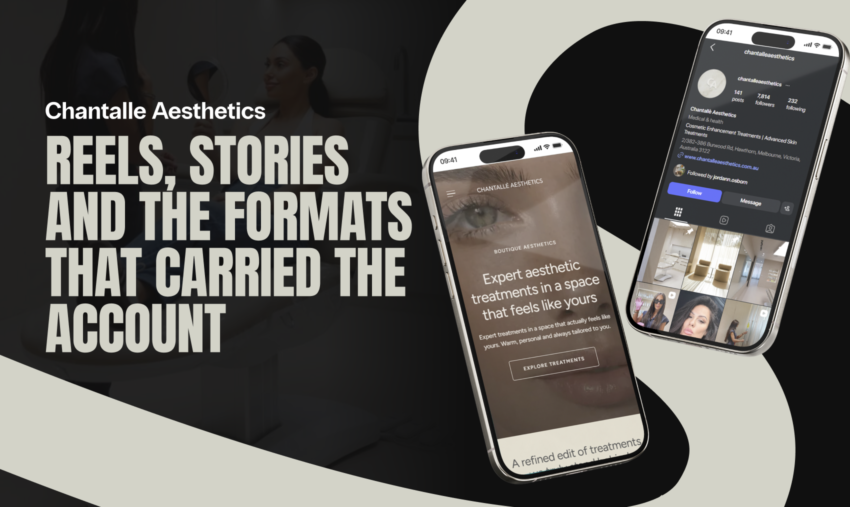
Most aesthetics ads lean on a glowing review, a promised transformation or a well-known prescription product. Take those away, and many clinic ads struggle to say anything specific.
Chantalle Aesthetics, a clinic in Melbourne, couldn’t use any of them. Until June 2026, the only paid activity on its Instagram account was a boosted post. CCM, which provides Instagram advertising management in Sydney and works with clinics across Australia, took over the account from there.
CCM rebuilt the account around Reels and Stories, with ads that had to grab attention without those shortcuts. Between June 1 and October 15, 2026, the new campaigns brought in 100+ tracked treatment deposits, and Instagram went from an afterthought to a real source of bookings.
TL;DR
- Before June 2026, the account’s only paid activity was a boosted post.
- The Reels and Stories ads had to work without testimonials, transformation promises or prescription product names.
- Between June 1 and October 15, 2026, three campaigns delivered ~600,000 impressions, 11,000+ link clicks and 100+ tracked treatment deposits.
- 94% of link clicks on the Sales campaign reached the landing page.
One Boosted Post and a Rulebook
A boosted post is the quickest way to advertise on Instagram, but also the most limited. It can only promote a post that’s already published, it offers few audience options, and its goals rarely match what the business needs.
Boosting is the simplest form of paid social advertising, so many clinics start there. For a clinic that needs bookings, though, it offers no structure to build on and no clear way to connect an ad to a booked treatment.
Chantalle also had strict rules to follow. Aesthetics advertising in Australia comes with firm limits, and Chantalle’s ads couldn’t use testimonials, promise a transformation or name prescription products. Those are the shortcuts most clinic ads rely on to get attention.
The Fix: Two Campaigns, Each With One Job
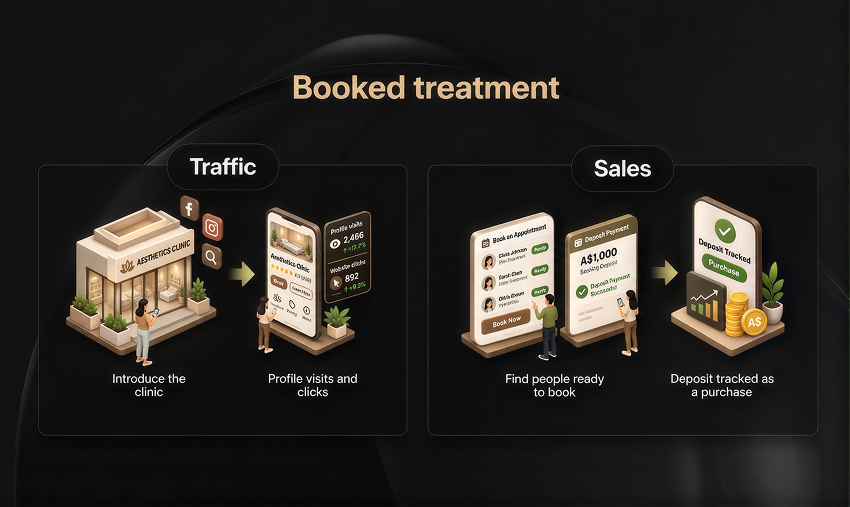
Structured Instagram ad campaigns replaced the boosts. A Traffic campaign introduced the clinic to new people, and a Sales campaign turned that interest into bookings. Keeping those jobs separate is central to Instagram advertising management, because a campaign’s goal changes who Meta shows the ads to and what it asks them to do.
Clinics advertise to win bookings, not likes or follows. Chantalle’s website takes a deposit to secure a treatment, so the account tracked each deposit as a purchase. Every campaign then reported against bookings, the result the clinic cares about most.
This setup also made the results easier to read. When each campaign has one job, you can judge it on that job alone, instead of mixing everything into one set of numbers that hides what’s working and what isn’t.
Creative Built for Reels and Stories
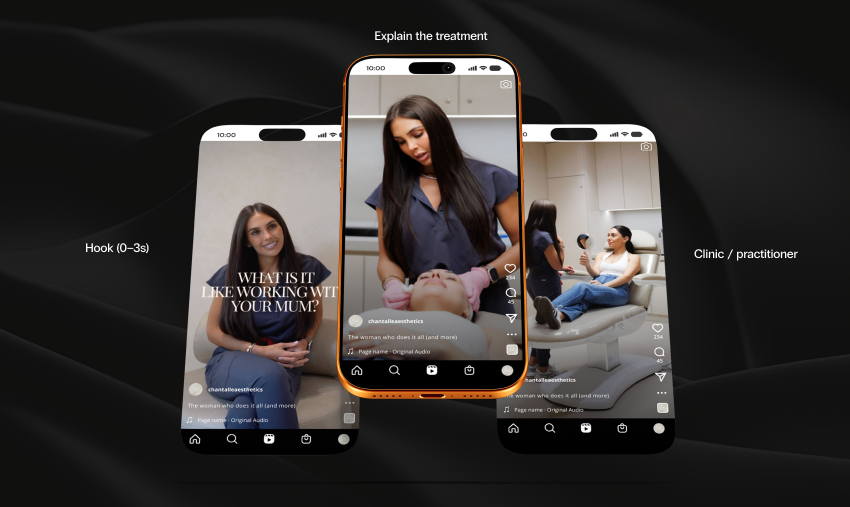
Without those shortcuts, an ad has to hold attention with what it shows. The first few seconds need to give people a reason to keep watching. After that, the ad has to explain the treatment or the clinic clearly enough that viewers want to know more.
This is where the format made a difference. Reels and Stories are both Instagram placements set up through Meta Ads Manager, and both show vertical video across the whole screen. A small image in a busy feed, by contrast, competes with everything around it.
Full-screen video also gives an ad enough time and space to explain a treatment properly. Reels and Stories reach people at different moments, though, so one idea usually needs a slightly different edit for each.
Reels
Reels ads appear between short videos as people scroll through Reels. People there are already in the mood to watch, so an ad that explains a treatment or shows the clinic fits in better than one making claims about results.
For a clinic that hadn’t advertised before, that makes Reels a good place to build familiarity with people who’ve never heard of it. That was the Traffic campaign’s job. Profile visits were a big part of it, because a curious viewer often checks the clinic’s profile next.
Stories
Stories ads appear full-screen between Stories from accounts people already follow, so a good ad feels like part of what they’re watching. Each one links straight to a website, which makes Stories a good fit for ads that ask people to do something, like book a treatment.
That was the Sales campaign’s job. In both formats, the ads followed the same rules, explaining rather than promising, and the full screen gave them room to do it properly. Neither format needed bigger claims to hold attention, just a clearer explanation.
The Numbers: Four and a Half Months In
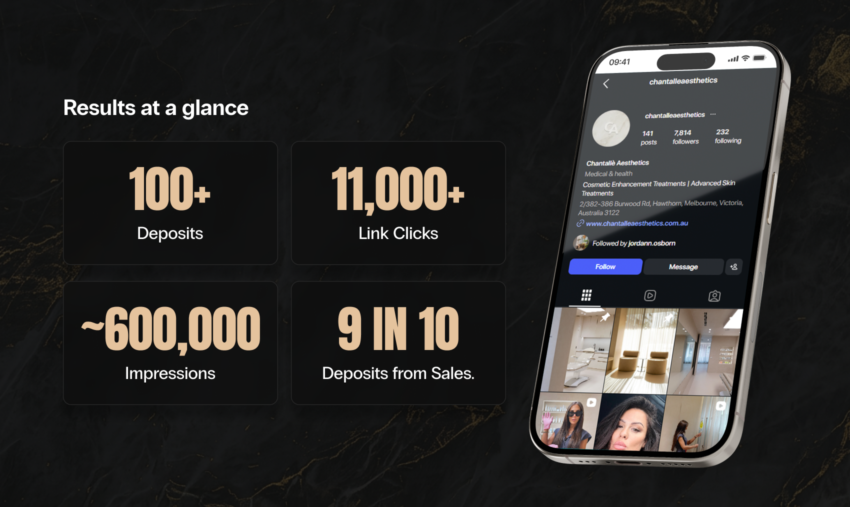
Between June 1 and October 15, 2026, the account ran three campaigns, all measured on the same thing, a booked treatment. The table shows the main results. Deposits matter most, because each one is a booked treatment, not just a view or a tap.
| Measure | Result | Campaign |
|---|---|---|
| Impressions | ~600,000 | All campaigns |
| Link clicks | 11,000+ | All campaigns |
| Tracked treatment deposits | 100+ | All campaigns |
| People reached | 100,000+ | Traffic |
| Profile and page visits | 9,300+ | Traffic |
| Link click-through rate | 2.48% | Traffic |
| Share of all deposits | 9 in 10 | Sales |
| Landing page arrival rate | 94% | Sales |
The Traffic campaign reached 100,000+ people, and its ads were seen 320,000+ times. It drove 9,300+ profile and page visits and 7,900+ link clicks, with 2.48% of ad views leading to a link click. For a clinic that hadn’t advertised before, that was a strong introduction.
The Sales campaign looked for people ready to book, and it brought in nine in ten of the account’s tracked bookings. Its click-through rate across all clicks was 3.54%. How often Meta shows an ad depends heavily on the ad itself, because creative wins Meta auctions, not bids alone.
The two rates measure different things, so you can’t compare them directly. The Traffic figure counts only clicks on the link, while the Sales figure counts every click on the ad. The rest of the deposits came from the Traffic campaign and a third, smaller campaign.
The Standout: 94% of Clicks Reached the Page
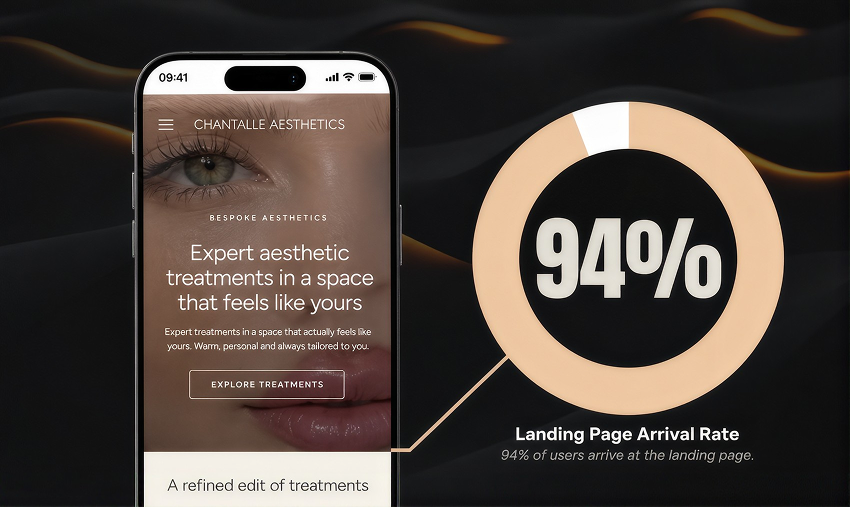
A click only counts if the person reaches the page. On the Sales campaign, 94% of link clicks made it to the landing page. On mobile, where people expect a page to open instantly, a slow page loses them before it even loads.
A rate that high suggests the page loads quickly and the conversion tracking records visits and deposits properly. It also means the results reflect real people reaching the booking page. Both matter because a fast page with unreliable tracking still leaves the clinic guessing.
The landing page also holds the detail an ad has no room for, such as treatment information, booking options and what to expect on the day. With all of that on the page, the ad can stay short and focus on getting the click.
How CCM Approached It
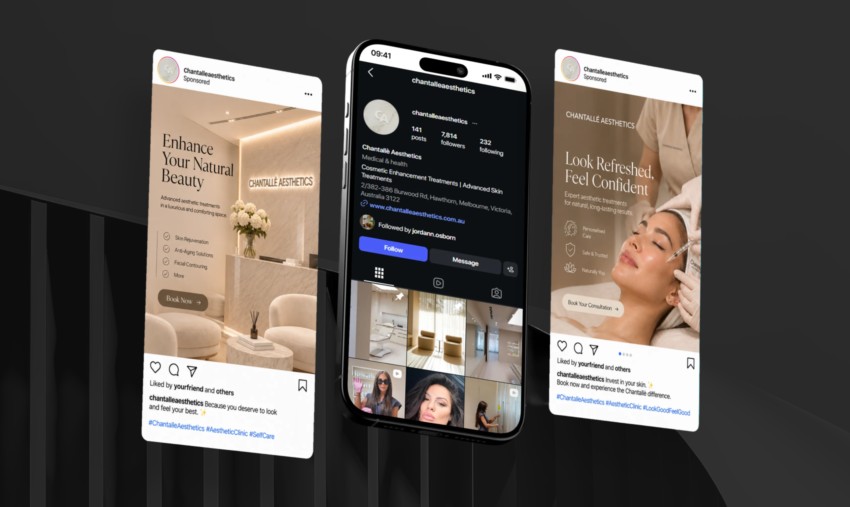
We started by replacing one-off boosts with a properly structured account. Our paid social advertising for Chantalle began with two campaigns, each with one clear job. We tracked each deposit as a purchase, so we could measure every decision against real bookings.
We made the ads for Reels and Stories from the start, within the rules that apply to aesthetics advertising. Rather than looking for ways around those rules, we treated them as part of the brief. Each ad had to rely on strong visuals and a clear explanation of the treatment.
From there, we kept each campaign focused on its job and judged the results by what they meant for the clinic. Profile visits and clicks help explain the results, but bookings are the number that fills the appointment book.
The Takeaway
In four and a half months, Chantalle Aesthetics went from a single boosted post to a structured Instagram account that brought in 100+ tracked deposits. None of the ads used a testimonial or a before-and-after. The rules shaped what the ads could say, but they didn’t limit the results.
The format matters more when an ad has to inform rather than promise. Reels and Stories give an ad the whole screen, but the ad still has to be worth watching. Better ads get shown more often, which gives each campaign more data to learn from.
Clinics working under similar rules should start with something clear to measure, such as a booking or a deposit. From there, separate campaigns for attention and for bookings, plus vertical ads that explain the treatment, do most of the work. None of it needs a big account or a large following.
FAQs
How do aesthetics clinics advertise on Instagram without testimonials?
Clinics can show what a treatment involves, what the clinic is like and who does the work, in a format that holds attention. Australian advertising rules restrict testimonials for regulated health services and ban promoting prescription-only medicines to the public, so the ads have to explain the treatment instead.
What is the difference between Reels ads and Stories ads?
Reels ads appear between short videos in the Reels feed, while Stories ads appear full-screen between the Stories people tap through. Both use vertical video, so one idea usually works in both with small changes to length and pacing.
Is boosting a post the same as running Instagram ads?
Boosting promotes an existing post with a limited set of options for the goal and audience. Campaigns built in Meta Ads Manager let you set a separate goal, audience and set of ads for each job, which is how a setup like Chantalle’s works.
Why track deposits as purchases?
A deposit shows that someone has committed to a treatment, which is a far stronger signal than a click or a profile visit. Tracking it as a purchase helps a Sales campaign find the people most likely to book and gives the clinic a result it can check.
How should a clinic measure Instagram ad results?
Start with the outcome the clinic cares about, usually booked appointments or deposits, and then work back through landing page views, link clicks and reach. Engagement figures help explain how the ads are performing, but they are not the result on their own.
More Bookings From Instagram, Without the Shortcuts
If your clinic’s Instagram ads are still the odd boosted post, a structured account could do far more. CCM provides Instagram advertising management in Sydney for clinics across Australia. To see what that could look like for your clinic, book a strategy chat with the team.